The 3 Days Nyerere National Park Safari Cost 2026–2027 is designed for travelers who want a short but immersive wildlife experience in southern Tanzania while understanding how much a realistic Nyerere safari may cost before requesting a final quotation.
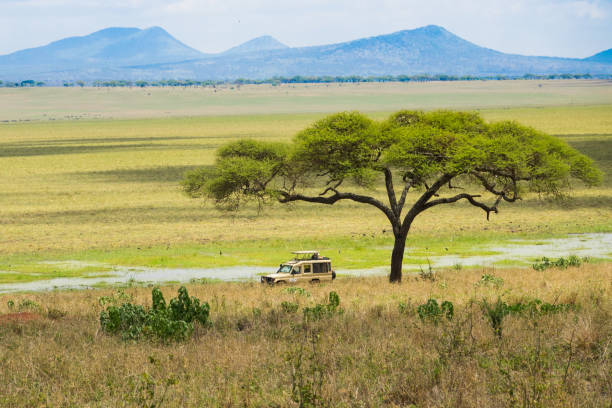
Formerly part of the legendary Selous Game Reserve, Nyerere National Park protects more than 30,000 square kilometres of miombo woodland, floodplains, grassland, riverine forest and the vast Rufiji River system. Tanzania National Parks describes it as one of Africa’s great wilderness landscapes and an important refuge for African wild dogs, elephants, lions, buffalo, hippos, crocodiles, giraffes, leopards and more than 430–440 bird species. Tanzania Parks
For a practical three-day road safari beginning in Dar es Salaam, the journey can follow:
Dar es Salaam → Nyerere National Park/Rufiji Area → Boat Safari → Full-Day Nyerere Game Drive → Morning Wildlife Experience → Dar es Salaam
The safari develops naturally through:
Dar es Salaam → southern Tanzania countryside → Rufiji River → hippos and crocodiles → elephants and buffalo → lions and wild dogs → miombo wilderness → Dar es Salaam.
Unlike a northern Tanzania safari focused almost entirely on road game drives, Nyerere provides a particularly distinctive combination of vehicle-based wildlife viewing and Rufiji River boat safaris. TANAPA specifically highlights game drives, boat safaris and the riverine environment among the park’s principal visitor experiences. Tanzania Parks
The total 3 Days Nyerere National Park safari cost depends heavily on whether you travel by road or air, whether the safari is private or shared, where you stay and whether activities such as a boat safari are included.
There is no single price that applies to every traveler.
For planning purposes, current 3-day Nyerere packages on the Tanzania safari market show a very wide range.
For road safaris from Dar es Salaam, current marketplace examples include shared or budget departures around US$400–US$600 per person, while many private and mid-range road packages fall broadly around US$600–US$1,050 per person.
Fly-in packages can be significantly more expensive. Current examples from Dar es Salaam or Zanzibar range from roughly US$1,100 to more than US$2,000 per person, depending on flights, accommodation and safari style. These are market examples rather than fixed Nyerere rates. SafariBookings.com
A useful planning range for 3 days / 2 nights is therefore:
Budget or shared road safari: approximately US$400–US$600 per person
Private road safari: approximately US$600–US$1,050+ per person
Private mid-range safari with upgraded accommodation: often approximately US$700–US$1,200+ per person
Fly-in safari: approximately US$1,100–US$2,200+ per person
These figures should be treated only as 2026–2027 planning estimates.
Your actual quotation can be higher or lower depending on:
TANAPA’s current Nyerere National Park information lists the international adult conservation fee at US$70 and the international child fee at US$20. The official visitor guide also notes that the final charges depend on visitor category, age and activities, and that vehicle, accommodation, camping or other charges may apply separately. Tanzania Parks
This means the park fee is only one component of the safari price.
A traveler should not calculate:
US$70 × number of days = total safari cost.
The full package also has to account for transportation, vehicle expenses, guide services, accommodation, meals, activities and operating costs.
A three-day package advertised at US$450 and another advertised at US$1,500 may both visit the same national park.
The difference usually comes from the structure of the trip.
Road travel from Dar es Salaam is usually considerably less expensive than flying.
TANAPA’s current visitor guidance states that Nyerere can be reached by road from Dar es Salaam through the Kibiti–Utete direction, while scheduled and charter flights also serve airstrips such as Mtemere and Kiba. Tanzania Parks
Flying saves considerable travel time but normally increases the price.
A shared safari spreads some costs across several travelers.
These can include:
A private safari places these costs across only your own booking.
That means a private trip for one traveler can cost considerably more per person than a private trip for four people.
Accommodation is often one of the largest differences between quotations.
Nyerere offers options ranging from practical camps and lodges to premium tented safari properties overlooking the Rufiji and surrounding wilderness. TANAPA’s visitor information confirms both camping and lodge/tented-camp accommodation within and around the park. Tanzania Parks
A Rufiji River safari can increase the package cost, but it is one of the experiences that makes Nyerere distinctive.
TANAPA highlights boat safaris as a signature activity for seeing hippos, crocodiles, elephants, buffalo and abundant birdlife around the river system. Tanzania Parks
A three-day Nyerere safari provides much more than simply a shorter alternative to Serengeti.
It has its own identity.
The Rufiji dominates the northern safari landscape.
Its network includes:
These environments support wildlife throughout the year. Tanzania Parks
Nyerere is one of East Africa’s important refuges for the endangered African wild dog.
TANAPA specifically highlights the park as a wild-dog stronghold. Tanzania Parks
Sightings are never guaranteed, but their presence gives Nyerere a particularly strong predator-conservation story.
TANAPA records healthy lion and leopard populations across the park’s woodlands and floodplains. Tanzania Parks
Elephant herds and buffalo occur across floodplains, woodland and river environments.
The Rufiji system supports abundant hippos and Nile crocodiles, making the river safari especially valuable. Tanzania Parks
TANAPA promotes Nyerere for its enormous landscapes and relatively low-density wildlife tourism compared with many heavily visited safari areas. Tanzania Parks
That can create a stronger sense of wilderness.
Your 3 Days Nyerere National Park Safari begins early in Dar es Salaam.
After breakfast at your hotel or an agreed pickup point, meet your professional safari driver-guide and begin traveling south toward the Nyerere ecosystem.
The first day combines the journey through southern Tanzania with your introduction to the Rufiji River landscape.
Leaving Dar es Salaam, dense urban surroundings gradually give way to smaller towns, villages, farmland and increasingly rural countryside.
The route begins feeling completely different from Tanzania’s northern safari circuit.
Instead of traveling from Arusha toward volcanic highlands, the journey moves deeper into the lowland landscapes of southern Tanzania.
TANAPA identifies road access from Dar es Salaam through the Kibiti–Utete corridor, with journey conditions changing according to weather and the park entrance being used. Tanzania Parks
The trip should therefore be planned around realistic road times rather than assuming an exact arrival hour.
As you approach the wider Nyerere landscape, vegetation becomes increasingly dominated by woodland, floodplain and riverine environments.
Eventually, the enormous wilderness surrounding the Rufiji begins to reveal itself.
After arrival and check-in at your selected camp or lodge, take time to rest before the first main safari experience.
A boat safari provides an ideal introduction to Nyerere because it immediately shows why the destination is different from many other Tanzania parks.
Instead of looking across the savanna from a safari vehicle, you experience wildlife from the river environment under authorized safari operations.
Possible wildlife along the Rufiji may include:
TANAPA describes boat safaris along the Rufiji as one of Nyerere’s signature experiences. Tanzania Parks
Hippos can become one of the dominant wildlife experiences.
Possible observations include animals resting in river pools or surfacing among quieter channels.
The perspective from the river makes these encounters completely different from seeing hippos from a distant safari-road viewpoint.
The Rufiji is also an important habitat for Nile crocodiles.
TANAPA specifically identifies Nyerere as one of Tanzania’s key national parks for crocodile viewing. Tanzania Parks
They may be seen resting on exposed banks or partly submerged near the water.
Elephants may approach the river system to drink or feed.
When encountered naturally, an elephant standing beneath riverine vegetation creates one of Nyerere’s classic wildlife scenes.
The Rufiji is exceptionally productive for birds.
Possible observations may include:
TANAPA currently records more than 430–440 bird species across Nyerere’s habitats. Tanzania Parks
Later in the afternoon, changing light can transform the river.
Possible photographic scenes include:
Return to your accommodation according to the authorized program.
Enjoy dinner and your first night near the Nyerere wilderness.
Overnight: Nyerere National Park / Rufiji area
Main Experience: Dar es Salaam journey, Rufiji River, hippos, crocodiles, elephants, birds and sunset safari atmosphere
Wake early and enjoy breakfast.
Day 2 becomes the main wildlife day of your 3 Days Nyerere Safari.
Unlike Day 1 and Day 3, there is no long transfer back to Dar es Salaam.
The day can therefore concentrate on Nyerere’s game-viewing landscapes.
TANAPA describes the park as a vast mosaic of miombo woodland, open grasslands, floodplains, riverine forest and wetlands, each supporting different wildlife communities. Tanzania Parks
Your driver-guide chooses the game-drive areas according to:
There should be no rigid promise that a certain animal will be found in a particular location.
The cooler morning hours can be particularly productive.
Possible wildlife includes:
TANAPA identifies these species among the important wildlife of the park. Tanzania Parks
For many experienced safari travelers, African wild dogs become one of the strongest reasons for visiting Nyerere.
The park is recognized as one of East Africa’s important refuges for the species. Tanzania Parks
These highly social predators move widely, so locating them requires both good guiding and good fortune.
A wild-dog sighting should never be guaranteed.
If encountered, however, their social behavior can be fascinating.
Lions are another major predator.
Possible encounters may include:
TANAPA lists lions among the park’s major big-game species. Tanzania Parks
Leopards are present but much more difficult to find.
Woodland and riverine vegetation can provide suitable cover.
A leopard sighting should therefore be considered an exceptional bonus rather than a normal expectation.
Elephants are among the defining mammals of Nyerere.
Possible encounters may involve:
TANAPA’s current Nyerere information highlights elephants as one of the park’s principal conservation and wildlife attractions. Tanzania Parks
Buffalo may be encountered in large or smaller groups across suitable habitats.
River and floodplain environments can be especially productive.
Giraffes add another classic element to the southern Tanzania landscape.
They may appear:
Their height makes them particularly striking against Nyerere’s expansive landscape.
Nyerere supports a particularly varied herbivore community.
TANAPA highlights:
alongside buffalo and giraffe. Tanzania Parks
This diversity supports the park’s predators.
Much of southern Tanzania is characterized by miombo woodland.
At first glance, woodland can feel less open than Serengeti grassland.
However, it provides an entirely different safari character.
The experience becomes more about:
rather than simply seeing wildlife from long distances across an open plain.
Closer to the Rufiji system, open floodplains can provide more expansive game-viewing conditions.
Possible scenes include:
The mixture of woodland and open habitat is one reason Nyerere wildlife viewing feels so varied.
Depending on the program, enjoy lunch at an approved location or return toward your lodge.
The middle of the day provides time to relax before continuing the afternoon game drive.
As temperatures begin falling, animal activity may change.
Your guide can continue exploring according to current wildlife conditions.
The objective should not be to simply accumulate the greatest number of species.
Spend time watching behavior.
A relaxed elephant-family encounter or extended wild-dog sighting may become much more memorable than constantly driving in search of another species.
Late afternoon provides particularly attractive conditions for:
Nyerere’s strongest photographs often include the environment.
An elephant surrounded by Rufiji floodplain or miombo tells a more complete story than an isolated animal portrait.
Return to your lodge in the evening and enjoy dinner.
Overnight: Nyerere National Park / Rufiji area
Main Experience: Full-day game drive, wild-dog possibilities, lions, elephants, buffalo, giraffes, antelope and miombo wilderness
Wake for your final morning near Nyerere.
Because the return drive to Dar es Salaam is substantial, the exact morning program should remain realistic.
Depending on accommodation location, road conditions and your final travel arrangements, enjoy a shorter morning wildlife experience before beginning the return journey.
Early morning can provide another opportunity to search for:
No two game drives are exactly the same.
An area that appeared quiet on Day 2 may be active the following morning.
Depending on your lodge location and schedule, enjoy one final view of the riverine environment.
The Rufiji is not simply an attraction added to the safari.
It is the ecological foundation of much of northern Nyerere.
TANAPA describes its channels, floodplains and oxbow lakes as central to the park’s wildlife and scenery. Tanzania Parks
Begin the return journey through southern Tanzania.
Forest and wildlife landscapes gradually give way to:
Continue toward Dar es Salaam.
Actual arrival time depends on:
Your 3 Days Nyerere National Park Safari then comes to an end.
Main Experience: Final wildlife viewing, southern Tanzania countryside and return to Dar es Salaam
Three days provides enough time to experience two of the park’s defining safari styles:
River safari + game drive.
Travel and introduction to the Rufiji.
Full wildlife day.
Final safari experience and return.
Trying to fit Nyerere into one day from Dar es Salaam would remove much of what makes the destination valuable.
With two nights, the experience becomes considerably more relaxed.
For travelers beginning in Dar es Salaam, road transport generally provides the most affordable format.
Current 3-day marketplace examples show some road packages beginning around US$411–US$540 per person for shared or budget arrangements, while several private options are advertised roughly around US$500–US$800, with some higher depending on accommodation and service level. SafariBookings.com
A realistic broad planning guide is therefore:
Budget/shared: around US$400–US$600 per person
Private practical or mid-range: around US$600–US$1,000+ per person
Higher-end private road safari: potentially US$1,000+ per person
These are not fixed Enjore Safaris quotations.
The final price should be calculated for:
A Nyerere safari beginning in Zanzibar is different because travelers usually need an air connection or a more complex mainland transfer arrangement.
Current three-day marketplace examples from Zanzibar commonly sit around US$1,100–US$1,700+ per person, while some fly-in packages exceed US$2,000 per person. SafariBookings.com
The additional expense generally comes from:
For travelers already staying in Zanzibar, however, flying directly toward the Nyerere ecosystem can save a substantial amount of road time.
Usually better suited to travelers prioritizing affordability.
Advantages include:
The main disadvantage is the amount of road time.
Usually more expensive but protects safari time.
Advantages include:
TANAPA lists air access to park airstrips including Mtemere, Siwandu and Beho Beho, alongside road access from Dar es Salaam. Tanzania Parks
A budget safari aims to keep accommodation and shared operating expenses lower while preserving the main wildlife experience.
Budget arrangements may use:
Current marketplace examples demonstrate that some three-day Nyerere road safaris can still fall within roughly the US$400–US$600 per-person range. SafariBookings.com
The wildlife itself is not “budget.”
A traveler paying less can still encounter:
The difference is usually in transportation, accommodation, privacy and service.
Mid-range travel generally offers a stronger balance between comfort and total price.
Possible features include:
Current 3-day market examples commonly appear in the approximate US$650–US$1,050 per-person range, although rates vary substantially. SafariBookings.com
Luxury Nyerere safaris can cost considerably more.
A luxury package may include:
Fly-in examples currently listed in the market range from roughly US$1,600 to over US$2,000 per person for three days. SafariBookings.com
But price alone should not define luxury.
For a short Nyerere safari, meaningful luxury can also mean:
good location + less transfer time + excellent guiding + privacy + enough time at wildlife sightings.
A private trip gives your party its own safari arrangement.
This generally increases per-person cost for:
but becomes more economical per person as group size increases.
Private travel can provide more flexibility around:
A shared safari helps divide vehicle and guide costs.
This often creates the lowest headline prices.
The trade-off is less control over:
Group size has a major impact on private road-safari pricing.
Consider the safari vehicle.
The approximate operating cost of that vehicle does not become twice as expensive simply because four travelers are inside instead of two.
Therefore:
1 traveler → highest shared operating cost per person
2 travelers → lower per-person vehicle cost
4 travelers → vehicle cost spread more widely
5–6 travelers → potentially stronger value
Park entry and accommodation charges, however, usually remain individual costs.
This is why asking for the number of travelers is essential before providing an accurate safari quote.
A lower-priced lodge may be farther from prime wildlife areas.
A more expensive camp may be closer to:
For a three-day safari, location matters because time is limited.
Saving money on accommodation can sometimes create additional driving.
The strongest value therefore comes from balancing:
price + location + comfort + wildlife time.
TANAPA currently lists the international adult conservation fee for Nyerere at US$70, while international children are listed at US$20. Tanzania Parks
TANAPA also notes that:
The current tariff portal states that fees are administered through TANAPA’s official payment system and that applicable charges include VAT according to the published tariff structure. Tanzania Parks
This is why final safari quotations should use the latest TANAPA schedule rather than old rates copied from previous years.
Usually lowers the total price.
Usually increases the total price.
Generally reduces per-person cost.
Usually costs more for smaller groups.
Can significantly reduce the trip price.
Can substantially increase accommodation cost.
Popular dates can increase accommodation demand.
Adds park fees, accommodation and operating costs.
Usually costs more than a comparable road departure from Dar es Salaam because of flight logistics.
Cost is important, but travelers should also understand what they are paying to experience.
Nyerere remains one of Tanzania’s most important destinations for these highly endangered predators. Tanzania Parks
Healthy lion populations occur across floodplains, woodland and other productive habitats. Tanzania Parks
Present but naturally difficult to locate.
One of the park’s iconic large mammals.
Common across suitable areas.
Especially associated with the Rufiji system.
A major river-safari attraction.
Characteristic of open woodland and plains.
The park supports species including:
according to TANAPA. Tanzania Parks
Nyerere offers several famous large mammals, including:
However, a standard Nyerere safari should not be marketed as a guaranteed traditional Big Five experience.
The park’s greater distinction lies in its:
Travelers interested only in completing a Big Five checklist may overlook what actually makes Nyerere special.
African wild dogs are among Africa’s most endangered carnivores.
Nyerere’s enormous connected wilderness provides particularly important habitat for them.
TANAPA repeatedly identifies the park as an important wild-dog refuge. Tanzania Parks
Possible observations may include:
However, wild dogs can cover large distances.
Seeing them should never be guaranteed.
The Rufiji gives Nyerere its distinctive character.
TANAPA describes a complex system containing:
These habitats attract:
The river therefore influences the safari both visually and ecologically.
The best three-day Nyerere itinerary usually benefits from experiencing both.
Better suited to searching for:
Better suited to appreciating:
The two experiences complement one another.
A vehicle shows the enormous terrestrial wilderness.
The boat reveals the river ecosystem.
Serengeti and Nyerere are very different destinations.
A three-day Serengeti trip starting from Dar es Salaam often requires air travel or substantial additional logistics because Serengeti lies far away in northern Tanzania.
Nyerere is much better positioned for a short southern Tanzania safari from Dar es Salaam.
This can make a road-based Nyerere safari significantly more affordable than attempting a short Serengeti journey from the same starting point.
Nyerere also provides something Serengeti does not normally emphasize:
Rufiji boat safaris.
Both destinations work well from Dar es Salaam.
Particularly suitable for:
Particularly suitable for:
Nyerere may cost more when accommodation and boat experiences are included, but the safari also provides a broader variety of environments.
Nyerere’s wildlife experience changes throughout the year.
TANAPA notes that seasonal rains and changing Rufiji water levels strongly influence wildlife distribution. Tanzania Parks
The dry season is particularly popular.
As surface water becomes less widespread, wildlife may become easier to locate around remaining water systems.
Possible advantages include:
Short rains can begin refreshing the landscape.
Possible advantages include:
Wildlife viewing can remain productive, with a mixture of green-season conditions and warmer weather.
Heavier rainfall can affect roads and access.
TANAPA advises visitors to pay close attention to road and river conditions during the wet season and recommends appropriate transport for road access. Tanzania Parks
The park can become exceptionally green, but logistics may be more variable.
Nyerere is an outstanding destination for bird enthusiasts.
TANAPA currently reports more than 430–440 species. Tanzania Parks
Possible birds include:
The combination of:
creates a wide variety of bird habitats.
Photograph:
Use vegetation to frame:
Excellent for wider environmental photographs.
If encountered, focus on natural pack behavior rather than only close portraits.
The Rufiji can be especially attractive during late-afternoon light.
The park forms one of southern Tanzania’s strongest short safari choices.
Fly-in options can combine an island holiday with wildlife.
A private safari can provide excellent flexibility.
Suitable accommodation and transport can be selected according to family requirements.
Sharing a vehicle can improve per-person value.
Group departures can potentially reduce costs.
The mixture of river, woodland, predators and large mammals provides substantial variety.
The Rufiji ecosystem makes Nyerere particularly rewarding.
Travelers who have already visited northern Tanzania may appreciate how different Nyerere feels.
A wider Tanzania holiday can follow:
Zanzibar → Nyerere Safari → Dar es Salaam
or:
Dar es Salaam → Nyerere → Zanzibar
Zanzibar provides:
Nyerere provides:
The contrast is excellent.
Nyerere belongs to Tanzania’s southern safari circuit.
This makes it much more geographically logical from Dar es Salaam than trying to reach Serengeti, Ngorongoro or Tarangire overland within only three days.
A well-planned Nyerere itinerary protects wildlife time while keeping the route centered around one major wilderness area.
For a short safari, keep luggage practical.
Useful items include:
TANAPA also recommends sun protection, neutral clothing, binoculars and suitable protection for river and seasonal conditions. Tanzania Parks
Animals should never be pressured for photographs.
Quiet viewing reduces disturbance.
Feeding changes natural behavior.
Stay within approved safari systems and follow guide instructions.
Do not leave waste around river or park environments.
TANAPA requires boating to operate under official river-use and safety regulations. Tanzania Parks
Nyerere is not only about large animals.
Its value also comes from:
How much does a 3-day Nyerere National Park safari cost in 2026–2027? Current market examples suggest roughly US$400–US$600 per person for some budget or shared road safaris, approximately US$600–US$1,050+ for many private road arrangements, and around US$1,100–US$2,200+ for various fly-in packages. Exact pricing depends on dates, accommodation, group size and transportation. SafariBookings.com
What is the cheapest way to visit Nyerere for three days? Road travel from Dar es Salaam combined with practical accommodation and shared transportation is generally the lowest-cost format.
How much is the Nyerere National Park entrance fee? TANAPA’s current Nyerere page lists US$70 for international adults and US$20 for international children. Other charges can apply depending on vehicle, activity, accommodation and visitor category. Tanzania Parks
Are park fees the total safari cost? No. Park entry is only one part of the package. Transport, safari vehicle, guide, accommodation, meals, activities and operational costs also affect the price.
Does a Nyerere safari from Zanzibar cost more? Usually yes, particularly when flights are required. Current three-day Zanzibar-origin examples commonly exceed US$1,000 per person and can rise above US$2,000 depending on the package. SafariBookings.com
Is flying to Nyerere more expensive than driving? Generally yes. Air transfers reduce travel time but add a substantial transportation expense.
Can I drive to Nyerere from Dar es Salaam? Yes. TANAPA confirms road access from Dar es Salaam through the Kibiti–Utete direction, with conditions varying seasonally. Tanzania Parks
Can I fly to Nyerere? Yes. TANAPA identifies airstrips including Mtemere, Siwandu and Beho Beho among air-access options. Tanzania Parks
Is three days enough for Nyerere? Yes. Three days allows a strong introduction combining road or air access, a Rufiji boat safari, a full game drive and additional wildlife viewing.
What wildlife can I see in Nyerere? Possible sightings include lions, African wild dogs, elephants, buffalo, giraffes, leopards, hyenas, hippos, crocodiles and several antelope species. Tanzania Parks
Can I see African wild dogs in Nyerere? Yes, the park is one of East Africa’s important wild-dog strongholds, but sightings cannot be guaranteed. Tanzania Parks
Can I see lions? Yes. Lions occur across Nyerere’s floodplains and woodland habitats. Exact sightings remain natural.
Can I see leopards? Leopards are present but much more secretive, so any sighting should be considered a bonus.
Can I see elephants? Yes. Elephants are one of the park’s major wildlife attractions. Tanzania Parks
Can I see buffalo? Yes. Buffalo occur across suitable habitats and around river environments.
Can I see hippos? Yes. The Rufiji River system supports abundant hippo populations. Tanzania Parks
Can I see crocodiles? Yes. Nile crocodiles are one of the Rufiji River’s characteristic wildlife attractions. Tanzania Parks
Is a boat safari available in Nyerere? Yes. TANAPA identifies Rufiji boat safaris among the park’s signature visitor experiences. Tanzania Parks
Is a boat safari included in every package? No. It depends on the tour program, accommodation and quotation. Travelers should check whether it is included or separately priced.
How many bird species are found in Nyerere? TANAPA currently cites more than 430–440 recorded species across the park. Tanzania Parks
Is Nyerere the former Selous Game Reserve? Nyerere National Park was created from the northern section of the historic Selous landscape. TANAPA continues to describe the park in this context. Tanzania Parks
How large is Nyerere National Park? TANAPA describes it as protecting more than 30,000 square kilometres. Tanzania Parks
Is Nyerere good for first-time safari visitors? Yes. It combines traditional game drives with river wildlife and large southern Tanzania wilderness.
Is Nyerere suitable for couples? Yes. A private road or fly-in safari can be arranged according to accommodation preferences.
Is Nyerere suitable for families? Yes. Family requirements should be considered when selecting accommodation, vehicle arrangements and daily pace.
Can solo travelers visit Nyerere? Yes. Private tours and some shared departures are available, although private solo travel is generally more expensive per person.
Why does group size affect safari price? Several costs such as vehicle, guide and fuel can be divided among more travelers, reducing the per-person cost.
Can the safari be arranged on a budget? Yes. Current marketplace examples show some three-day road packages around US$400–US$600 per person. SafariBookings.com
Can the safari be arranged as mid-range? Yes. Mid-range lodges and private safari arrangements are widely available.
Can Nyerere be arranged as a luxury fly-in safari? Yes. Current fly-in listings can exceed US$1,500–US$2,000 per person depending on flights and lodge quality. SafariBookings.com
What is the best time for Nyerere? The park can be visited during different seasons. Drier months are popular for larger-mammal viewing, while greener periods provide lush scenery and excellent birdlife.
Is June to October good for Nyerere? Yes. Drier conditions often make game viewing and road travel particularly attractive.
Can I visit during the rainy season? Yes, although road and river conditions may change and some access can become more difficult. TANAPA recommends checking current conditions. Tanzania Parks
Is Nyerere less crowded than northern Tanzania parks? TANAPA promotes the park for its immense wilderness and generally low-density safari experience. Tanzania Parks
Can Nyerere be combined with Mikumi? Yes. Additional days can create a southern Tanzania safari combining both parks.
Can Nyerere be combined with Zanzibar? Yes. Nyerere and Zanzibar create an excellent wildlife-and-beach combination.
Can Nyerere be combined with Ruaha? Yes. A longer southern Tanzania itinerary can combine Nyerere and Ruaha, generally with additional days and appropriate transport.
Is wildlife guaranteed? No. All wildlife moves naturally, so exact species, locations and behavior cannot be guaranteed.
Safari value should not be measured only by the lowest price.
A good three-day Nyerere experience can include:
Day 1: Dar es Salaam → Nyerere → Rufiji River → hippos → crocodiles → sunset.
Day 2: Full game drive → wild-dog possibilities → lions → elephants → buffalo → giraffes → miombo wilderness.
Day 3: Morning wildlife → Rufiji landscape → return to Dar es Salaam.
Within only three days, travelers experience:
That diversity is what gives the safari its value.
Before calculating a final price, determine:
The price should then be calculated using the current TANAPA tariff and actual accommodation and transport rates applying to those dates.
This is more accurate than publishing one fixed figure for every traveler.
The 3 Days Nyerere National Park Safari Cost 2026–2027 represents much more than a short trip from Dar es Salaam.
The journey begins in Tanzania’s largest city before moving south into increasingly quiet countryside.
Eventually, the enormous wilderness of Nyerere takes over.
The Rufiji River becomes the first major attraction.
Hippos surface between the channels.
Crocodiles rest along sandy banks.
Elephants may emerge beside the river while fish eagles and kingfishers bring constant movement to the sky.
The following day belongs to the land.
Explore woodland and floodplain in search of elephants, buffalo and giraffes.
Watch for lions across open country.
Remain patient for elusive leopards.
And search for one of Nyerere’s greatest wildlife treasures—the endangered African wild dog.
After a second night surrounded by southern Tanzania wilderness, enjoy one final morning before returning toward Dar es Salaam.
The complete safari follows:
Dar es Salaam → Nyerere National Park → Rufiji River Safari → Full-Day Wildlife Safari → Final Morning Experience → Dar es Salaam
For 2026–2027, a realistic three-day Nyerere safari can range from roughly US$400–US$600 per person for selected budget/shared road arrangements to US$1,100–US$2,200+ for many fly-in or higher-end options, with private road safaris generally falling between those extremes. These remain planning ranges rather than fixed quotations. SafariBookings.com
Share your travel dates, number of travelers and preferred accommodation level so the final cost can be calculated using the current TANAPA fees and actual 2026–2027 operating rates.
Choose between a road safari from Dar es Salaam, fly-in safari from Zanzibar or Dar es Salaam, budget lodge, mid-range tented camp or premium wilderness property according to your time and budget.
Travel into a vast wilderness where African wild dogs move through miombo woodland, elephants cross open floodplains, lions patrol the landscape, and the Rufiji River supports hippos, crocodiles and extraordinary birdlife on a three-day Nyerere National Park safari.
Tanzania is a year-round safari destination with many adventures being offered all over the country. For optimal wildlife sightings, the dry season from June to October is your best bet! Read more on when to visit Tanzania
Both have their perks with Big Five national parks, the incredible Great Migration and that quintessential African experience we all dream of. Check out our article on Serengeti vs Masai Mara to help you decide.
They both have such different safari experiences! Tanzania offers Big Five game reserves on classic dusty desert plains, rather South Africa partners the Big Five animals with luscious winelands. Both are just as good, but it depends on your safari style.
That’s a tough one! Botswana is home to herds of elephants at Chobe and the sparkling Okavango Delta, and Tanzania has the iconic Mount Kilimanjaro and Great Migration. Check out our article on Botswana vs Tanzania safaris to help you decide.
Tanzania is in general a safe, hassle-free country. However, like most places, you do need to take precautions and listen to your tour guide. It also pays to read our articles on ‘Things to know before going to Tanzania’.
A camera and binoculars are a must. You’ll regret it if you don’t take them! As for clothing, definitely pack lightweight, breathable clothing. Remember, Tanzania is an arid country so the days can get quite hot. Read more on what to pack for a safari in Tanzania in our travel magazine
EXPERIENCES
BEST TOURS
copyright©2026 . Enjore Safaris