The 3 Days Tarangire Safari Price from Arusha 2026-2027 offers travelers a focused short safari into one of northern Tanzania’s most distinctive wildlife destinations. Instead of rushing between several national parks, this itinerary spends meaningful time inside Tarangire National Park, allowing travelers to experience its huge elephant herds, ancient baobab trees, Tarangire River, Silale Swamp, lions, buffalo, giraffes, zebras, wildebeest and exceptional birdlife.
Arusha → Tarangire National Park → Tarangire River & Baobab Landscapes → Silale Swamp & Wildlife Plains → Final Morning Safari → Arusha
The journey develops naturally through:
Arusha countryside → elephant country → ancient baobabs → river wildlife → open savannah → full safari day → final morning game drive → Arusha.
Tarangire covers approximately 2,850 km², and Tanzania National Parks describes it as the “Paradise of Elephants.” TANAPA currently highlights the park’s exceptional elephant population, baobab landscapes, Tarangire River, seasonal wildlife corridors and more than 550 bird species. Tanzania Parks
For travelers researching 2026-2027 Tarangire safari prices from Arusha, the final cost depends mainly on accommodation category, number of travelers, private or shared vehicle arrangements, travel season and the official park charges applying to the actual dates.
Enjore Safaris’ currently published 2026 planning prices place a 3-day Tarangire safari at approximately US$600–900 per person for a budget/camping safari, US$900–1,300 per person for a mid-range lodge safari and US$1,300–2,500+ per person for a luxury safari. These are planning ranges rather than one universal price because accommodation and group size can substantially change the final quotation. enjoresafaris.com
For 2027, prices should be reconfirmed for the exact dates rather than simply copying a 2026 rate. Current published 2027 market examples illustrate the difference accommodation can make: one value-oriented three-day Tarangire package is advertised around US$1,270–1,365 per adult sharing depending on month, while premium lodge examples can exceed US$2,000 per person sharing. These are market examples from other operators, not Enjore Safaris quotations, but they demonstrate why the lodge and season matter so much. AfricanMecca Safaris
TANAPA’s current Tarangire park page displays an international adult entry fee of US$70 and an international child rate of US$20, while its visitor guidance notes that additional rates can vary by visitor category, age, vehicle and activity. For a final 2026 or 2027 quotation, the fee schedule applying on the actual travel date should therefore be checked rather than treating one displayed entry charge as the entire park cost. Tanzania Parks
The largest difference usually comes from how many travelers share the safari vehicle.
A private safari for one person carries most of the guide, vehicle and fuel expenses in a single booking. When two, four or more travelers share the same private Land Cruiser, those fixed transportation costs are divided among more people, reducing the average price per person.
Accommodation is the second major factor. Public camping provides the lowest-cost style, comfortable lodges and tented camps create a mid-range safari, while premium properties inside or around the Tarangire ecosystem can increase the total considerably.
Season matters as well. Popular dry-season months can command higher accommodation prices, whereas selected green-season periods may offer better lodge value.
The final safari cost normally reflects much more than the park ticket alone. Transportation from Arusha, professional guiding, fuel, accommodation, meals, game drives, government charges and park-related fees all contribute to the complete package.
This is why an advertised “Tarangire entry fee” should never be confused with the full 3 Days Tarangire Safari Price from Arusha.
Many short Tanzania itineraries give Tarangire only part of one day before moving immediately toward another national park.
That works for travelers trying to see as many destinations as possible, but it does not show the full character of Tarangire.
Three days allow several different wildlife periods:
Day 1 afternoon → Day 2 morning → Day 2 afternoon → Day 3 morning.
Wildlife can be in a completely different place between one drive and the next.
Elephants may gather around water later in the day.
Lions that were hidden during the afternoon may become easier to locate the following morning.
Bird activity changes.
Buffalo move through different feeding areas.
Light changes the appearance of the baobab landscapes.
A three-day Tarangire-only safari therefore works especially well for travelers who prefer quality wildlife time over destination counting.
Your 3 Days Tarangire Safari from Arusha begins after breakfast at your hotel or another agreed pickup point.
Meet your professional safari driver-guide and travel south toward Tarangire National Park.
TANAPA currently estimates the road journey from Arusha at approximately 2.5–3 hours, making Tarangire one of the easiest major northern Tanzania wildlife destinations to combine with a short holiday. Tanzania Parks
As Arusha disappears behind you, the environment gradually becomes more open.
The landscape becomes drier and increasingly dominated by savannah vegetation.
Eventually the unmistakable baobabs of Tarangire begin appearing.
After the appropriate park formalities, begin your first game drive.
Tarangire immediately introduces the wildlife feature for which it is most famous: elephants.
TANAPA describes the park’s elephant herds and baobab galleries as its signature scene and currently characterizes Tarangire as supporting one of Africa’s great concentrations of elephants. Tanzania Parks
Possible encounters may include family groups traveling through woodland, adult bulls feeding alone, younger elephants protected by older animals and larger herds moving toward water.
Safari quality comes from allowing these encounters time to develop.
Instead of stopping for one photograph and immediately leaving, observe how family members interact, feed and move together.
Continue through open savannah, acacia woodland and river-associated habitats.
Buffalo may occupy productive feeding areas.
Giraffes browse above surrounding vegetation.
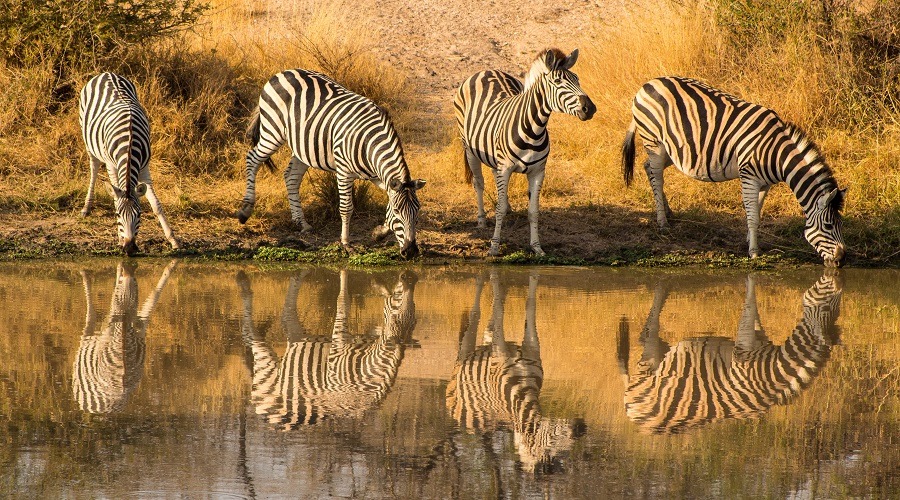
Zebras and wildebeest move across more open country.
Antelope add further diversity.
Predators are also present.
TANAPA identifies lions, leopards and hyenas among Tarangire’s important carnivores. Lions may be encountered around plains, river areas and concentrations of prey, while leopards remain considerably more secretive and should always be treated as a special possibility rather than a guaranteed sighting. Tanzania Parks
The Tarangire River is especially important.
It functions as a major dry-season lifeline, while connected swamp and river systems help support animals when seasonal water becomes limited. TANAPA notes that wildebeest, zebra and hartebeest move toward the river as surrounding pans dry. Tanzania Parks
Birdlife adds another major attraction.
More than 550 species are recorded, from kori bustards and ostriches to lovebirds, bee-eaters and raptors. Tanzania Parks
Enjoy lunch according to the safari arrangement and continue exploring through the afternoon.
As the sunlight becomes softer, baobabs and wildlife take on warmer tones.
Elephants beneath giant trees, giraffes crossing open landscapes and buffalo against distant hills create classic Tarangire photography.
Later, travel to your selected campsite, tented camp or lodge in or around the Tarangire ecosystem.
Enjoy dinner and your first night.
Main Experience: Arusha to Tarangire, elephants, baobabs, Tarangire River, buffalo, giraffes, predator possibilities and sunset landscapes.
Wake early for the main wildlife day of the safari.
With no long transfer to another park, Day 2 can be dedicated entirely to exploring Tarangire.
The early hours may feel very different from the previous afternoon.
Wildlife may have moved overnight.
Elephants can be using another section of the river system.
Lions may become visible in an area that appeared empty the previous day.
Bird activity can be particularly strong in the cooler morning.
Your guide can adapt the day according to current wildlife movement rather than following exactly the same circuit.
One of the important landscapes is Silale Swamp.
TANAPA describes Silale and the river loops as a major dry-season wildlife lifeline where elephants, buffalo and birds can concentrate. Tanzania Parks
This environment demonstrates why Tarangire becomes particularly rewarding during drier months.
As surrounding seasonal water disappears, dependable river and swamp habitats attract wildlife from a wider area.
Elephants may dominate some sections.
Buffalo can gather in significant numbers.
Zebras and wildebeest may occupy surrounding plains.
Giraffes continue browsing through woodland.
Predator possibilities remain throughout the day.
Lions may use shade during warmer conditions before becoming more active as temperatures decrease.
Leopards remain much more difficult to locate.
Hyenas may appear around open habitats and areas used by grazing animals.
There is no advantage in rushing from one reported sighting to another if a strong natural encounter is already happening nearby.
A three-day Tarangire safari provides enough time to slow down.
Watch elephants interact.
Observe giraffes feeding.
Look for smaller antelope.
Follow bird activity.
Appreciate termite mounds, woodland and changing vegetation.
The landscape itself is a major part of Tarangire.
TANAPA also highlights open flats, acacia woodland, riverine forest and termite-mound country as important habitats supporting grazers, browsers and birds of prey. Tanzania Parks
Enjoy lunch according to the selected arrangement before continuing into the afternoon.
Photography becomes particularly attractive later in the day.
Tarangire’s baobabs provide natural frames for wildlife, while warm light can transform the surrounding hills and river valley.
By sunset, the park can look completely different from the bright morning landscape.
Return to your accommodation for dinner and your second night.
Main Experience: Full-day Tarangire game drive, Silale Swamp, elephants, buffalo, predators, seasonal wildlife corridors and outstanding birdlife.
Wake for one final morning in the Tarangire ecosystem.
This last game drive provides another opportunity to experience the park during cooler conditions before returning to Arusha.
Wildlife may again have changed location overnight.
A lion pride that remained hidden yesterday could appear.
Elephants may be moving toward river habitats.
Giraffes and zebras can become particularly photogenic in softer morning light.
Continue through suitable areas according to your accommodation location and current wildlife information.
This is not the time to turn the safari into a stressful final checklist.
Tarangire is strongest when visitors appreciate the complete ecosystem.
An elephant family beneath baobabs can be more memorable than briefly finding several famous species.
A kori bustard crossing open grassland, a giraffe framed against the morning sky or buffalo moving between swamp and woodland may become the defining final encounter.
After the game drive, return for breakfast or continue with the agreed departure arrangements.
Leave Tarangire and travel toward Arusha.
TANAPA currently places the normal road journey at approximately 2.5–3 hours, although traffic and conditions can alter actual travel time. Tanzania Parks
Arrive at your Arusha hotel, airport connection or another agreed drop-off point, completing your 3 Days Tarangire Safari Price from Arusha 2026-2027 package.
Main Experience: Final morning wildlife, elephants, baobabs and return to Arusha.
The current Enjore Safaris page provides a useful 2026 starting framework.
A budget Tarangire safari is currently presented at approximately US$600–900 per person. This level generally uses camping or simple accommodation and becomes most economical when several travelers share transport costs. enjoresafaris.com
A mid-range safari is currently shown at approximately US$900–1,300 per person. The main difference is normally accommodation, with comfortable lodges or tented camps replacing basic camping. enjoresafaris.com
A luxury safari is currently shown at approximately US$1,300–2,500+ per person, although the premium end of the market can go considerably higher depending on lodge, season and whether one person is traveling alone. enjoresafaris.com
For example, published 2026 three-day luxury Tarangire packages at premium camps can exceed US$3,000 per adult sharing during selected peak periods, demonstrating why “luxury safari” does not represent one fixed price. AfricanMecca Safaris
For 2027, accommodation rates already published by some operators show increases over comparable 2026 packages. This is why Enjore Safaris should calculate the final 2027 quotation using the actual travel dates rather than simply adding “2027” to a 2026 price. AfricanMecca Safaris
A complete Tarangire safari quotation generally brings together the main operating costs required for the journey rather than charging only for entry into the park.
The current Enjore Safaris Tarangire page states that its package structure can include park entry fees, safari vehicle and driver-guide, accommodation, meals, game drives and drinking water. International flights, visa costs, travel insurance, gratuities and personal expenses are listed separately. enjoresafaris.com
The final quotation should still be read carefully because exact inclusions can differ between budget, mid-range and luxury arrangements.
For example, a premium property may include services that are not part of a basic campsite package, while optional activities can create additional charges.
Tarangire is open year-round, but the character of the park changes significantly with the seasons.
The June–October dry season is particularly famous for wildlife concentration around the Tarangire River and Silale Swamp. As surrounding seasonal pans dry, elephants, buffalo, wildebeest, zebras and other animals increasingly depend on permanent water. Tanzania Parks
This can make dry-season game viewing especially productive.
The landscape often becomes more golden and open, making large mammals easier to see.
The green season brings a different experience.
Vegetation becomes lush, birdlife remains exceptional and dramatic skies can create beautiful photography.
The park may also feel quieter outside the busiest dry-season months.
Travelers focused primarily on maximum large-mammal concentration often choose the dry season, while those interested in green scenery, birds and potentially lower accommodation rates may prefer other periods.
There is therefore no single “best” month for everyone.
Elephants are the headline species, and TANAPA currently describes Tarangire as supporting one of Africa’s highest elephant concentrations. Tanzania Parks
Buffalo, giraffes, zebras, wildebeest and hartebeest contribute to the wider herbivore community.
Lions occur throughout suitable habitats, while leopards remain elusive.
Hyenas are also part of the predator system.
Tarangire is not normally promoted as the strongest destination for completing the traditional Big Five because rhino is not a realistic core Tarangire attraction.
Travelers whose primary objective is a complete Big Five search should consider combining Tarangire with Ngorongoro Crater or another suitable destination.
For someone who wants elephants, beautiful landscapes, wildlife variety and excellent birdlife, Tarangire is outstanding on its own.
For many travelers, no.
A one-day Tarangire safari provides an introduction.
Three days allow travelers to understand the park more deeply.
The extra time gives access to different landscapes, multiple wildlife periods and a much more relaxed pace.
It also reduces the pressure to see everything immediately.
Instead of spending every afternoon driving toward a different park, travelers can remain in Tarangire when wildlife activity becomes interesting.
This works particularly well for photographers, birdwatchers, elephant enthusiasts, couples and travelers who prefer slower safaris.
For visitors whose goal is to see several different Tanzania ecosystems within three days, a Tarangire–Ngorongoro–Lake Manyara itinerary may be more suitable.
For travelers who specifically want to explore Tarangire properly, three days is an excellent length.
Couples often prefer a private safari because it provides more control over wildlife stops and daily pacing.
Families can also benefit from private transportation because game-drive length can be adjusted around the group.
Solo travelers face a different pricing structure because vehicle, guide and often room costs are not shared.
Published 2026 market examples demonstrate this clearly. A value-level three-day package listed at roughly US$1,265 per adult sharing can exceed US$2,000 for a solo traveler, even though the destination and general duration remain the same. AfricanMecca Safaris
This is why travelers comparing safari prices should always check whether a figure is:
per person sharing, single-room pricing or true solo-traveler pricing.
A headline number without that context can be misleading.
How much does a 3-day Tarangire safari cost in 2026? Enjore Safaris currently publishes planning ranges of about US$600–900 per person for budget travel, US$900–1,300 for mid-range and US$1,300–2,500+ for luxury, depending on accommodation, group size and safari style. enjoresafaris.com
How much should I expect to pay in 2027? The exact Enjore Safaris 2027 quotation should be confirmed for the travel dates. Published 2027 market examples already show value packages around US$1,270–1,365 per adult sharing and much higher premium rates, illustrating the effect of lodge and season. AfricanMecca Safaris
How far is Tarangire from Arusha? TANAPA currently estimates approximately 2.5–3 hours by road under normal conditions. Tanzania Parks
What is Tarangire famous for? It is particularly famous for large elephant herds, ancient baobabs, the Tarangire River, Silale Swamp and exceptional bird diversity. Tanzania Parks
How many bird species are found in Tarangire? TANAPA records more than 550 species. Tanzania Parks
Can I see lions in Tarangire? Yes. Lions occur in Tarangire together with leopards and hyenas, although individual sightings remain completely natural and cannot be guaranteed. Tanzania Parks
Can I see elephants? Tarangire is one of Tanzania’s signature elephant destinations. TANAPA currently describes it as the “Paradise of Elephants” and highlights exceptionally large elephant concentrations. Tanzania Parks
Is Tarangire a Big Five park? Tarangire has several classic large mammals including lion, leopard, elephant and buffalo, but rhino should not be treated as a realistic standard Tarangire sighting. Travelers focused on the traditional Big Five often combine Tarangire with Ngorongoro.
Is a private safari more expensive than a group safari? Usually yes on a per-person basis for a small booking because the vehicle and guide costs are divided among fewer travelers. Larger private groups can significantly reduce the per-person cost.
Is three days worth it? Yes. Three days provides multiple morning and afternoon wildlife periods and allows travelers to explore Tarangire at a much more relaxed pace than a single-day visit.
The itinerary is simple, and that is its strength.
Day 1 becomes:
Arusha → Tarangire → elephants → baobabs → river wildlife → overnight near the park.
Day 2 becomes:
Full Tarangire exploration → Silale Swamp → buffalo → predators → birdlife → sunset.
Day 3 becomes:
Morning wildlife → final elephant encounters → Arusha.
There is very little unnecessary destination hopping.
Instead, most of the holiday is spent experiencing the wildlife destination travelers paid to visit.
That makes the safari particularly attractive for visitors seeking a short, focused Tanzania wildlife trip with clear 2026-2027 price options.
The 3 Days Tarangire Safari Price from Arusha 2026-2027 can be adapted around budget, mid-range or luxury accommodation, private or shared transportation and the exact travel season.
Leave Arusha and travel directly into Tarangire’s baobab country.
Watch elephant families move through the savannah.
Follow the river system through one of Tanzania’s most important dry-season wildlife landscapes.
Explore the Silale Swamp, open plains and woodland in search of buffalo, giraffes, zebras, wildebeest, lions, leopards and more than 550 bird species.
Spend two nights close to the wilderness rather than rushing toward another park.
Then enjoy one final morning game drive before returning to Arusha.
The complete safari follows:
Arusha → Tarangire National Park → Tarangire River → Silale Swamp & Baobab Landscapes → Full-Day Safari → Final Morning Game Drive → Arusha
For 2026, Enjore Safaris’ current published planning range begins at approximately US$600 per person for selected budget arrangements and increases according to accommodation and safari style. For 2027, the best approach is to price the trip using the exact dates, group size and current lodge and TANAPA charges rather than assuming the previous year’s rate will remain unchanged. enjoresafaris.com
The three-day package can remain entirely focused on Tarangire or be redesigned into a wider northern Tanzania safari by adding enough time for Ngorongoro Crater, Lake Manyara or Serengeti National Park.
Spend three days exploring Tarangire’s enormous elephant herds, ancient baobab trees, wildlife-rich river system, Silale Swamp, predators and exceptional birdlife on a short safari from Arusha where the price can be matched to budget, mid-range or luxury travel without sacrificing the park’s extraordinary wildlife experience.
Tanzania is a year-round safari destination with many adventures being offered all over the country. For optimal wildlife sightings, the dry season from June to October is your best bet! Read more on when to visit Tanzania
Both have their perks with Big Five national parks, the incredible Great Migration and that quintessential African experience we all dream of. Check out our article on Serengeti vs Masai Mara to help you decide.
They both have such different safari experiences! Tanzania offers Big Five game reserves on classic dusty desert plains, rather South Africa partners the Big Five animals with luscious winelands. Both are just as good, but it depends on your safari style.
That’s a tough one! Botswana is home to herds of elephants at Chobe and the sparkling Okavango Delta, and Tanzania has the iconic Mount Kilimanjaro and Great Migration. Check out our article on Botswana vs Tanzania safaris to help you decide.
Tanzania is in general a safe, hassle-free country. However, like most places, you do need to take precautions and listen to your tour guide. It also pays to read our articles on ‘Things to know before going to Tanzania’.
A camera and binoculars are a must. You’ll regret it if you don’t take them! As for clothing, definitely pack lightweight, breathable clothing. Remember, Tanzania is an arid country so the days can get quite hot. Read more on what to pack for a safari in Tanzania in our travel magazine
EXPERIENCES
BEST TOURS
copyright©2026 . Enjore Safaris