Serengeti Heritage Camp is a tented safari accommodation located inside the spectacular Serengeti National Park in northern Tanzania. Set within the wildlife-rich landscapes of Central Serengeti, the camp combines the atmosphere of traditional African safari camping with comfortable modern facilities, making it a convenient choice for travelers exploring one of Tanzania’s most famous wildlife destinations.
The camp provides spacious safari tents with private en-suite bathroom facilities, comfortable beds and views across the surrounding Serengeti landscape. Accommodation is available in different configurations suitable for solo travelers, couples, friends and families. Serengeti Heritage Camp
Its setting within the Serengeti allows guests to remain close to the wilderness throughout their stay. Days can be spent exploring the national park on game drives before returning to camp for meals, relaxation and evenings around the campfire.
For travelers planning a Serengeti safari, Serengeti Heritage Camp offers a balance between an authentic tented safari experience and the comforts expected from an established safari camp.
Serengeti Heritage Camp is located within Serengeti National Park, in the central part of the Serengeti ecosystem.
This area provides access to the Seronera Valley, one of the best-known wildlife viewing areas in Central Serengeti. The broader central region is famous for its year-round resident wildlife and is an important section of many Tanzania safari itineraries.
Seronera Airstrip is the nearest major safari airstrip mentioned by the camp, making fly-in safari arrangements possible from Arusha and other Tanzanian destinations. Travelers can also reach the Serengeti by road from Arusha, often combining the journey with destinations such as the Ngorongoro Conservation Area. Serengeti Heritage Camp
National Park: Serengeti National Park
Region: Northern Tanzania
Safari Area: Central Serengeti
Nearby Wildlife Area: Seronera Valley
Nearest Safari Airstrip: Seronera Airstrip
Country: Tanzania
The main accommodation at Serengeti Heritage Camp consists of spacious canvas safari tents designed to provide guests with the atmosphere of camping in the African wilderness without giving up essential comforts.
The camp states that its tents stand on raised wooden platforms and include private en-suite facilities, comfortable bedding and views of the surrounding savanna. Serengeti Heritage Camp
Accommodation options include:
Suitable for solo travelers looking for a private room while exploring Serengeti National Park.
Designed for couples and travelers who prefer one large bed.
A suitable arrangement for friends, siblings or other travelers sharing accommodation.
Available for small families or groups requiring additional sleeping space.
Exact room configuration should always be confirmed when making a reservation.
Staying in a tented camp offers a different experience from staying in a conventional city hotel.
Instead of being separated from nature by permanent walls, guests remain surrounded by the sights and sounds of the Serengeti.
Depending on the tent category and current camp setup, accommodation features may include:
The camp’s own information describes solar-powered lighting and charging points as part of its accommodation setup. Serengeti Heritage Camp
Although the property maintains the atmosphere of a wilderness camp, guests have access to shared facilities for dining and relaxation.
Key facilities include:
Restaurant / Dining Area
Meals are served at the camp, with local and international-style dishes forming part of the dining experience. primalandsafaris.com
Lounge Area
A communal lounge gives guests somewhere to relax between safari activities.
Campfire Area
Evenings around the fire are part of the traditional safari-camp experience.
Charging Facilities
Charging is available for devices, although electricity in wilderness camps may operate differently from hotels in towns.
En-suite Bathrooms
Guest tents provide private bathroom facilities.
Wi-Fi
Some sources report internet access in communal areas, although connectivity in the Serengeti can be limited and should not be expected to perform like urban broadband. primalandsafaris.com
Meals are an important part of the safari experience at Serengeti Heritage Camp.
Guests can enjoy meals after early-morning game drives or before heading into the park for afternoon wildlife viewing.
The camp describes its dining experience as combining locally sourced ingredients with international flavors, with meals served within its safari setting. Serengeti Heritage Camp
Depending on the booked safari arrangement, stays may be offered on a full-board basis, meaning breakfast, lunch and dinner are included in the accommodation package.
Travelers with vegetarian, vegan, allergy-related or other dietary requirements should communicate them when booking.
One of the main advantages of staying inside the Serengeti is access to wildlife areas without needing to travel to the park from accommodation far outside its boundaries each morning.
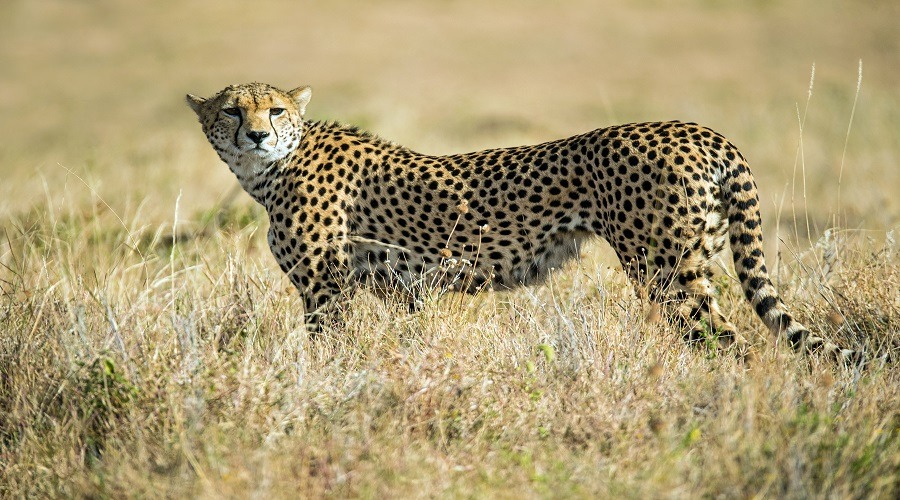
Central Serengeti is particularly well known for wildlife throughout much of the year.
Safari drives may offer opportunities to search for animals such as:
Wildlife encounters are always natural and cannot be guaranteed.
The Great Wildebeest Migration moves through different parts of the Serengeti ecosystem during the year.
Because wildlife movements depend heavily on rainfall and grazing conditions, there is no single fixed location where the migration remains throughout the year.
Central Serengeti can nevertheless be an excellent safari area because it supports substantial resident wildlife in addition to seasonal migratory activity.
Travelers whose main objective is to see a particular stage of the migration should choose their Serengeti region according to their travel month rather than choosing accommodation solely by camp name.
Game drives are the main activity for guests staying at Serengeti Heritage Camp.
Safari vehicles explore the plains, river valleys, kopjes and other habitats in search of wildlife.
Early mornings and late afternoons can be particularly rewarding because temperatures are cooler and many species are active.
The Serengeti offers excellent opportunities for photography, ranging from landscapes and sunsets to predators, elephants, giraffes and large herds.
Guests interested in photography can request a safari itinerary allowing additional time at sightings.
Serengeti National Park supports a wide variety of birdlife.
Birders may encounter raptors, vultures, storks, bustards, hornbills, rollers, weavers and numerous other species depending on habitat and season.
Depending on the safari arrangement and park regulations, a sundowner may sometimes be organized as part of the safari experience.
This gives travelers an opportunity to enjoy the evening landscape as the sun sets over the Serengeti.
A safari day normally begins early.
Guests may wake before sunrise, enjoy tea or coffee and prepare for an early game drive.
The cooler morning hours can provide excellent wildlife viewing.
After several hours in the park, guests may return to camp for breakfast or lunch and relax during the warmer middle part of the day.
An afternoon game drive can then explore another section of Central Serengeti.
After sunset, guests return to camp for dinner and spend time relaxing in the communal area or around the campfire.
The exact schedule depends on the safari itinerary selected.
Serengeti Heritage Camp can be incorporated into safari itineraries during different months of the year.
A good period for combining Central Serengeti with the southern Serengeti and Ndutu ecosystem, where seasonal migration activity may be concentrated.
Traditionally part of Tanzania’s wetter period. Landscapes can become particularly green, and visitor numbers may be lower.
These are generally drier months and are popular for wildlife safaris.
Short seasonal rains can refresh the landscape while wildlife viewing continues across the Serengeti.
Because weather and animal movement vary from year to year, travelers should plan around the safari experience they most want to see.
The combination of private tented accommodation, wilderness scenery, sunsets and safari activities can make Serengeti Heritage Camp suitable for couples.
It may be incorporated into:
Tanzania honeymoon safaris
Anniversary safaris
Private Serengeti safaris
Safari and Zanzibar honeymoon packages
A popular itinerary style is to combine several nights in Serengeti with a beach stay in Zanzibar.
Families can also consider Serengeti Heritage Camp, particularly when suitable tent configurations are available.
For family safaris, important information to confirm before booking includes:
Children’s age policy
Room or tent configuration
Extra beds
Meal requirements
Safari vehicle arrangement
Park-fee rules for children
A private safari vehicle is often useful for families because the daily schedule can be adjusted more easily.
There are two main ways travelers typically reach Central Serengeti.
A road safari from Arusha allows visitors to travel through Tanzania’s northern safari circuit.
A common route is:
Arusha → Lake Manyara/Tarangire → Ngorongoro → Serengeti
This option is excellent for travelers undertaking a multi-day northern Tanzania safari.
Scheduled light aircraft operate between Arusha and Serengeti airstrips.
The camp identifies Seronera Airstrip as its nearest safari airstrip. Serengeti Heritage Camp
A fly-in option can reduce travel time and works particularly well when combining Serengeti with Zanzibar.
Enjore Safaris can include Serengeti Heritage Camp within different Tanzania safari itineraries.
Suggested packages include:
A short safari focused primarily on wildlife viewing in Serengeti National Park.
Combine Serengeti wildlife viewing with a game drive in the Ngorongoro Crater.
Combine Tarangire, Serengeti and Ngorongoro.
A slower itinerary allowing additional time for wildlife viewing.
Ideal for travelers looking for a more complete northern circuit experience.
Combine wildlife viewing with a beach holiday on Zanzibar.
The camp can be a good accommodation option for:
Couples
Families
Solo safari travelers
Wildlife photographers
Honeymoon travelers
First-time Tanzania visitors
Private safari travelers
Great Migration travelers
Small safari groups
Its main attraction is the opportunity to stay within the Serengeti wilderness while retaining comfortable tented accommodation.
Useful safari items include:
Avoid packing unnecessarily heavy luggage, particularly when using domestic safari flights, because small aircraft may apply strict baggage limits.
Excellent Serengeti Location
Stay within one of Africa’s best-known wildlife ecosystems.
Tented Safari Experience
Enjoy the atmosphere of traditional safari camping with private facilities.
Central Serengeti Access
The location provides access to the Seronera region and surrounding wildlife areas. Serengeti Heritage Camp
Wildlife Viewing
Central Serengeti supports wildlife viewing throughout much of the year.
Different Tent Configurations
Single, double and triple accommodation configurations are reported by the camp. Serengeti Heritage Camp
Easy Safari Combination
The camp can be incorporated into itineraries including Ngorongoro, Tarangire and Zanzibar.
Accommodation rates at Serengeti Heritage Camp can vary according to:
Travel season
Room configuration
Number of guests
Meal plan
Length of stay
Park and statutory fees
Tour operator package
The referenced Monkey Adventures listing currently displays a Double Room – Full Board at USD 158 per person for one night, but accommodation pricing can change and should therefore be confirmed for the actual travel dates before publishing it as a fixed rate. dev2.monkey.travel
For the Enjore Safaris page, I recommend displaying:
Price: On Request
or:
Request Current Serengeti Heritage Camp Rates
instead of hard-coding an accommodation price that may later change.
Serengeti Heritage Camp is located inside Serengeti National Park in northern Tanzania, with access to the Central Serengeti and Seronera wildlife area. Serengeti Heritage Camp
Yes. The camp describes itself as being located within Serengeti National Park. Serengeti Heritage Camp
Yes. Its luxury safari tents are described as having en-suite bathroom facilities. Serengeti Heritage Camp
The camp reports single, double and triple tent configurations. Availability should be checked for the chosen travel dates. Serengeti Heritage Camp
It can be included in private and honeymoon safari itineraries, especially when combined with Ngorongoro or Zanzibar.
Seronera Airstrip is identified as the nearest safari airstrip. Serengeti Heritage Camp
Yes. Travelers can complete their Serengeti safari and then fly onward for a Zanzibar beach holiday.
Migration viewing depends on the month, rainfall and location of the herds. Central Serengeti may experience seasonal migration activity, but a specific sighting cannot be guaranteed.
The camp reports solar-powered lighting and charging facilities. Serengeti Heritage Camp
Some accommodation information reports Wi-Fi in communal areas, but internet connectivity can be limited in remote parts of Serengeti National Park. primalandsafaris.com
Make Serengeti Heritage Camp part of your Tanzania safari with Enjore Safaris.
Whether you are planning a short Serengeti safari, a complete northern Tanzania wildlife tour, a honeymoon, a photographic safari or a Serengeti and Zanzibar holiday, your itinerary can be customized around your travel dates, preferred accommodation level and safari interests.
Tanzania is a year-round safari destination with many adventures being offered all over the country. For optimal wildlife sightings, the dry season from June to October is your best bet! Read more on when to visit Tanzania
Both have their perks with Big Five national parks, the incredible Great Migration and that quintessential African experience we all dream of. Check out our article on Serengeti vs Masai Mara to help you decide.
They both have such different safari experiences! Tanzania offers Big Five game reserves on classic dusty desert plains, rather South Africa partners the Big Five animals with luscious winelands. Both are just as good, but it depends on your safari style.
That’s a tough one! Botswana is home to herds of elephants at Chobe and the sparkling Okavango Delta, and Tanzania has the iconic Mount Kilimanjaro and Great Migration. Check out our article on Botswana vs Tanzania safaris to help you decide.
Tanzania is in general a safe, hassle-free country. However, like most places, you do need to take precautions and listen to your tour guide. It also pays to read our articles on ‘Things to know before going to Tanzania’.
A camera and binoculars are a must. You’ll regret it if you don’t take them! As for clothing, definitely pack lightweight, breathable clothing. Remember, Tanzania is an arid country so the days can get quite hot. Read more on what to pack for a safari in Tanzania in our travel magazine
EXPERIENCES
BEST TOURS
copyright©2026 . Enjore Safaris