
The 3-Days Discover Queen Elizabeth National Park 2026-2027 is a compact western Uganda safari combining classic savannah game drives, the wildlife-rich Kazinga Channel, crater landscapes, elephants, buffalo, hippos, lions, leopards and more than 600 recorded bird species.
For travelers with only three days, Queen Elizabeth National Park works especially well because several very different ecosystems occur within the same protected landscape. Instead of spending the entire journey transferring between distant national parks, visitors can experience open savannah, crater country, lakes, wetlands, woodland and riverine habitats from one main safari base.
Kampala/Entebbe → Fort Portal/Kasese Region → Queen Elizabeth National Park → Kasenyi Plains → Kazinga Channel → Crater Landscapes → Morning Wildlife Safari → Kampala/Entebbe
The experience progresses through:
Ugandan countryside → Rift Valley landscapes → elephants and buffalo → lions and Uganda kob → Kazinga Channel hippos → wetland birds → crater scenery → final morning wildlife → Kampala/Entebbe.
Queen Elizabeth National Park covers approximately 1,978 km² and Uganda Wildlife Authority currently records more than 95 mammal species and over 600 bird species. Its landscapes include savannah, woodland, wetlands, lakes and forest environments beneath the wider backdrop of western Uganda and the Rwenzori region. Uganda Wildlife Authority
Three days is enough for a meaningful Queen Elizabeth safari because the park offers several major wildlife experiences without requiring visitors to change national parks every morning.
The Kasenyi Plains and surrounding savannah provide classic vehicle-based wildlife viewing. Elephants, buffalo, Uganda kob, waterbuck and predators can be encountered across the wider ecosystem.
The Kazinga Channel changes the safari completely. This approximately 40-kilometre waterway connects Lake George and Lake Edward and attracts hippos, crocodiles, elephants, buffalo and large numbers of waterbirds. Uganda Wildlife Authority
Crater landscapes add another visual dimension, while the more distant Ishasha sector is internationally famous for its tree-climbing lions.
The result is a three-day journey that feels much larger than its duration because each environment provides a different wildlife perspective.
Queen Elizabeth National Park was originally established as Kazinga National Park in 1952 and received its current name in 1954. Today it remains one of Uganda’s best-known wildlife destinations. UWA describes it as supporting over 95 mammal species, more than 600 bird species and a broad mixture of savannah, humid forest, lakes and wetlands. Uganda Wildlife Authority
Its biodiversity is partly explained by geography.
Open grasslands provide habitat for Uganda kob and other grazing animals. Woodland and bush support elephants, buffalo and predators. Lakes and wetlands support hippos, crocodiles and large bird communities. Forested areas introduce primates and additional birdlife.
This means a Queen Elizabeth safari should never be treated simply as a search for lions.
The complete experience is about the relationship between:
savannah wildlife + lakes + wetlands + predators + birds + Rift Valley scenery.
Your 3-Days Discover Queen Elizabeth National Park 2026-2027 begins in Kampala or Entebbe after breakfast or from another agreed collection point.
Meet your professional Uganda safari driver-guide and travel west toward Queen Elizabeth National Park.
Uganda Wildlife Authority places the park approximately 410 kilometres west of Kampala and notes that a direct road journey commonly requires at least seven to eight hours depending on traffic, stops and road conditions. Scheduled or charter flights can also connect the Entebbe/Kampala area with airstrips around Kasese, Mweya or Kihihi. Uganda Wildlife Authority
Because the road journey is substantial, Day 1 should remain realistic.
Rather than trying to add several major activities after a long transfer, the route can be treated as an introduction to western Uganda.
The scenery changes gradually as the more densely populated central region gives way to greener countryside and the western Rift Valley landscape.
As you approach the Queen Elizabeth area, broad plains, volcanic features and distant mountain scenery begin giving the journey a much stronger safari character.
Depending on arrival time and accommodation location, the late afternoon can include a short introductory wildlife drive.
Possible sightings may include elephants, buffalo, Uganda kob, waterbuck, warthogs and baboons.
Lions and leopards occur within the park but should never be expected automatically during the first drive.
UWA lists elephants, buffalo, hippos and Uganda kob among Queen Elizabeth’s notable large mammals, while lions, leopards, spotted hyenas and side-striped jackals form part of its predator community. Uganda Wildlife Authority
The first evening is also a good opportunity to simply appreciate the landscape.
The park sits within a remarkable western Uganda setting where savannah, lakes and crater country meet beneath the broader Rwenzori landscape.
Continue toward your selected lodge or tented camp, enjoy dinner and prepare for the main safari day.
Main Experience: Kampala or Entebbe departure, western Uganda landscapes, Queen Elizabeth arrival and introductory wildlife viewing.
Wake early for the most important wildlife day of the safari.
The morning is dedicated to a game drive through suitable areas of Queen Elizabeth National Park, commonly including the Kasenyi Plains and surrounding savannah.
Early conditions can be particularly rewarding because temperatures are generally cooler and wildlife may be more active.
Uganda kob are among the characteristic animals of the open plains.
Buffalo may appear in groups across grassland and wetter areas.
Elephants move between feeding habitats.
Waterbuck, warthogs and other herbivores contribute to the wider safari experience.
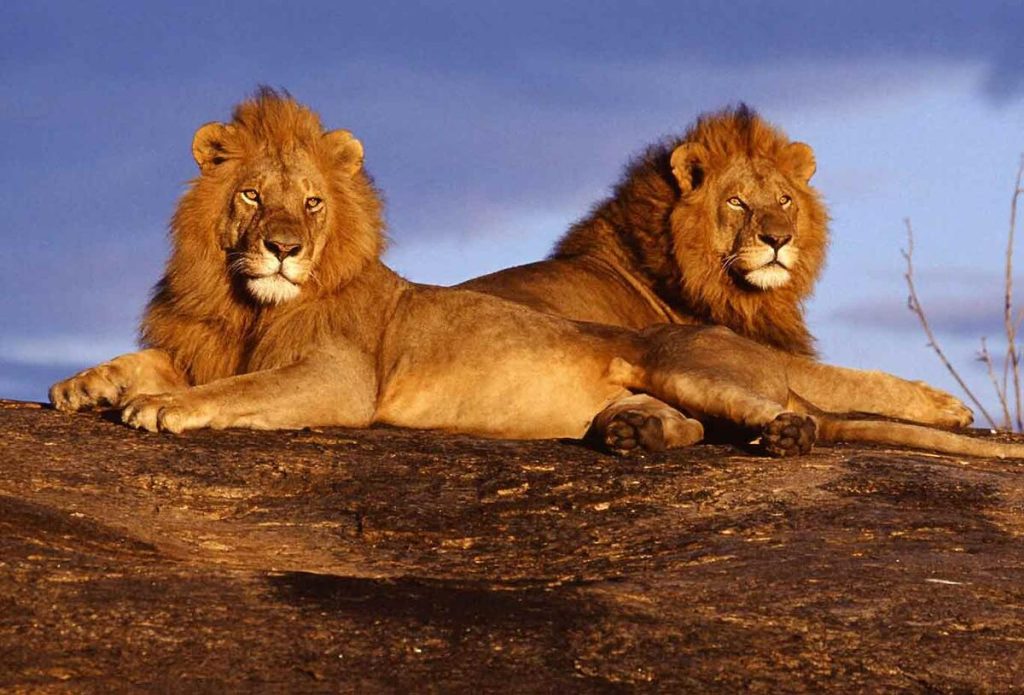
Lions are among the principal predator possibilities.
Queen Elizabeth National Park supports an important lion population, although animals may remain hidden within grass or bush for long periods.
A sighting may involve resting pride members, solitary individuals or lions observing concentrations of prey.
Every encounter is different.
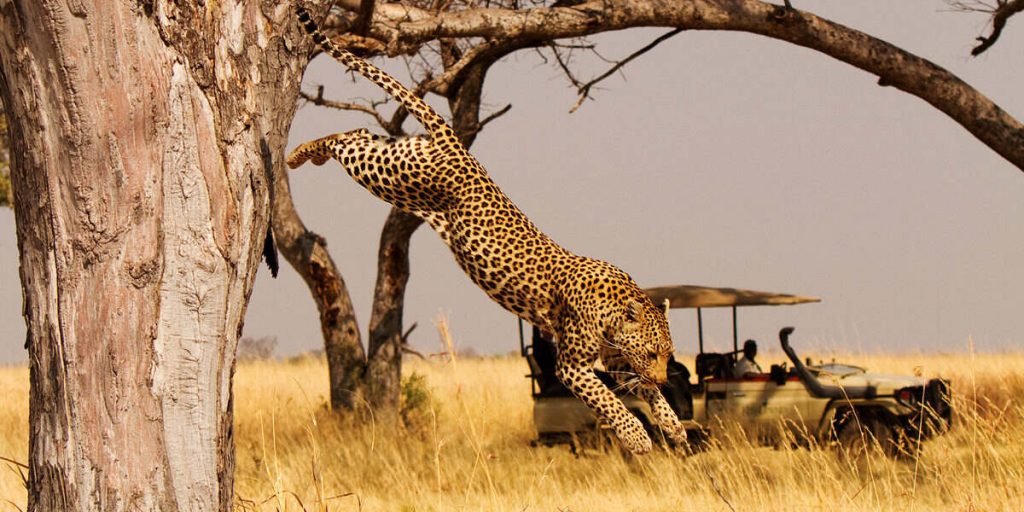
Leopards also occur but are considerably more secretive.
Their ability to use dense vegetation means that even a productive game drive can easily finish without one being seen.
Spotted hyenas add another predator to the ecosystem.
The strongest game drive should remain flexible.
If elephants are interacting naturally, there is no need to leave immediately simply to search for another famous animal.
If lions are visible at a comfortable distance, allow time to observe their behavior.
After the morning game drive, enjoy lunch and prepare for one of Queen Elizabeth National Park’s signature experiences: the Kazinga Channel boat safari.
The channel connects Lake George with Lake Edward and extends for approximately 40 kilometres. UWA highlights it as one of the park’s principal wildlife areas, particularly for hippos, crocodiles, elephants, buffalo and waterbirds. Uganda Wildlife Authority
From the boat, the safari perspective changes completely.
Instead of scanning distant grasslands, attention shifts toward the shoreline and water.
Hippos may surface close to established boat routes.
Nile crocodiles can sometimes be seen near banks.
Elephants and buffalo may approach water.
Waterbirds occupy reeds, mudflats, trees and shallow sections of the channel.
Fish eagles, pelicans, storks and other wetland birds can become major photographic subjects.
The Kazinga Channel is particularly valuable because animals often approach water voluntarily, allowing visitors to observe wildlife within an important ecological setting rather than simply following animals by vehicle.
All boat activities should follow the authorized operator’s instructions and appropriate wildlife-viewing procedures.
Later in the afternoon, return toward the lodge.
The combination of morning savannah and afternoon water safari makes Day 2 particularly varied:
lions and plains wildlife in the morning → hippos, crocodiles, elephants and birds along the Kazinga Channel in the afternoon.
Enjoy dinner and your second night.
Main Experience: Kasenyi Plains wildlife, lion and leopard possibilities, elephants, buffalo, Uganda kob, Kazinga Channel, hippos, crocodiles and waterbirds.
Wake early for one final experience inside Queen Elizabeth National Park.
The exact route can be adjusted according to accommodation location, road conditions and wildlife activity.
One option is a shorter morning game drive across productive savannah.
Another can incorporate suitable crater-viewing landscapes while beginning the journey out of the park.
The Katwe explosion-crater region forms one of Queen Elizabeth’s most distinctive geological features. UWA currently identifies the Katwe Explosion Craters as reaching around 1,350 metres above sea level, while the shores of Lake Edward mark some of the park’s lowest elevations. Uganda Wildlife Authority
The final morning provides another opportunity for elephants, buffalo, Uganda kob, waterbuck, warthogs and predators.
Wildlife can move substantially overnight, so an area that appeared quiet the previous afternoon may be productive in the morning.
Do not allow the last game drive to become a stressful attempt to complete a species checklist.
Queen Elizabeth is particularly rewarding because its wildlife occurs within such varied scenery.
A herd of buffalo beneath the Rift Valley sky can be just as memorable as a distant predator.
Elephants moving through woodland or Uganda kob grazing across the plains may provide the final major wildlife encounter of the trip.
After completing the morning experience, begin traveling back toward Kampala or Entebbe.
Because UWA places the normal road journey at roughly seven to eight hours under straightforward conditions, travelers with an international flight should allow a sensible time buffer rather than depending on an extremely tight same-day connection. Uganda Wildlife Authority
Arrive at your agreed final destination and complete your 3-Days Discover Queen Elizabeth National Park 2026-2027 safari.
Main Experience: Final morning game drive, crater and Rift Valley scenery, wildlife encounters and return to Kampala or Entebbe.
Queen Elizabeth’s wildlife diversity is one of its strongest advantages.
UWA currently records more than 95 mammal species. Large mammals include elephants, buffalo, hippos, Uganda kob and waterbuck, while predators include lions, leopards and spotted hyenas. Primates such as chimpanzees, black-and-white colobus, vervet monkeys and olive baboons occur within suitable habitats. Uganda Wildlife Authority
The park is often associated with major African wildlife, but expectations should remain accurate.
Queen Elizabeth is not currently a traditional full Big Five safari park. Lions, leopards, elephants and buffalo occur, but rhino is not part of UWA’s current Queen Elizabeth wildlife listing; Uganda’s recent rhino-restoration work has focused on other protected areas such as Ajai and Kidepo. Uganda Wildlife Authority
That does not reduce the park’s wildlife value.
Its real strength is the combination of predators, large herbivores, hippos, wetlands, primates and exceptional bird diversity within one relatively compact landscape.
The Kazinga Channel deserves to be treated as more than an optional extra.
UWA describes the approximately 40-kilometre channel linking Lake George and Lake Edward as one of the park’s most important wildlife features. Hippos, crocodiles, elephants, buffalo and numerous birds use the surrounding water system. Uganda Wildlife Authority
For photographers, the channel provides opportunities unavailable during a normal game drive.
Wildlife can be viewed against water instead of grassland.
Hippos may be seen in groups.
Elephants drinking or feeding near shore create strong environmental images.
Buffalo may gather near the water.
Birdlife can be extraordinarily active.
The experience also demonstrates why Queen Elizabeth has such high biodiversity.
Savannah species, aquatic animals and wetland birds all depend on different parts of the same ecosystem.
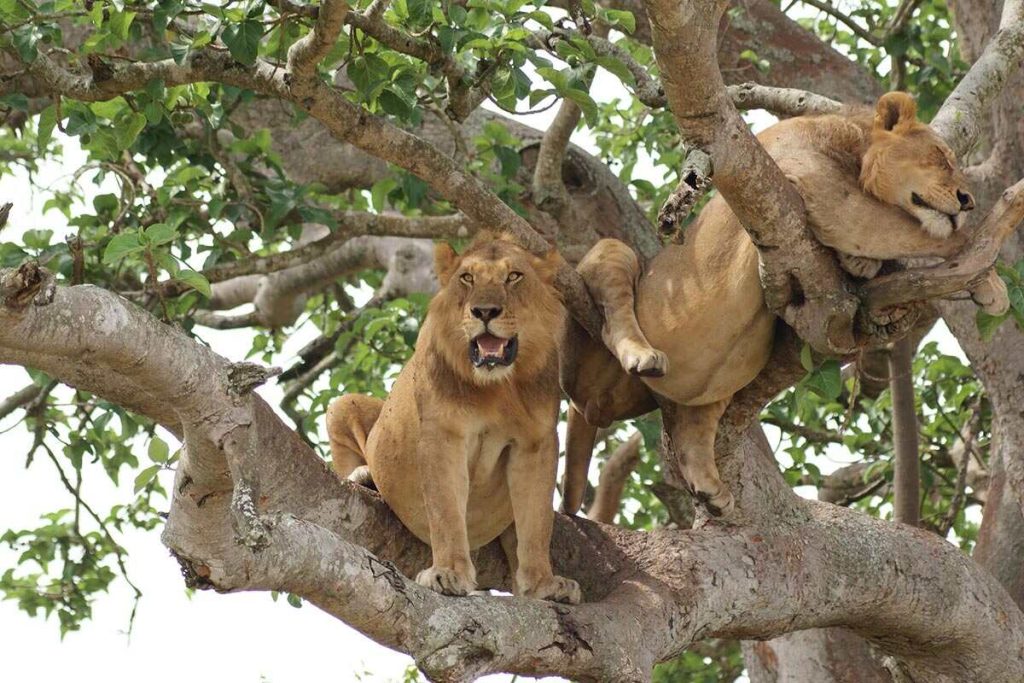
The Ishasha sector in southern Queen Elizabeth National Park is internationally famous for tree-climbing lions.
UWA describes these lions as using fig trees and identifies the unusual behavior as one of the park’s signature tourism attractions. Uganda Wildlife Authority
However, travelers planning for 2026-2027 should also understand the current conservation reality.
In September 2026, UWA and the Wildlife Conservation Society launched a new collaborative conservation program for Ishasha after reporting a serious decline in the local lion population. UWA stated that only three known adult lions remained in the Ishasha sector at that time, making population recovery an urgent conservation priority. Uganda Wildlife Authority
For this reason, an Ishasha visit should never be sold with guaranteed tree-climbing-lion sightings.
The behavior remains iconic, but conservation and realistic expectations must come before marketing promises.
A standard three-day Kampala–Queen Elizabeth itinerary may also be too short to include extensive Ishasha exploration without sacrificing Kasenyi or Kazinga Channel time. Travelers specifically interested in Ishasha should consider adding another day.
Queen Elizabeth is one of Uganda’s outstanding birding destinations.
UWA currently records more than 600 bird species, an extraordinary total for a park of approximately 1,978 km². Uganda Wildlife Authority
The high diversity comes from the park’s mixture of habitats.
Wetlands and the Kazinga Channel support waterbirds.
Savannah supports grassland species.
Woodland adds another bird community.
Forest environments introduce still more species.
UWA highlights birds including African fish eagles, flamingos, pelicans and papyrus-associated species within the wider park ecosystem. Uganda Wildlife Authority
Even travelers who are not dedicated birdwatchers will encounter birds throughout the safari.
This is one reason the Kazinga Channel is so valuable: wildlife and birding occur together rather than as separate activities.
Queen Elizabeth can be visited throughout the year.
Different seasons simply change the appearance and wildlife-viewing conditions.
The generally drier periods can provide easier game-drive conditions and more open vegetation in some areas. Animals may also concentrate more strongly around dependable water.
Wetter periods transform the landscape into a greener environment.
Birdlife can be excellent, cloud formations create dramatic photography and the overall park can feel particularly lush.
Because Queen Elizabeth contains permanent lakes, wetlands and major waterways, water-dependent wildlife remains an important feature throughout the year.
Travelers planning 2026-2027 should consider their wider Uganda itinerary as well.
If Queen Elizabeth is being combined with Kibale, Bwindi or another region, weather and road conditions across the whole route matter more than choosing a month based only on one park.
Queen Elizabeth offers several styles of accommodation in and around the park.
Travelers can choose practical budget lodges, comfortable mid-range safari properties or higher-end lodges with stronger views, locations and service.
For a three-day itinerary, location matters more than unnecessary luxury.
A lodge positioned conveniently for Kasenyi Plains and the Kazinga Channel can protect valuable game-viewing time.
A cheaper property located far outside the main wildlife area may require additional driving every morning and evening.
Private safaris provide the greatest flexibility.
A private vehicle can remain longer at interesting wildlife encounters and adapt game-drive pacing around the travelers.
Group arrangements can reduce the per-person cost but usually provide less flexibility because several guests share the same schedule.
There is no single universal price for a three-day Queen Elizabeth safari.
The final cost depends on the number of travelers, accommodation level, private or shared transport, road or fly-in travel, meals, vehicle arrangements and optional activities such as the Kazinga Channel cruise.
UWA’s current Queen Elizabeth park page still displays an international adult entrance rate of US$40, but UWA’s official rates page also links a separate 2026-2027 tariff-change notice. Because tariffs can change by date and visitor category, a 2026 or 2027 package should be calculated using the rate valid for the exact travel dates rather than treating an older webpage figure as permanent. Uganda Wildlife Authority
A complete safari price is much more than park entrance.
It normally reflects transportation from Kampala or Entebbe, safari vehicle, professional guide, fuel, accommodation, meals, park charges and selected activities.
A fly-in safari usually costs more but reduces transfer time.
A road safari can provide better value and a fuller view of western Uganda.
Queen Elizabeth offers unusually varied photography within one park.
The Kasenyi Plains provide classic savannah subjects such as lions, Uganda kob, elephants and buffalo.
The Kazinga Channel creates a completely different style with hippos, crocodiles, waterbirds and animals near the shoreline.
Crater country adds broad landscape photography.
The Rwenzori backdrop can add still more atmosphere when weather conditions allow.
Wide environmental photographs are often particularly effective.
An elephant beside the Kazinga Channel or buffalo beneath the western Uganda sky tells a stronger destination story than a tightly cropped portrait alone.
Responsible viewing remains essential.
Wildlife should be given enough space to move naturally.
Vehicles should follow park rules and authorized routes.
Predators should not be surrounded or pressured for photographs.
Elephants and buffalo should never be blocked from moving toward water or feeding areas.
The best safari photograph is one obtained without changing the animal’s behavior.
Queen Elizabeth fits particularly well into a longer western Uganda safari.
One of the strongest extensions is Kibale National Park, allowing travelers to combine savannah wildlife with chimpanzee tracking.
A longer journey can follow:
Kampala/Entebbe → Kibale → Queen Elizabeth → Kampala/Entebbe.
Another popular extension is toward Bwindi Impenetrable National Park, creating a broader itinerary combining Queen Elizabeth’s savannah and water-based wildlife with Uganda’s mountain-forest environment.
Travelers interested in Ishasha can also use a longer route through southern Queen Elizabeth before continuing toward the Bwindi region.
The key planning principle is simple:
add days when adding distant destinations.
Trying to include Kibale, Queen Elizabeth and Bwindi fully within only three days would result in too much transfer time and too little wildlife experience.
Is three days enough for Queen Elizabeth National Park? Yes. Three days works well for a focused itinerary with a transfer day, a full wildlife day combining a game drive and Kazinga Channel experience, and a final morning safari before returning to Kampala or Entebbe.
How large is Queen Elizabeth National Park? Uganda Wildlife Authority currently lists the park at approximately 1,978 km². Uganda Wildlife Authority
How many mammal species live in Queen Elizabeth National Park? UWA records more than 95 mammal species. Uganda Wildlife Authority
How many bird species are found in the park? UWA currently records more than 600 bird species. Uganda Wildlife Authority
Can I see lions? Yes. Lions occur in Queen Elizabeth, but individual sightings are never guaranteed.
Does Queen Elizabeth have tree-climbing lions? The Ishasha sector is famous for them, although the population is currently under serious conservation pressure and sightings should never be guaranteed. Uganda Wildlife Authority
Can I see elephants and buffalo? Yes. Both are characteristic large mammals within the park and are commonly associated with the savannah and Kazinga Channel environments. Uganda Wildlife Authority
Is Queen Elizabeth a Big Five park? Not currently in the traditional sense. Lions, leopards, elephants and buffalo occur, but rhino is not part of UWA’s current Queen Elizabeth wildlife listing. Uganda Wildlife Authority
What is special about the Kazinga Channel? It is an approximately 40-kilometre natural waterway connecting Lake George and Lake Edward and is particularly rich in hippos, crocodiles, elephants, buffalo and waterbirds. Uganda Wildlife Authority
Can the safari start from Entebbe or Kampala? Yes. Both are common starting points. UWA places Queen Elizabeth roughly 410 km west of Kampala and estimates a direct road journey at approximately seven to eight hours. Uganda Wildlife Authority
Can I fly instead of driving? Yes. UWA notes scheduled and charter options serving airstrips including Kasese, Mweya and Kihihi. Uganda Wildlife Authority
Can Queen Elizabeth be combined with Kibale or Bwindi? Yes. Both are excellent additions when enough extra days are available.
The itinerary succeeds because it concentrates on one highly diverse national park rather than spending three days racing between several destinations.
Day 1 becomes:
Kampala/Entebbe → western Uganda → Queen Elizabeth → first wildlife → safari lodge.
Day 2 becomes:
Kasenyi Plains → elephants → buffalo → Uganda kob → lion and leopard possibilities → Kazinga Channel → hippos → crocodiles → birds.
Day 3 becomes:
Final morning wildlife → crater and Rift Valley scenery → Kampala/Entebbe.
Within only three days, travelers experience savannah, lakes, wetlands, predators, large mammals, remarkable birdlife and volcanic landscapes.
The 3-Days Discover Queen Elizabeth National Park 2026-2027 begins in Kampala or Entebbe and travels west into Uganda’s spectacular Rift Valley landscapes.
Enter the savannah and search for elephants, buffalo, Uganda kob and predators.
Spend the main wildlife day exploring the plains before changing perspective completely on the Kazinga Channel, where hippos fill the water, crocodiles use the shoreline and elephants or buffalo may approach the banks.
Wake for one final morning surrounded by western Uganda’s wildlife and crater landscapes before returning toward Kampala or Entebbe.
The complete journey follows:
Kampala/Entebbe → Queen Elizabeth National Park → Kasenyi Plains → Kazinga Channel → Crater Landscapes → Morning Game Drive → Kampala/Entebbe
The final quotation should be calculated according to the exact travel dates, number of travelers, accommodation category, private or shared safari preference, road or fly-in arrangement and official UWA tariffs valid for those dates.
The three-day tour can remain focused entirely on Queen Elizabeth National Park or expand with additional time for Kibale National Park, Bwindi Impenetrable National Park, Ishasha or a broader western Uganda safari.
Experience elephants, buffalo, lions, leopard possibilities, hippos, crocodiles, Uganda kob and more than 600 bird species across the Kasenyi Plains, Kazinga Channel and remarkable Rift Valley landscapes of Queen Elizabeth National Park on a focused three-day Uganda wildlife journey.
No results available
ResetNo results available
ResetTanzania is a year-round safari destination with many adventures being offered all over the country. For optimal wildlife sightings, the dry season from June to October is your best bet! Read more on when to visit Tanzania
Both have their perks with Big Five national parks, the incredible Great Migration and that quintessential African experience we all dream of. Check out our article on Serengeti vs Masai Mara to help you decide.
They both have such different safari experiences! Tanzania offers Big Five game reserves on classic dusty desert plains, rather South Africa partners the Big Five animals with luscious winelands. Both are just as good, but it depends on your safari style.
That’s a tough one! Botswana is home to herds of elephants at Chobe and the sparkling Okavango Delta, and Tanzania has the iconic Mount Kilimanjaro and Great Migration. Check out our article on Botswana vs Tanzania safaris to help you decide.
Tanzania is in general a safe, hassle-free country. However, like most places, you do need to take precautions and listen to your tour guide. It also pays to read our articles on ‘Things to know before going to Tanzania’.
A camera and binoculars are a must. You’ll regret it if you don’t take them! As for clothing, definitely pack lightweight, breathable clothing. Remember, Tanzania is an arid country so the days can get quite hot. Read more on what to pack for a safari in Tanzania in our travel magazine
EXPERIENCES
BEST TOURS
copyright©2026 . Enjore Safaris