
The 11-Day Northern Namibia Self-Drive Adventure is designed for travelers who want to experience Namibia with greater independence, moving through wildlife reserves, desert landscapes, ancient cultural sites and remote northwestern scenery at their own pace.
Rather than following a fixed guided safari schedule from morning to evening, this journey places the road itself at the centre of the experience.
You begin in Windhoek, collect your vehicle and prepare for a route that gradually moves north through the central highlands toward Waterberg Plateau Park before reaching Namibia’s flagship wildlife destination, Etosha National Park.
Several days are devoted to Etosha so the park is not treated as a brief stop. Its enormous salt pan, open plains and network of waterholes create one of southern Africa’s most distinctive wildlife landscapes. Namibia’s official tourism authority records more than 100 mammal species and over 400 bird species in the park. Visit Namibia
From Etosha, the journey turns west into Damaraland, where the landscapes become increasingly dry, rocky and dramatic.
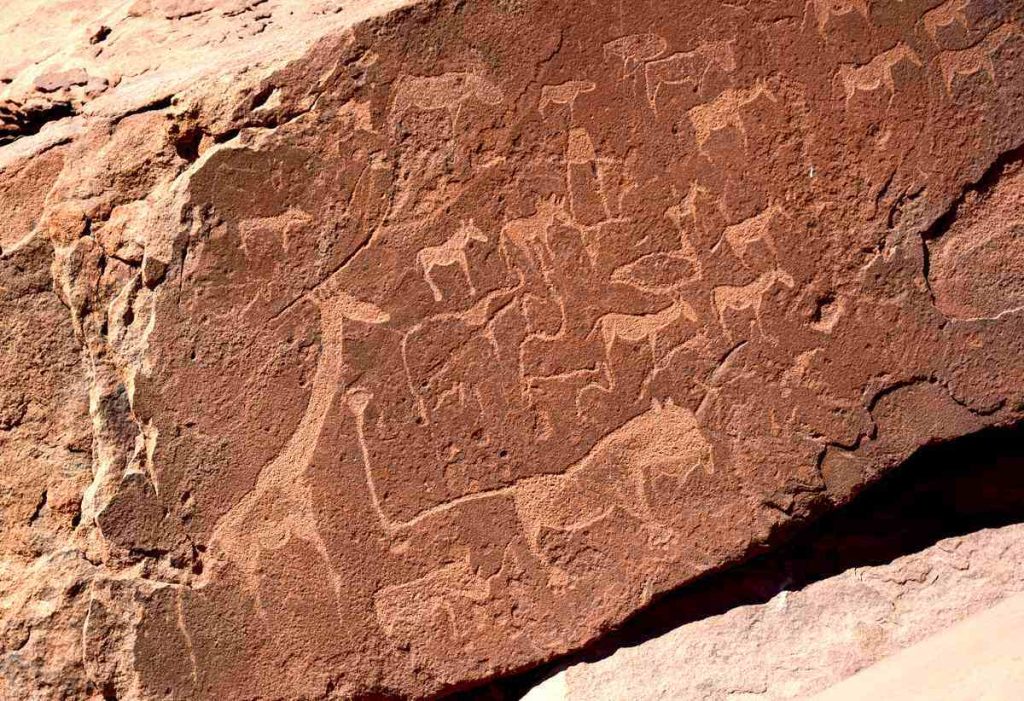
Here, the itinerary reaches Twyfelfontein or /Ui-//aes, Namibia’s first UNESCO World Heritage Site and one of Africa’s major concentrations of rock engravings. UNESCO describes the site as an extensive record of hunter-gatherer ritual practices extending over at least two millennia. UNESCO World Heritage Centre
The road then continues through Namibia’s extraordinary northwestern landscapes toward the Skeleton Coast, where desert terrain meets the cold Atlantic Ocean.
The final part of the journey reaches Swakopmund, providing time to slow down beside the coast before returning toward Windhoek.
The route therefore develops naturally:
Capital city → sandstone plateau → wildlife wilderness → ancient rock-art landscape → desert coast → Atlantic town → Windhoek.
That progression makes this more than a driving holiday.
It becomes a journey through the different landscapes that define northern and northwestern Namibia.
Namibia is particularly well suited to road travel because the distances between destinations reveal as much about the country as the attractions themselves.
Namibia’s official tourism authority describes the country as well suited to self-driving, with a broad road network connecting its tourism regions. It also notes that much of the country’s road network is gravel, so travel times need to be planned realistically rather than judged purely by distance. Visit Namibia
This itinerary therefore avoids treating driving simply as transportation between hotels.
A self-drive itinerary provides more freedom over the rhythm of the trip.
You can stop at viewpoints, spend longer photographing landscapes and take breaks according to the pace of your own journey.
Within national parks and protected areas, that independence must still operate within local rules, gate hours and designated roads.
Etosha is one of the central reasons for choosing northern Namibia.
Instead of allocating only one night, the itinerary moves through different parts of the park over several days.
That allows you to experience the landscape at different times of day and spend longer around productive waterholes.
After the wildlife focus of Etosha, Damaraland changes the character of the journey.
Rocky mountains, dry river systems, cultural heritage and ancient engraving sites replace the broad wildlife plains.
Namibia Tourism describes Damaraland as a region of striking mountains and plains and identifies Twyfelfontein as one of its principal cultural attractions. Visit Namibia
The transition from the dry interior to the Skeleton Coast is one of the most dramatic changes in the itinerary.
Cold Atlantic air, fog, open desert and coastal landscapes create a completely different atmosphere from Etosha and Damaraland.
The journey then reaches Swakopmund, where travelers can rest before completing the loop back toward Windhoek.
The route is arranged as a progressive self-drive loop rather than repeatedly returning to the same area.
The journey follows:
Windhoek → Waterberg Plateau → Etosha National Park → Damaraland → Twyfelfontein → Skeleton Coast → Swakopmund → Windhoek
Each region introduces a different element of Namibia.
Windhoek provides the practical starting point of the journey.
It is the place to collect the rental vehicle, complete trip preparations and adjust to Namibia before beginning the longer road sections.
Waterberg introduces northern Namibia through a dramatic sandstone plateau rising above surrounding savanna.
The park combines geology, conservation history and wildlife.
Etosha forms the major wildlife section of the itinerary.
Its waterholes, dry plains and vast pan provide opportunities to observe elephants, giraffes, zebra, antelope, predators and extensive birdlife.
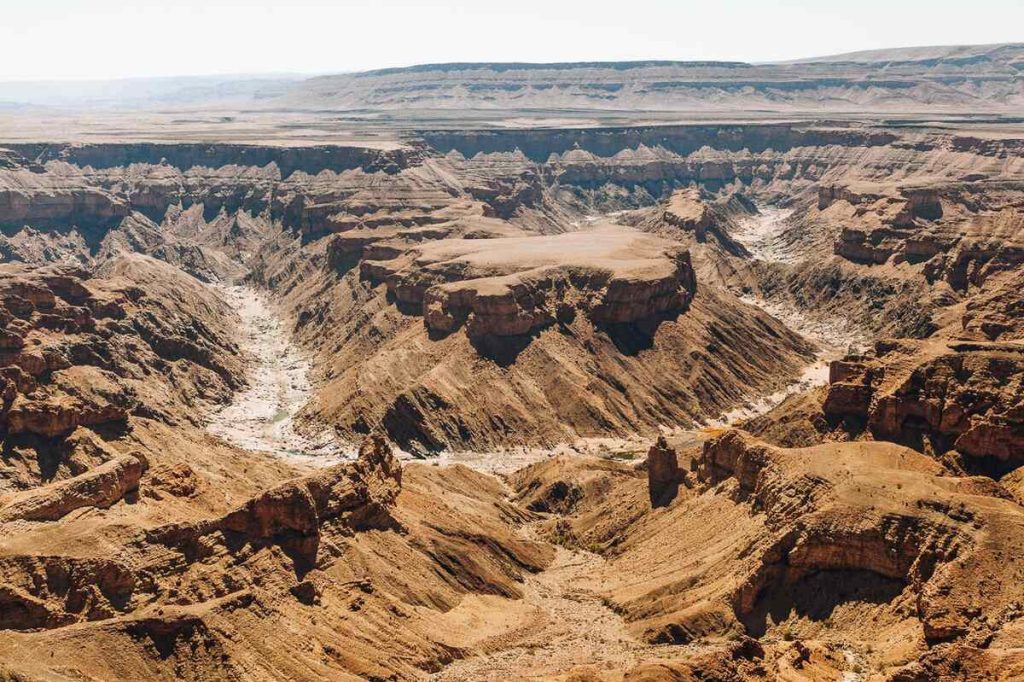
Damaraland shifts the experience away from classic safari plains toward rocky mountains, dry valleys and desert-adapted ecosystems.
Twyfelfontein adds an important human story through prehistoric engravings and archaeological evidence.
The Skeleton Coast introduces one of Namibia’s most unusual environments, where the Namib Desert reaches the Atlantic Ocean.
Swakopmund provides a slower coastal stage before the final return to Windhoek.
Welcome to Namibia.
Your self-drive journey begins in Windhoek, Namibia’s capital and the main starting point for many road trips through the country.
After arrival, collect your vehicle from the agreed rental location and complete the necessary rental orientation and documentation.
The first day should remain intentionally light.
A self-drive holiday becomes much easier when the opening day is used to settle in rather than immediately attempting a long-distance road journey.
Take time to organize luggage and prepare the items you will need regularly during the drive.
Depending on your arrival time, the afternoon can also provide an introduction to Windhoek.
The city’s combination of modern buildings, historical architecture, restaurants and commercial areas provides a useful contrast with the sparsely populated landscapes you will encounter later.
The evening is best kept relaxed before beginning the northern journey the following morning.
Overnight: Windhoek
Main Experience: Arrival and preparation for the self-drive journey
After breakfast, leave Windhoek and begin traveling north.
The city gradually disappears behind you as the road enters farming areas and increasingly open landscapes.
Your destination is Waterberg Plateau Park, southeast of Otjiwarongo.
The park is dominated by a distinctive sandstone plateau extending for approximately 50 kilometres.
Namibia Tourism describes Waterberg as a landscape of towering cliffs, permanent springs and savanna, as well as an important conservation area for rare wildlife species. Visit Namibia
Waterberg is valuable because it introduces several themes that will continue throughout the journey:
The park has played an important role in conservation and the management of rare wildlife species.
Black and white rhino, buffalo, roan, sable and other species occur within the broader protected landscape. Visit Namibia
Depending on your arrival time and chosen accommodation, spend the afternoon exploring the accessible areas around the plateau.
The first driving day is deliberately moderate so travelers can adapt to Namibia’s road conditions before moving farther north.
Overnight: Waterberg area
Main Experience: Sandstone landscapes, nature and northern Namibia introduction
After breakfast, continue north toward Etosha National Park.
Today marks the transition from scenic road travel into Namibia’s principal wildlife destination.
Etosha is one of the country’s most famous protected areas.
Its defining feature is the enormous Etosha Pan, a pale salt depression surrounded by grassland, woodland and waterholes.
Namibia Tourism records 114 large and small mammal species and more than 400 bird species in the park. Visit Namibia
Depending on the route and accommodation selected, enter Etosha through the appropriate gate and begin your first game drive.
Etosha is particularly well suited to patient wildlife observation.
Possible animals include:
Instead of trying to cover as much distance as possible, the first afternoon is better used to understand how wildlife viewing works in Etosha.
Waterholes often form natural focal points.
Some may appear quiet while others can suddenly become extremely active.
Arrive at your accommodation before the relevant park or camp access times require.
Overnight: Etosha eastern or central region
Main Experience: First self-drive wildlife safari
Begin early for your first complete day inside Etosha.
A self-drive safari provides independence, but the strongest experiences often come from slowing down.
Morning temperatures can be comfortable for wildlife activity.
Travel between selected waterholes and open areas while watching carefully for animals moving through the landscape.
Possible sightings may include:
Etosha’s open terrain can sometimes provide long views across the landscape.
Waterholes are central to the park’s wildlife experience, particularly during drier periods.
Rather than stopping for only a few minutes, allow time to observe how different animals use the same water source.
Elephants may arrive in groups.
Antelope may approach carefully.
Predators can appear unexpectedly.
Birds frequently occupy the edges of the same areas.
Namibia Tourism particularly highlights Etosha’s southern waterholes as productive locations for wildlife observation. Visit Namibia
Continue through another section of the park later in the day.
The quality of Etosha comes partly from unpredictability.
A road that appears empty in the morning may provide a major sighting in the afternoon.
Return to your accommodation with enough time to comply with local park requirements.
Overnight: Etosha National Park area
Main Experience: Full-day self-drive wildlife safari
Today the journey continues through Etosha rather than remaining entirely within one small section.
This allows you to experience changes in vegetation and wildlife habitat across the park.
The enormous pale surface of the pan dominates much of the region.
Its name is associated with the idea of a place where little vegetation grows.
The wider pan system reflects a much wetter geological past, while today the surrounding habitats support large concentrations of wildlife. Visit Namibia
Continue stopping at waterholes and viewpoints rather than treating the journey as a direct transfer.
Possible wildlife includes:
Etosha also has an important history of black-rhino conservation. Visit Namibia
Wildlife does not follow a timetable.
One day may produce excellent elephant sightings.
Another may provide predators or unusual birdlife.
Spending several days increases the opportunity to experience natural behavior without feeling pressured to find everything immediately.
Overnight: Etosha central or western region
Main Experience: Wildlife, Etosha Pan and cross-park exploration
After breakfast, leave Etosha and begin traveling west toward Damaraland.
This is one of the most important landscape transitions of the journey.
The environment gradually becomes drier and more rugged.
Open wildlife plains give way to rocky hills, mountains and broad arid valleys.
Namibia Tourism describes Damaraland as a distinctive region of rocky mountains and grass-covered plains and highlights both its cultural heritage and desert-adapted wildlife. Visit Namibia
Your destination is the wider Twyfelfontein area.
Do not treat this purely as a transfer day.
The attraction lies partly in observing the changing geography.
The landscape becomes increasingly spacious, and settlement density generally decreases.
Allow enough time for breaks and photography before reaching your accommodation.
Spend the remainder of the afternoon relaxing and preparing for the cultural exploration planned for the following morning.
Overnight: Twyfelfontein / Damaraland area
Main Experience: Scenic drive into northwestern Namibia
Today focuses on one of the most important cultural sites in Namibia.
Twyfelfontein or /Ui-//aes became Namibia’s first UNESCO World Heritage Site in 2007. Visit Namibia
The landscape contains one of Africa’s major concentrations of rock engravings.
Images include:
UNESCO describes the site as an extensive and high-quality record of ritual practices associated with hunter-gatherer communities over at least two millennia. UNESCO World Heritage Centre
Rather than viewing the engravings as isolated artwork, consider their relationship with water, seasonal movement and the wider landscape.
The significance of Twyfelfontein is not only in individual carvings.
The archaeological site reflects long-term interaction between people and an arid environment where reliable water sources were particularly important.
That relationship between people, ritual activity and landscape is one of the reasons UNESCO recognized the site.
Depending on timing and the final arrangement, the day can also introduce other geological and cultural attractions within the broader Twyfelfontein area.
The official Namibia self-drive route highlights attractions such as:
Return to your accommodation later in the day.
Overnight: Damaraland / Twyfelfontein area
Main Experience: Rock art, archaeology and desert landscape
After breakfast, continue west.
Today’s drive produces another dramatic environmental transition.
The rocky interior gradually gives way to the Namib Desert and Atlantic coast.
The Skeleton Coast is one of Namibia’s most recognizable landscapes.
Namibia Tourism describes Skeleton Coast Park as an environment of beaches, dunes, ephemeral rivers, rugged canyons and coastal fog influenced by the cold Benguela Current. Visit Namibia
The coast often feels very different from inland Namibia.
Expect:
This environmental contrast is precisely why the road from Damaraland to the coast is such an important part of the itinerary.
The coastal desert is fragile.
Namibia Tourism specifically warns that off-road driving can leave marks that remain visible for extremely long periods. Visit Namibia
Remain on permitted roads and follow local access regulations.
Continue south toward Swakopmund.
Arrive in the coastal town later in the day and enjoy a slower evening after several days of safari and remote road travel.
Overnight: Swakopmund
Main Experience: Skeleton Coast landscapes and Atlantic arrival
After many driving days, today deliberately reduces the pace.
Swakopmund is one of Namibia’s principal coastal tourism towns and provides a dramatic contrast with both Etosha and Damaraland.
Spend the day exploring according to your interests.
Walk through central Swakopmund and observe the town’s historical architecture and coastal character.
Cafés, shops and the seafront make this an easy place to take a break from long-distance driving.
One of the most remarkable things about Swakopmund is its location.
The Atlantic Ocean lies on one side while arid Namib landscapes extend inland.
That combination produces the cool, often misty conditions for which this section of the coast is known.
Depending on interest, locally operated activities can be added.
The important point is not to overfill the day.
A strong self-drive itinerary needs occasional slower days so travelers are not continuously packing and driving.
Overnight: Swakopmund
Main Experience: Coastal exploration and relaxation
After breakfast, leave the Atlantic coast and begin traveling back toward Namibia’s central interior.
Instead of making the entire return to Windhoek in one rushed stage, this itinerary uses the day to reconnect with the landscapes between the coast and the capital.
Depending on the final accommodation selection, the route can pass through the broader Erongo region or another practical overnight area.
The journey inland reveals another transition.
Coastal desert gives way gradually to:
This road section reinforces one of the main themes of the entire self-drive journey: Namibia’s landscapes change dramatically over relatively short geographic transitions.
Stop responsibly at designated viewpoints and safe public areas where appropriate.
Arrive at your overnight accommodation and enjoy the final evening outside Windhoek.
Overnight: Central Namibia / Erongo area
Main Experience: Scenic drive from coast to interior
Enjoy breakfast before completing the final drive toward Windhoek.
The last day provides time to reflect on how many different environments have been experienced during the journey.
Over eleven days, the route has moved through:
Return the rental vehicle according to the agreed arrangements and continue with your onward travel.
The road trip ends having provided much more than a sequence of destinations.
It offers an understanding of Namibia through movement across its landscapes.
Main Experience: Return to Windhoek and departure
The strongest self-drive itineraries have a reason behind the route.
This journey is structured around changes in landscape.
Waterberg introduces the traveler to Namibia beyond Windhoek.
Its elevated sandstone landscape provides a geographical and ecological transition toward northern Namibia.
Etosha forms the central wildlife chapter.
Several days allow travelers to observe how wildlife responds to water, habitat and changing conditions.
Damaraland changes the focus.
Wildlife remains part of the environment, but geology, cultural history and remoteness become equally important.
Twyfelfontein places people within the environmental story.
The engravings demonstrate that Namibia’s arid landscapes have supported human communities and cultural practices for thousands of years. UNESCO World Heritage Centre
The coast completes the sequence with one of the most dramatic environmental contrasts in southern Africa.
Although the trip includes several landscapes, Etosha National Park provides the most concentrated wildlife experience.
Possible sightings include:
Wildlife remains completely natural, and individual sightings cannot be guaranteed.
Damaraland also supports wildlife adapted to arid conditions.
Namibia Tourism identifies desert-adapted elephants, rhinos and lions among the animals associated with the wider northwestern landscape. Visit Namibia
These animals range over very large areas and should not be expected like wildlife around Etosha’s concentrated waterholes.
Namibia’s geography makes road travel an important part of the tourism experience.
The country’s official tourism authority specifically recommends exploring by car and notes that paved arterial roads connect major areas, while gravel roads dominate much of the wider road network. Visit Namibia
Self-driving works particularly well for travelers who appreciate independence.
You decide when to take normal breaks and how much time to spend at permitted viewpoints and attractions.
Some of Namibia’s strongest travel memories occur between major destinations rather than only after arrival.
Within Etosha, self-driving allows travelers to spend longer at a waterhole when wildlife activity is interesting.
A road trip makes geographic changes easier to understand because you experience the transition directly.
Self-drive travel requires more planning than a guided tour.
The aim should always be a relaxed itinerary rather than trying to cover excessive distances.
Namibia Tourism notes that gravel-road travel takes longer than equivalent distances on paved roads. Visit Namibia
The itinerary therefore avoids placing too many major destinations into one day.
Local speed limits, road signs, protected-area rules and gate times should always take priority over an itinerary.
NWR states that national park gates generally operate between sunrise and sunset, subject to specific park arrangements. NWR
Long rural stages should be planned with sufficient daylight.
This provides more time for normal travel disruptions while reducing unnecessary pressure to reach the next accommodation late.
Remote areas have fewer services than Windhoek and larger towns.
The route should therefore be planned around normal fuel, food and accommodation stops before beginning remote sections.
The correct vehicle depends on the final route.
For the principal roads connecting Windhoek, Waterberg, Etosha and many major tourism areas, travelers use different vehicle categories.
However, much of Namibia’s network away from major highways is gravel.
Namibia Tourism notes that travelers intending to explore more remote or rougher routes may benefit from the additional ground clearance and capability of an appropriate 4×4. Visit Namibia
The vehicle should be selected according to:
The rental company’s current route advice should be followed because road conditions can change.
Namibia can be explored during different seasons, but conditions change significantly through the year.
These months are particularly popular for northern Namibia wildlife travel.
Namibia Tourism identifies May through October as a strong period for Etosha game viewing, when cooler and drier conditions encourage animals to use waterholes more frequently. Visit Namibia
This period is attractive for:
Morning temperatures can be cool, so layered clothing is useful.
The warmer months bring seasonal rains to parts of northern Namibia.
Landscapes may become greener and birdlife can be excellent.
Etosha’s wet season can also attract flamingos and other waterbirds when conditions are suitable around parts of the pan. Visit Namibia
Rain can also influence gravel-road conditions, so route planning should remain flexible.
The coast has its own climate.
Cold ocean currents and frequent fog create cooler conditions that can feel dramatically different from the hot interior. Visit Namibia
That is why layered clothing is valuable on a route crossing both inland and coastal Namibia.
Accommodation should support the journey rather than dictate it.
A convenient city hotel or guesthouse works well for the arrival night.
Choose accommodation that provides practical access to the plateau and surrounding nature.
Location is especially important.
Options may include accommodation inside the park or properties near its gates.
Staying strategically can reduce unnecessary driving before and after game-viewing days.
Lodges and camps in Damaraland often emphasize the surrounding landscape.
Because distances are greater and towns fewer, location should be checked carefully when designing the driving day.
The coastal town offers a wider range of accommodation, allowing travelers to choose according to budget and comfort preference.
The final overnight can be selected to make the return to Windhoek relaxed rather than rushed.
The route works especially well for people who value flexibility and do not want every day controlled by a fixed group schedule.
Couples can enjoy a private road-trip atmosphere while sharing the driving journey and accommodation.
Three days around Etosha provide a substantial safari experience.
The route offers highly varied subjects, including:
Twyfelfontein introduces a substantial heritage component rather than making the journey exclusively about wildlife.
Travelers who have previously experienced conventional guided safaris may appreciate the independence and landscape focus of a Namibian road trip.
Because the itinerary crosses inland savanna, arid regions and the coast, clothing should work across different conditions.
Useful items include:
Consider:
Namibia’s open landscapes make sun protection important.
Bring:
Keep important items organized and accessible:
Independence should always be combined with respect for the landscape.
This is especially important in fragile desert environments.
Tyre tracks created by unauthorized off-road driving can persist for very long periods. Visit Namibia
Do not block animals, attempt to feed them or leave designated areas where local rules prohibit doing so.
At Twyfelfontein, rock art should be viewed according to site-management instructions.
UNESCO notes that preservation of the site’s integrity depends partly on responsible visitor management. UNESCO World Heritage Centre
Cultural encounters should be approached respectfully rather than treating communities as attractions.
Photography of people should follow local guidance and permission.
Eleven days allows the route to develop without turning every day into a long transfer.
Windhoek and Waterberg create a gradual introduction rather than beginning with an exhausting drive.
Several days in Etosha create the central safari experience.
Damaraland and Twyfelfontein provide an entirely different understanding of the country.
The Skeleton Coast and Swakopmund create another major change of environment.
The last section completes the loop gradually instead of ending with one excessive driving day.
The result is a journey with a logical rhythm:
Preparation → wildlife → heritage → desert → ocean → return.
Yes. Namibia’s tourism authority specifically promotes road-based travel and describes the country as well suited to exploring by car. Travelers should account for long distances and extensive gravel-road sections. Visit Namibia
The route combines Windhoek, Waterberg Plateau, Etosha National Park, Damaraland, Twyfelfontein, the Skeleton Coast and Swakopmund.
Yes. Etosha is widely explored by self-drive visitors using designated park roads and waterhole routes, subject to park rules and operating times. Namibia Tourism’s own self-drive itinerary recommends multiple days driving through Etosha and stopping at waterholes. Visit Namibia
Around three days works well within an 11-day northern Namibia itinerary because it allows more than one full wildlife-viewing day without dominating the entire journey.
Possible species include elephants, lions, rhinos, giraffes, zebra, springbok, wildebeest, oryx, kudu, hyenas and many birds. Namibia Tourism records 114 mammal species and more than 400 bird species. Visit Namibia
Twyfelfontein is famous for its extensive concentration of prehistoric rock engravings. UNESCO inscribed it as a World Heritage Site in 2007. UNESCO World Heritage Centre
No. Namibia currently has two UNESCO World Heritage properties: Twyfelfontein or /Ui-//aes and the Namib Sand Sea. UNESCO World Heritage Centre
Damaraland is known for rugged arid landscapes, cultural heritage, rock art and desert-adapted wildlife. Visit Namibia
The Skeleton Coast provides a dramatic meeting point between desert and Atlantic Ocean, with coastal fog, dunes, beaches and a long history associated with shipwrecks. Visit Namibia
May through October is particularly popular because drier conditions generally concentrate wildlife around water sources. Visit Namibia
That depends on the exact road choices and accommodation access. Namibia Tourism notes that many gravel routes are manageable for self-drive travel, while a suitable 4×4 can provide additional clearance and capability when routes become more remote. Visit Namibia
Yes. Additional nights can be added in Etosha, Damaraland or Swakopmund, while Waterberg or the coastal section can be adjusted according to travel interests.
Yes. One or more additional Etosha nights can replace part of the coastal section.
Yes. More time can be allocated around Twyfelfontein and Damaraland, subject to local cultural activities and availability.
The 11-Day Northern Namibia Self-Drive Adventure is designed for travelers who want to experience Namibia through the freedom of the open road without reducing the journey to a collection of long driving days.
The route begins gently in Windhoek, introduces the sandstone landscapes of Waterberg and then provides several days among the wildlife and waterholes of Etosha National Park.
From there, the journey changes character.
The road enters Damaraland, where geological landscapes and the ancient engravings of Twyfelfontein reveal a much longer human relationship with Namibia’s arid environment.
The landscape then becomes increasingly stark until the desert finally reaches the Atlantic along the Skeleton Coast.
Swakopmund provides time to slow down before the route turns inland again toward Windhoek.
No results available
ResetNo results available
ResetTanzania is a year-round safari destination with many adventures being offered all over the country. For optimal wildlife sightings, the dry season from June to October is your best bet! Read more on when to visit Tanzania
Both have their perks with Big Five national parks, the incredible Great Migration and that quintessential African experience we all dream of. Check out our article on Serengeti vs Masai Mara to help you decide.
They both have such different safari experiences! Tanzania offers Big Five game reserves on classic dusty desert plains, rather South Africa partners the Big Five animals with luscious winelands. Both are just as good, but it depends on your safari style.
That’s a tough one! Botswana is home to herds of elephants at Chobe and the sparkling Okavango Delta, and Tanzania has the iconic Mount Kilimanjaro and Great Migration. Check out our article on Botswana vs Tanzania safaris to help you decide.
Tanzania is in general a safe, hassle-free country. However, like most places, you do need to take precautions and listen to your tour guide. It also pays to read our articles on ‘Things to know before going to Tanzania’.
A camera and binoculars are a must. You’ll regret it if you don’t take them! As for clothing, definitely pack lightweight, breathable clothing. Remember, Tanzania is an arid country so the days can get quite hot. Read more on what to pack for a safari in Tanzania in our travel magazine
EXPERIENCES
BEST TOURS
copyright©2026 . Enjore Safaris