
The 2-Day Tanzania Camping Safari to Tarangire and Ngorongoro is designed for travelers who have limited time but still want a genuine northern Tanzania safari with wildlife, dramatic landscapes and the experience of spending a night close to nature.
In only two days, the journey connects two completely different safari environments.
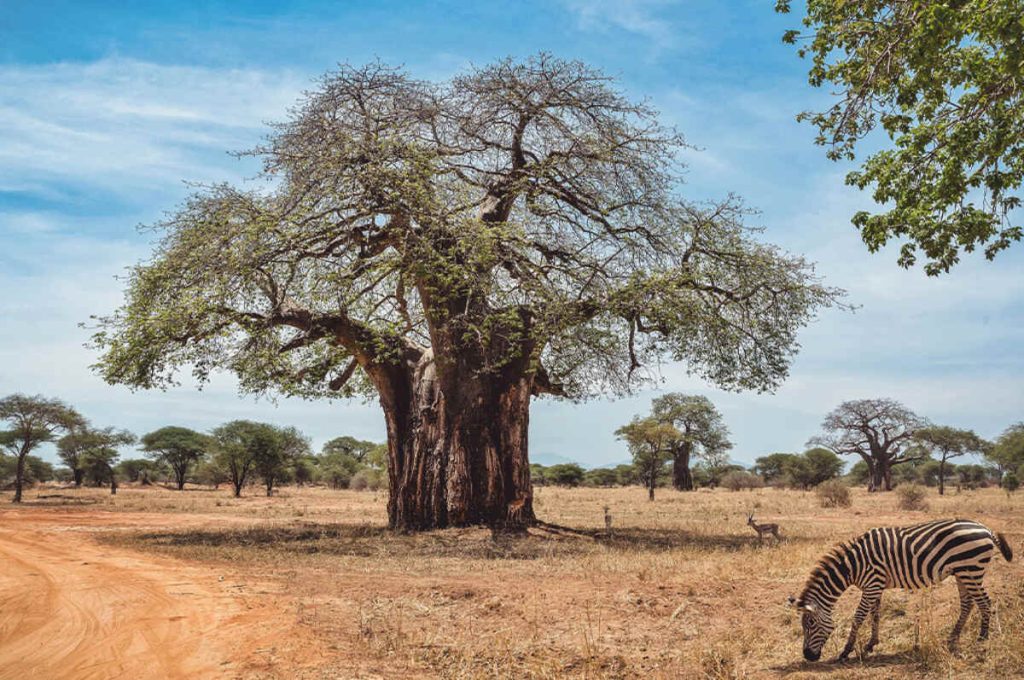
The first day takes you into Tarangire National Park, a landscape famous for large elephant families, ancient baobab trees, river valleys, open savanna and impressive birdlife.
Tanzania National Parks describes elephants moving beneath old baobabs as one of Tarangire’s signature scenes. The park’s Tarangire River and Silale Swamp also act as important wildlife areas, particularly during drier periods when animals increasingly depend on available water. Tanzania Parks
After a full day of game viewing, the safari continues toward the Mto wa Mbu or Karatu region, where you settle into a campsite for the night.
This camping experience changes the character of the trip.
Instead of returning immediately to a city hotel, you remain within northern Tanzania’s safari landscape, enjoy dinner at camp and experience the quieter atmosphere of an African evening.
The following morning, the journey continues to the Ngorongoro Conservation Area.
Here, the scenery changes dramatically.
The road climbs into cooler volcanic highlands before reaching the rim of the Ngorongoro Crater, one of Africa’s most remarkable natural wildlife landscapes.
The crater is the world’s largest intact and unfilled volcanic caldera and supports a large concentration of animals, including elephants, buffalo, lions, black rhinos, hippos, hyenas, zebras and wildebeest. NCAA identifies the wider conservation area as habitat for all of the traditional Big Five. ncaa.go.tz
The complete journey follows a simple but powerful progression:
Arusha → Tarangire National Park → Safari Camp → Ngorongoro Crater → Arusha
This is what makes the two-day itinerary work.
You experience elephant country on Day 1, authentic camping at night and one of Tanzania’s most extraordinary wildlife landscapes on Day 2.
A short safari should not feel like an ordinary road transfer with a few wildlife stops in between.
The route needs to use the available time carefully.
Tarangire and Ngorongoro complement each other particularly well because they provide very different experiences without requiring the longer journey necessary to reach the Serengeti.
Tarangire is characterized by baobabs, river systems, open savanna, woodland and large elephant populations.
Ngorongoro is a volcanic landscape where wildlife is viewed on the floor of an enormous caldera surrounded by steep highland walls.
This means the second day does not simply repeat the first.
Across both destinations, travelers may encounter:
No wildlife sighting can be guaranteed, but combining Tarangire and Ngorongoro provides a strong variety of habitats and species within a short itinerary.
A conventional two-day safari could simply use a lodge or hotel.
Camping creates a different atmosphere.
The overnight becomes part of the adventure rather than merely somewhere to sleep between two game drives.
Both destinations are part of Tanzania’s northern safari circuit and can be connected logically from Arusha without spending the entire trip on extremely long road transfers.
This safari is short, but the landscapes change dramatically.
Arusha provides the starting and finishing point.
Most travelers begin after breakfast or early in the morning, depending on their accommodation and final departure arrangements.
Tarangire provides the first major game drive and introduces elephants, baobabs and classic East African savanna.
The overnight camping location provides a practical transition between Tarangire and Ngorongoro.
The exact campsite can vary according to availability and the final safari arrangement.
On the second morning, the road rises into cooler highlands with dramatically different vegetation and scenery.
The crater provides the final and most concentrated wildlife experience before the return toward Arusha.
Your 2-Day Tanzania Camping Safari begins in Arusha.
After an early breakfast, meet your professional safari driver-guide and begin traveling toward Tarangire National Park.
As Arusha disappears behind you, the road passes through northern Tanzania’s countryside before reaching the park.
Once inside Tarangire, the safari begins immediately.
Tarangire is one of northern Tanzania’s most distinctive wildlife destinations.
TANAPA highlights its large elephant families, ancient baobab landscapes, river habitats and more than 550 recorded bird species. Tanzania Parks
The park does not feel like a smaller version of Serengeti.
It has its own identity.
Large baobabs rise above woodland and open plains, while the Tarangire River cuts through the landscape and provides an important source of water.
Elephants are among the park’s defining animals.
Possible encounters range from individual bulls to extended family groups moving through the woodland.
Instead of simply taking one photograph and driving away, allow time to watch their behavior.
You may observe adults feeding while younger elephants remain close to the group, or several animals moving together toward water.
Tarangire is officially promoted by TANAPA as one of Tanzania’s outstanding elephant destinations. Tanzania Parks
Although elephants receive much of the attention, Tarangire supports a much wider variety of wildlife.
Possible sightings include:
Predators such as lions, leopards and hyenas occur in the park, though individual sightings depend entirely on natural wildlife movement. Tanzania Parks
The enormous baobab trees are another defining feature of Tarangire.
Their broad trunks and unusual shapes create classic safari scenery, particularly when elephants, giraffes or antelope move beneath them.
Baobabs are not simply photographic backgrounds.
They form part of the park’s ecological landscape and contribute strongly to Tarangire’s visual identity.
The Tarangire River acts as an important wildlife lifeline.
During the dry season, wildlife from surrounding areas may become increasingly dependent on river and swamp systems for water.
TANAPA specifically identifies the river and Silale Swamp as important dry-season areas where elephants, buffalo and birdlife can concentrate. Tanzania Parks
Tarangire is also exceptionally strong for birdwatching.
More than 550 bird species have been recorded in the park. Tanzania Parks
Even travelers who arrive mainly interested in lions and elephants may begin noticing:
During the day, stop at an appropriate designated area for lunch.
Afterward, continue exploring.
The afternoon can provide a different experience from the morning as wildlife movement and light change.
Your guide may adjust the route according to recent sightings, season and road conditions.
Later in the afternoon, leave the park and continue toward your overnight campsite in the Mto wa Mbu or Karatu region, depending on the confirmed itinerary.
The drive toward camp introduces a different side of northern Tanzania as you move closer to the Great Rift Valley and Ngorongoro highlands.
On arrival, settle into camp.
Camping brings you much closer to the atmosphere of the safari than a conventional city hotel.
The experience is intentionally simple.
A typical camping arrangement may use safari tents, mattresses or sleeping equipment and shared campsite facilities depending on the confirmed package.
Dinner is prepared and enjoyed at camp while the day gradually becomes quiet.
There is no need for another scheduled activity.
After hours of game viewing, the evening is a chance to relax, discuss the day’s wildlife sightings and prepare for an early start toward Ngorongoro.
Overnight: Camping around Mto wa Mbu / Karatu region
Main Experience: Tarangire wildlife, elephants, baobabs and safari camping
Wake early at camp and prepare for the second day of your adventure.
After breakfast, leave the campsite and begin climbing toward the Ngorongoro Conservation Area.
Today feels completely different from Tarangire.
As elevation increases, temperatures can become cooler.
Dry savanna gives way to greener vegetation and highland scenery.
The journey eventually reaches the crater rim.
From this elevated landscape, the enormous Ngorongoro Crater opens below.
The crater floor lies within a massive volcanic caldera containing grasslands, wetlands and wooded areas.
Begin the descent toward the crater floor for several hours of wildlife exploration.
NCAA identifies Ngorongoro Crater as the world’s largest intact and unfilled volcanic caldera, with a very high concentration of wildlife. Its official information records more than 25,000 animals in the crater landscape. Geopark
Unlike the broader landscapes of Tarangire, the crater feels much more contained.
Steep volcanic walls surround the wildlife areas, creating one of Tanzania’s most unusual safari settings.
The Ngorongoro Conservation Area supports all of the traditional Big Five:
NCAA confirms all five species within the wider conservation area. ncaa.go.tz
This does not mean every traveler automatically sees all five.
Leopards in particular can be difficult to locate, and black rhino sightings remain dependent on natural movement and viewing conditions.
Ngorongoro is especially important for travelers interested in the possibility of seeing black rhino.
NCAA lists black rhinos among the animals occurring within the crater and surrounding conservation landscape. ncaa.go.tz
Rhinos may sometimes be viewed from a considerable distance, so binoculars can be particularly useful.
The crater supports major predators including lions and spotted hyenas.
Spend time watching behavior rather than simply searching for photographs.
Predators may be resting, observing prey or moving through grassland habitats depending on the time of day.
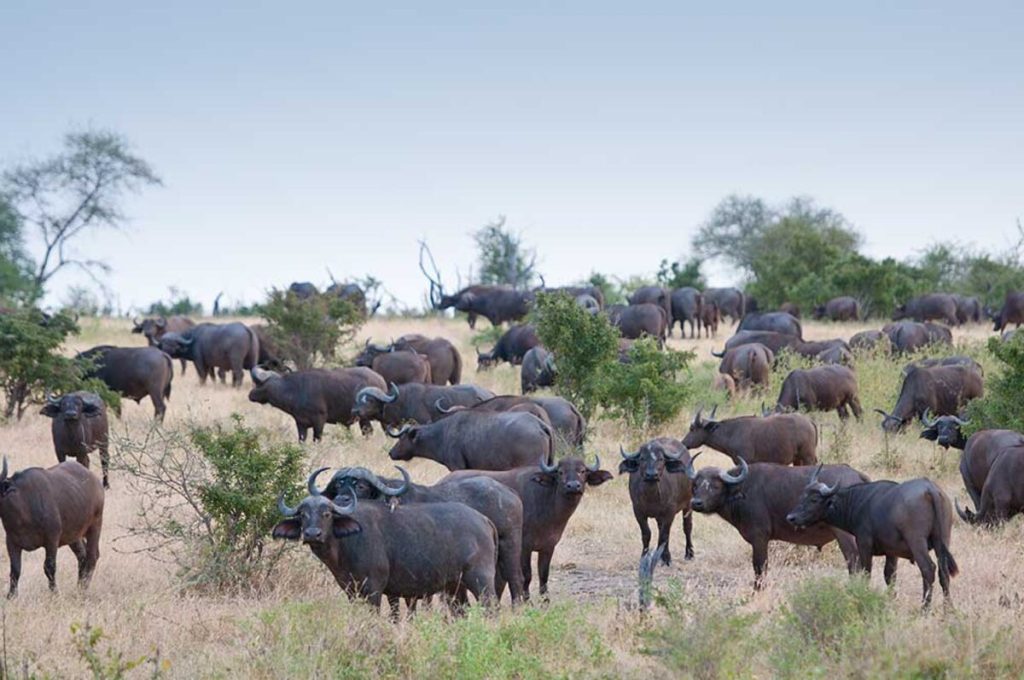
Buffalo can occur in large groups, while elephants may be seen in different parts of the crater ecosystem.
Older elephant bulls are particularly characteristic of some crater areas.
Wetlands and pools provide habitat for hippos and numerous waterbirds.
Depending on conditions, these sections create an important contrast with the open grasslands.
Large herbivores form a major part of the crater ecosystem.
Possible sightings include:
These herbivores also support the predator populations that make Ngorongoro famous.
The crater contains Lake Magadi, a shallow saline lake.
Depending on conditions, flamingos and other birds may be seen in wetland and lake environments.
NCAA records flamingos, ostriches, kori bustards and numerous other bird species within the conservation area. ncaa.go.tz
During the safari, stop at an appropriate picnic area for lunch.
This creates time to relax before continuing with the final game drive.
After lunch, continue exploring selected sections of the crater.
Rather than spending the final hour racing to find one last animal, take time to enjoy the complete environment.
Look beyond individual species.
The crater’s grasslands, high walls, wetlands and wildlife together create the experience.
Later in the afternoon, begin ascending from the crater floor.
The safari then continues back toward Arusha.
As you descend from the highlands and travel through northern Tanzania’s countryside, the two-day journey comes to an end.
Arrive in Arusha in the evening, depending on road and safari conditions.
Main Experience: Ngorongoro Crater, Big Five wildlife and scenic highlands
Camping is an important part of this package.
It makes the safari feel more adventurous while helping keep the journey accessible for travelers who would rather spend their budget on wildlife experiences than high-end accommodation.
Camping accommodation is generally more basic than a safari lodge.
That simplicity is part of the experience.
After the game drive, travelers settle into camp rather than entering a large hotel environment.
The atmosphere changes as daylight fades.
Temperatures become cooler and the campsite becomes quieter.
Dinner provides time to relax after the Tarangire safari.
The exact setup depends on the confirmed safari arrangement.
A camping package may use:
The final camping equipment and facilities should always be confirmed when booking.
On such a short journey, expensive accommodation is not always essential.
Most daylight hours are spent exploring the national parks.
Camping therefore allows travelers to keep the experience focused on wildlife and adventure.
Tarangire works particularly well on Day 1 because it creates an immediate wildlife experience after leaving Arusha.
The park is widely associated with large elephant populations.
Seeing elephants moving beneath enormous baobabs creates an immediate sense of being on safari. Tanzania Parks
These ancient trees make Tarangire visually different from Ngorongoro.
The park supports predators, large herbivores and exceptional birdlife.
During drier periods, the Tarangire River becomes particularly important for wildlife. Tanzania Parks
This combination makes Tarangire a strong first chapter for a short Tanzania safari.
Ngorongoro works particularly well on Day 2 because it provides a completely different safari environment.
It is the world’s largest intact and unfilled volcanic caldera. Geopark
Official NCAA information estimates roughly 26,000–28,000 animals in the crater based on its internal population data. ncaa.go.tz
The wider conservation area supports all five traditional Big Five species. ncaa.go.tz
The wildlife is viewed beneath enormous crater walls.
For photographers, this means animals can sometimes be captured within a much larger volcanic landscape.
Although the safari lasts only two days, the route provides significant ecological variety.
Tarangire is particularly strong for elephant viewing.
Elephants also occur within the Ngorongoro ecosystem.
Both destinations support lions.
They may be encountered resting, moving through grasslands or observing prey.
Ngorongoro provides an important possibility for black rhino sightings.
Leopards occur within both wider ecosystems but are naturally elusive.
Seeing one should be considered a special encounter rather than an expectation.
Buffalo may occur in both Tarangire and Ngorongoro, sometimes in substantial groups.
Tarangire provides good giraffe opportunities.
An important ecological detail is that giraffes are generally not found on the Ngorongoro Crater floor, although they occur elsewhere in the wider conservation area. NCAA specifically notes this distinction. ncaa.go.tz
Both are common elements of northern Tanzania’s grazing ecosystems and can occur in large numbers.
Tarangire alone has more than 550 recorded bird species, while Ngorongoro adds wetland, grassland and highland birdlife. Tanzania Parks
This safari can be operated during different parts of the year, but the experience changes with seasonal conditions.
The drier months are particularly strong for Tarangire.
As surrounding areas dry, the river and swamp systems become increasingly important for wildlife.
TANAPA highlights the park’s dry-season concentrations of elephants, buffalo, wildebeest and zebra around important water sources. Tanzania Parks
These months are popular for travelers whose main priority is wildlife.
Camping nights can become cool, so warm clothing is useful.
These months can provide green landscapes and strong general wildlife viewing.
Temperatures can be warmer than during the middle of the year.
Northern Tanzania generally receives more rainfall during this period.
The landscape may become lush and green.
Travel remains possible, but rain can affect some road and camping conditions.
Shorter seasonal rains may occur.
The scenery can become greener, while wildlife viewing remains possible.
For a camping safari, weather conditions matter more than they would on a lodge safari, so travelers should pack appropriately.
This is one of the strongest reasons to choose the itinerary.
You can experience two major northern Tanzania wildlife destinations without needing a week-long safari.
Camping can help keep the accommodation side of the trip simpler while protecting the essential wildlife experience.
The short duration fits easily into a longer Tanzania journey.
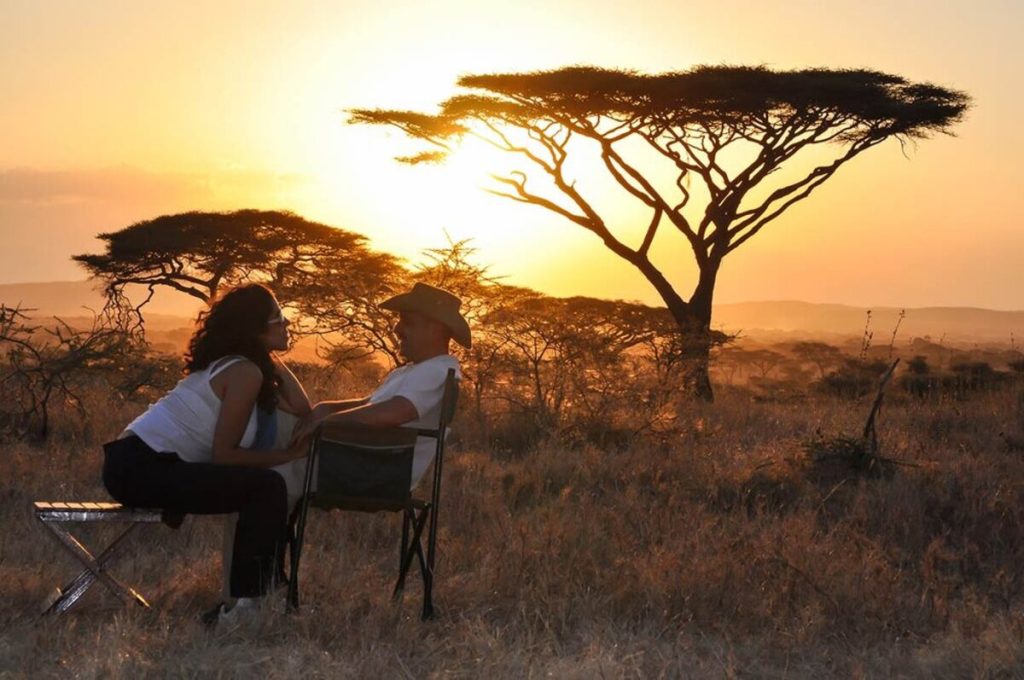
Couples who value adventure more than luxury accommodation can enjoy the simplicity of a camping safari.
Small groups of friends can combine wildlife, road travel and camping within a short itinerary.
The straightforward camping style can suit travelers looking for an adventurous and educational wildlife experience without the expense of premium safari lodges.
This short safari can be completed before continuing toward Zanzibar or another Tanzania destination.
Two days is short.
It should not be presented as though it offers the same depth as a seven-day northern Tanzania safari.
However, when the route is designed correctly, two days can still provide an excellent introduction.
Tarangire introduces elephants, baobabs, river environments and birdlife.
Camping means the safari atmosphere does not end when the park gate is left behind.
Ngorongoro introduces a volcanic landscape and concentrated crater wildlife.
The itinerary does not attempt to force the Serengeti into an unrealistic two-day schedule.
This is one of its biggest strengths.
Rather than trying to see everything in Tanzania, it focuses on two destinations that work well together.
The wildlife destinations remain the same.
The major difference is the overnight experience.
Camping focuses on:
A lodge safari generally provides:
Neither style changes the fact that wildlife sightings remain natural.
The best option depends on how much value you place on accommodation compared with the adventure itself.
Because this is a short trip, there is no need to carry excessive luggage.
Bring practical, comfortable clothes such as:
Ngorongoro highlands can feel considerably cooler than Tarangire, particularly early in the morning.
Bring a fleece, sweater or light jacket.
Useful items include:
Bring sunscreen, sunglasses and a hat.
Keep your passport or required identification, personal medication, toiletries and reusable water bottle organized and accessible.
The exact camping equipment supplied by the safari operator should be confirmed before departure so that you know whether personal sleeping equipment is necessary.
Even a short safari can provide excellent photographic variety.
Look for:
Possible photographic subjects include:
A photograph of an elephant interacting with its family may tell a stronger story than a close portrait of an animal doing nothing.
Be patient whenever time allows.
Camping and wildlife tourism should always respect protected areas and local environments.
Waste should be handled according to campsite rules and never left behind.
Wild animals should not associate people or camps with food.
Professional guides understand park regulations and wildlife behavior.
Never pressure a driver-guide to approach wildlife excessively closely for photography.
Waterholes and major sightings may be shared with other safari vehicles.
Patience and responsible positioning help everyone enjoy the experience.
A camping safari can remain simple without becoming unnecessarily uncomfortable.
For one night, a small safari bag is usually much easier than large suitcases.
This becomes particularly important around Ngorongoro.
Wildlife can appear quickly, so avoid packing essential equipment at the bottom of your luggage.
A compact torch can be useful around a campsite after dark.
Ngorongoro works best when the second day begins early.
Rest properly after dinner rather than treating the camping night as a late-night activity.
For travelers planning Tanzania in 2026 or 2027, this itinerary works particularly well when time is limited.
It does not attempt to promise an unrealistic number of destinations.
Instead, it focuses on two of northern Tanzania’s strongest experiences.
Elephants, baobabs and open savanna immediately create the classic safari atmosphere.
The adventure continues after leaving the national park.
The crater adds Big Five possibilities, spectacular geography and concentrated wildlife.
The complete rhythm is straightforward:
Leave Arusha → safari in Tarangire → camp overnight → descend into Ngorongoro → return to Arusha.
There is very little wasted time.
The journey can be arranged from Moshi instead of Arusha, though driving times should be considered when planning departure.
Travelers who want more comfort can move from basic public camping toward a more comfortable tented arrangement where available.
The same general route can be adapted for lodge accommodation instead of camping.
A private 4×4 gives your own party greater control over the wildlife-viewing pace.
Travelers focused strongly on budget may consider available group-joining departures.
The safari can form the wildlife portion of a longer Tanzania and Zanzibar holiday.
Adding more time allows the route to include another destination or create less driving pressure.
The 2-Day Tanzania Camping Safari to Tarangire and Ngorongoro 2026–2027 proves that a short safari does not need to feel ordinary.
The journey begins in Tarangire National Park, where enormous baobabs rise above the savanna and elephant families move between woodland, river systems and open plains.
Throughout the day, you search for lions, giraffes, buffalo, zebras, wildebeest, antelope and the extraordinary birdlife for which Tarangire is known.
As afternoon ends, the safari does not return immediately to city life.
Instead, you continue toward your campsite and spend the evening within northern Tanzania’s safari country.
The following morning brings an entirely different experience.
The road climbs into the cool Ngorongoro Highlands before reaching the rim of one of Africa’s most extraordinary volcanic landscapes.
You descend into the Ngorongoro Crater, where lions, buffalo, elephants, black rhinos, hippos, zebras, wildebeest and hyenas may all form part of the wildlife experience.
By evening, you return toward Arusha having experienced two very different worlds in only two days.
The complete adventure becomes:
Arusha → Tarangire → Camping Experience → Ngorongoro Crater → Arusha.
For 2026–2027, the safari can be customized according to:
Share your preferred travel dates and number of travelers to begin planning your Tarangire and Ngorongoro adventure.
Choose between private or shared safari arrangements, basic camping or a more comfortable accommodation style depending on your preferred budget and experience.
Travel from Tarangire’s elephant-filled baobab landscapes to the extraordinary Ngorongoro Crater, with an authentic safari camping night connecting two of northern Tanzania’s most memorable wildlife experiences.
No results available
ResetNo results available
ResetTanzania is a year-round safari destination with many adventures being offered all over the country. For optimal wildlife sightings, the dry season from June to October is your best bet! Read more on when to visit Tanzania
Both have their perks with Big Five national parks, the incredible Great Migration and that quintessential African experience we all dream of. Check out our article on Serengeti vs Masai Mara to help you decide.
They both have such different safari experiences! Tanzania offers Big Five game reserves on classic dusty desert plains, rather South Africa partners the Big Five animals with luscious winelands. Both are just as good, but it depends on your safari style.
That’s a tough one! Botswana is home to herds of elephants at Chobe and the sparkling Okavango Delta, and Tanzania has the iconic Mount Kilimanjaro and Great Migration. Check out our article on Botswana vs Tanzania safaris to help you decide.
Tanzania is in general a safe, hassle-free country. However, like most places, you do need to take precautions and listen to your tour guide. It also pays to read our articles on ‘Things to know before going to Tanzania’.
A camera and binoculars are a must. You’ll regret it if you don’t take them! As for clothing, definitely pack lightweight, breathable clothing. Remember, Tanzania is an arid country so the days can get quite hot. Read more on what to pack for a safari in Tanzania in our travel magazine
EXPERIENCES
BEST TOURS
copyright©2026 . Enjore Safaris