
The 3 Days Meet Face to Face with the Gorillas – Gorilla Trekking Safari Uganda 2026–2027 is a short but deeply memorable wildlife journey into the mountain forests of southwestern Uganda, where travelers can experience endangered mountain gorillas living in their natural habitat.
Rather than a traditional savanna safari built around game drives, this three-day adventure moves into the ancient rainforest of Bwindi Impenetrable National Park, a UNESCO World Heritage Site and one of the most biologically important forests in Africa.
Uganda Wildlife Authority confirms that gorilla trekking in Uganda takes place in Bwindi Impenetrable National Park and Mgahinga Gorilla National Park. Bwindi remains Uganda’s principal gorilla trekking destination and is divided into the trekking sectors of Buhoma, Ruhija, Rushaga and Nkuringo. A normal gorilla trek may take several hours depending on the location of the assigned habituated gorilla family, followed by a regulated observation period with the gorillas. Uganda Wildlife Authority
The most recent completed population figure published by Uganda Wildlife Authority records 459 mountain gorillas in Bwindi from the 2018 census. UWA reported in September 2026 that the newer 2025–2026 genetic census had been completed but its updated mountain-gorilla population estimate was still being analyzed. The older combined Bwindi and Virunga data produced a global estimate of 1,063 mountain gorillas. Uganda Wildlife Authority
The classic three-day journey follows:
Entebbe/Kampala → Southwestern Uganda → Bwindi Impenetrable National Park → Gorilla Trekking Experience → Bwindi → Entebbe/Kampala
The progression is simple but powerful:
Ugandan countryside → forested highlands → ancient rainforest → mountain gorillas → conservation experience → return journey.
For travelers planning Uganda in 2026–2027, this package works particularly well when gorilla trekking is the main purpose of the trip and there is limited time for a longer Uganda safari.
A three-day itinerary is one of the shortest practical ways to experience Uganda’s mountain gorillas while allowing one full day for the actual trekking experience.
Day 1 is primarily the journey into southwestern Uganda.
Day 2 belongs to Bwindi and the gorillas.
Day 3 provides the return journey.
This structure keeps the trip focused.
It does not attempt to squeeze Queen Elizabeth National Park, Kibale, Murchison Falls and several other destinations into an unrealistic short schedule.
Instead, the purpose is clear:
Travel to the forest, experience the gorillas responsibly and return.
Bwindi is far more than a place where tourists can see gorillas.
UNESCO describes the park as an exceptionally important biodiversity hotspot positioned at the meeting point of lowland and montane forest systems along the Albertine Rift.
The World Heritage property covers approximately 32,092 hectares and contains exceptional diversity of trees, ferns, birds, butterflies and mammals. UNESCO emphasizes its importance for numerous globally threatened species, especially the mountain gorilla. UNESCO World Heritage Centre
Uganda Wildlife Authority describes Bwindi as an ancient forest covering about 321 square kilometres, with elevations ranging from approximately 1,160 to 2,607 metres. Uganda Wildlife Authority
The landscape is characterized by steep forested slopes, valleys, streams and thick vegetation.
This is why gorilla trekking in Bwindi feels fundamentally different from an ordinary wildlife drive.
You do not sit inside a vehicle waiting for animals to appear beside a road.
You enter the forest with official guides and trackers and experience the environment on foot.
Bwindi was inscribed on the UNESCO World Heritage List in 1994 because of its outstanding biodiversity and ecological importance. UNESCO World Heritage Centre
The forest protects remarkable biological diversity, including many species associated with the Albertine Rift.
Its importance includes much more than mountain gorillas.
UNESCO records rich populations of forest birds, butterflies, trees, ferns and other mammals within the park. UNESCO World Heritage Centre
That wider biodiversity becomes part of the gorilla trek.
Even before finding gorillas, travelers may experience an impressive living forest filled with birds, insects, enormous trees, vines, streams and dense vegetation.
Uganda is one of the countries where wild mountain gorillas survive.
Within Uganda, they occur in:
Bwindi Impenetrable National Park and Mgahinga Gorilla National Park. Uganda Wildlife Authority
The animals live in social family groups generally led by dominant adult males commonly called silverbacks.
Other family members can include adult females, younger males, juveniles and infants.
The exact composition varies between groups.
Tourism visits are made only to gorilla families that have undergone a controlled habituation process and are managed for visitor encounters by Uganda Wildlife Authority.
The phrase describes the emotional impact of observing mountain gorillas at close range in their natural forest, but responsible gorilla tourism does not mean deliberately approaching them face-to-face or trying to touch them.
Uganda Wildlife Authority’s gorilla rules require visitors to maintain a minimum distance from the animals and follow ranger instructions throughout the encounter. The standard viewing period with a habituated gorilla group is limited to one hour. Uganda Wildlife Authority
This controlled approach helps protect both visitors and the gorillas.
Mountain gorillas are closely related to humans and can be vulnerable to human respiratory illnesses. UNESCO and UWA both identify disease transmission from people as an important conservation concern. UNESCO World Heritage Centre
The best encounter is therefore one based on:
respect, distance, quiet observation and conservation.
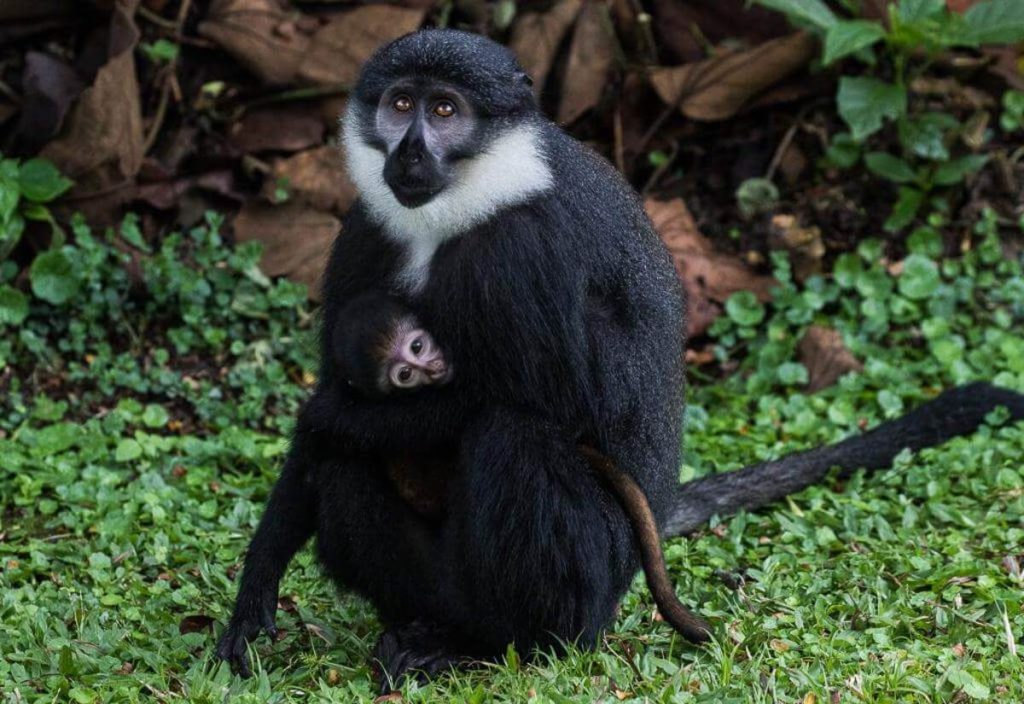
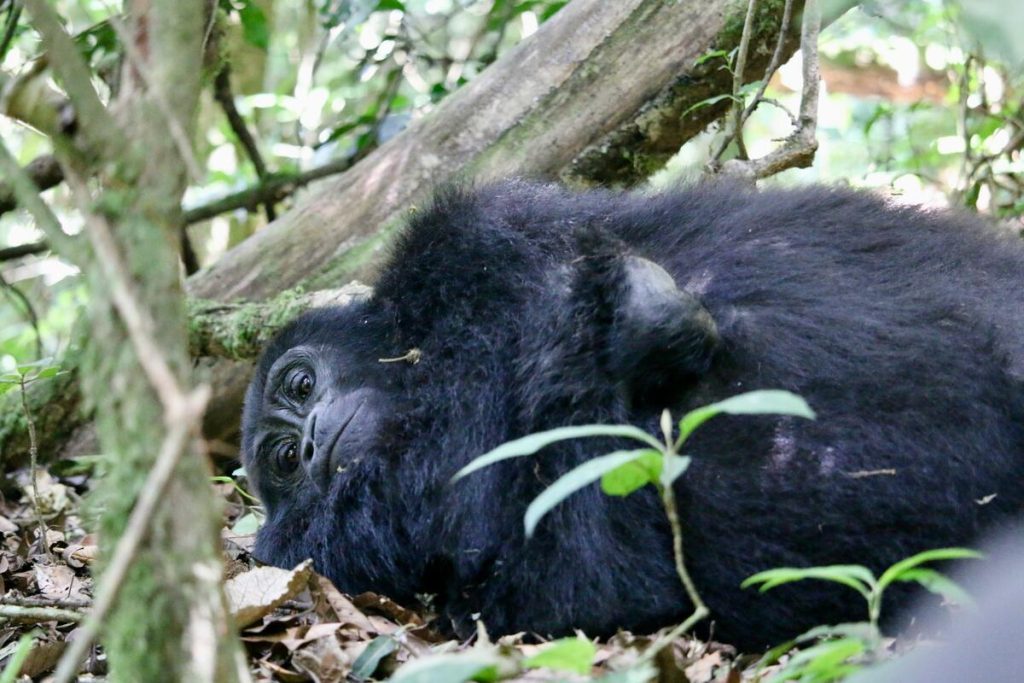
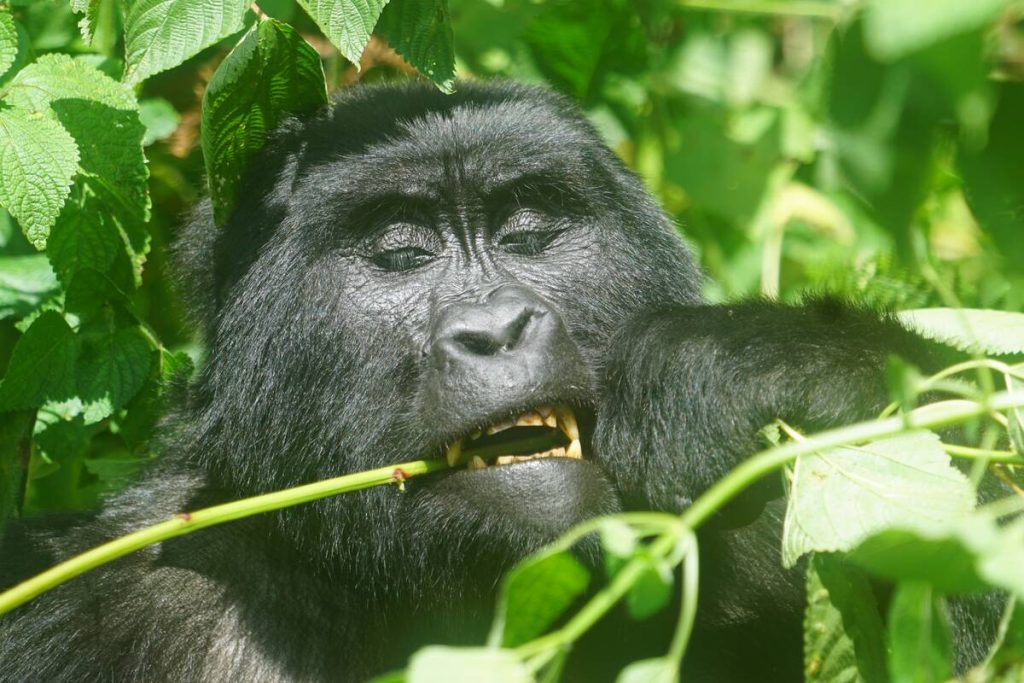
Your 3 Days Uganda Gorilla Trekking Safari begins in the Entebbe or Kampala area.
Meet your driver-guide early and begin the journey toward southwestern Uganda.
Day 1 is primarily a travel day, but it also introduces the changing landscapes that make Uganda such a visually interesting country.
The route gradually moves away from the busy urban environment and toward rural Uganda.
As the journey continues, the scenery may include agricultural areas, villages, rolling hills and increasingly mountainous landscapes.
Rather than treating the drive simply as transportation, it becomes the first chapter of the gorilla experience.
The first part of the journey passes through busier populated regions.
Gradually, the urban environment begins giving way to open countryside.
Uganda is often characterized by dramatic changes in vegetation and elevation across relatively short distances.
The deeper you travel toward the southwest, the more the landscape begins to reflect the highlands associated with Bwindi and the Albertine Rift.
The road journey provides an opportunity to experience everyday Uganda beyond the capital.
Depending on the exact route, you may pass through areas characterized by:
farmland, villages, local trading centers, rolling hills and cultivated valleys.
The aim of a well-planned Day 1 should be comfortable progression toward Bwindi rather than trying to add numerous unrelated attractions.
A three-day itinerary is already short.
Protecting time and energy for the following morning is important.
As you travel farther southwest, the landscape becomes increasingly dramatic.
Hills rise more sharply.
Vegetation becomes greener.
Agricultural terraces and highland communities may appear across the slopes.
The air can also become noticeably cooler compared with lower-elevation areas.
Eventually, the forested region surrounding Bwindi begins to dominate the scenery.
Bwindi’s forest looks different from open African savanna.
Dense vegetation covers steep terrain.
Mist may sometimes hang over the surrounding hills.
The forest appears layered, dark and extremely green.
This first view helps explain the park’s famous name.
The forest is not literally impossible to enter, but its thick vegetation and steep landscape created the historical reputation reflected in the term “Impenetrable.”
Reach your selected lodge or accommodation near your assigned trekking sector.
Bwindi gorilla trekking is organized through different sectors, so accommodation location matters.
The main sectors used for trekking include:
Buhoma, Ruhija, Rushaga and Nkuringo. Uganda Wildlife Authority
A lodge positioned near the correct trekking area can reduce unnecessary morning travel.
After check-in, relax and prepare for the following day.
The evening atmosphere can feel completely different from Kampala.
Instead of city noise, you may hear:
forest birds, insects, nearby streams and the natural sounds of the surrounding highlands.
Enjoy dinner and rest.
The next morning is the central experience of the trip.
Overnight: Bwindi Impenetrable National Park area
Main Experience: Journey through Uganda’s countryside and arrival in the mountain rainforest
Wake early in the Bwindi highlands.
This is the day around which the entire safari has been built.
After breakfast, travel to the appropriate Uganda Wildlife Authority trekking point according to your assigned sector and permit.
The experience is carefully regulated because mountain gorillas are endangered and their welfare comes first.
Uganda Wildlife Authority states that gorilla trekking may take approximately two to seven hours, depending on the location of the assigned gorilla group and conditions in the forest. Uganda Wildlife Authority
This means no operator can promise exactly how long the forest portion will take.
Before entering the forest, visitors receive an official briefing from Uganda Wildlife Authority staff.
The briefing explains the conservation importance of the park and the rules that apply during the experience.
Visitors are then organized according to the permitted trekking arrangements.
The forest journey takes place with authorized personnel.
This is a controlled wildlife experience rather than independent hiking.
Once the trek begins, the environment quickly surrounds you.
The forest may include:
towering trees, vines, ferns, streams, thick undergrowth and steep slopes.
The route changes according to the gorillas’ movements.
There is therefore no single fixed trail guaranteeing where the animals will be found.
Trackers monitor the habituated families and help the trekking team locate them.
This uncertainty is part of what makes the encounter genuine.
You are searching for wild animals inside their natural home.
While the gorillas are the main objective, do not ignore the forest itself.
UNESCO describes Bwindi as a major biodiversity refuge with exceptional tree, fern, butterfly, bird and mammal diversity. UNESCO World Heritage Centre
The trek may expose you to:
forest birds, butterflies, distinctive plants, primates and countless smaller forms of life.
The rainforest is not merely the background to the gorillas.
It is the ecosystem that makes their survival possible.
Eventually, your guides and trackers may indicate that the assigned gorilla family is nearby.
The atmosphere often changes immediately.
Movement becomes more controlled.
Visitors follow ranger instructions closely.
The objective is to observe without disrupting normal gorilla behavior.
Depending on the family and circumstances, animals may be:
feeding, resting, grooming, moving through vegetation or interacting socially.
Every encounter is different.
Uganda Wildlife Authority limits the normal visitor encounter to one hour with the gorilla group. Uganda Wildlife Authority
This hour may become the emotional centerpiece of the entire Uganda journey.
A silverback may sit quietly among vegetation.
Juveniles may interact nearby.
Females may feed or care for younger animals.
The forest may sometimes appear completely still before one gorilla suddenly becomes visible through the vegetation.
Nothing needs to be staged.
That natural behavior is the experience.
The adult silverback is often the most visually impressive member of the family.
Its size can be striking, but the encounter should never be treated as an opportunity to challenge, approach or interact with the animal.
Visitors remain under ranger direction and observe quietly.
The strongest memories often come from seeing ordinary gorilla behavior:
feeding, resting, watching other family members or moving carefully through the vegetation.
When infants or juveniles are present, family interactions can be especially interesting.
Possible observations may include young gorillas:
remaining close to adults, exploring vegetation or interacting with other family members.
Exact behavior varies naturally.
There is no guarantee that infants will be present in a particular family during a particular visit.
Photography can form part of the encounter, but the animals’ welfare remains more important than obtaining a photograph.
Uganda Wildlife Authority prohibits flash photography around the gorillas. Uganda Wildlife Authority
The forest can also create challenging lighting conditions.
Instead of expecting perfect photographs, allow yourself time to actually observe the animals.
Some of the most memorable parts of the encounter may never appear clearly on a camera.
UWA’s published tracking rules require visitors to maintain a minimum distance of approximately 7 metres from the gorillas. Uganda Wildlife Authority
The rule exists partly because gorillas can be vulnerable to human illnesses.
If circumstances change because an animal moves, visitors should follow the ranger’s directions rather than attempting to control the situation themselves.
The principle remains simple:
the gorillas decide where gorillas go; visitors follow official guidance.
Visitors showing signs of infectious illness may not be allowed to trek.
UWA’s permit-management guidelines specifically state that a visitor who develops signs of illness before tracking may be prevented from visiting the gorillas and referred for assessment. Uganda Wildlife Authority
This may feel disappointing to a traveler who has come a long distance, but protecting endangered primates must take priority.
UWA also instructs visitors to cover coughs or sneezes and turn away from the gorillas. Uganda Wildlife Authority
Responsible gorilla tourism depends on these rules.
Uganda Wildlife Authority’s published rules set the minimum age for gorilla tracking at 15 years. Uganda Wildlife Authority
Families traveling with younger children therefore need to plan alternative supervised activities for family members who do not meet the minimum age requirement.
Travelers aged 15–17 who are participating should do so within the official guided UWA system and as part of appropriately supervised family travel.
UWA’s published gorilla-tracking regulations state that a maximum of eight visitors are assigned to a gorilla group. Uganda Wildlife Authority
Limiting visitor numbers reduces pressure on habituated families and helps keep the encounter controlled.
This is also one reason gorilla permits can become limited during popular travel periods.
After the regulated observation period, the trekking party moves away under ranger guidance.
The experience ends without extending the encounter simply because the group wants more photographs.
This controlled time limit is fundamental to responsible tourism.
You then continue out of the forest according to the official trekking program.
After completing the trek, return toward the starting area and eventually back to your lodge.
The rest of the day should generally remain relaxed.
Gorilla trekking can involve substantial walking over uneven forest terrain, and UWA describes the activity as requiring moderate fitness. Uganda Wildlife Authority
A quiet afternoon therefore works well.
Take time to reflect on what you have seen rather than immediately rushing into another demanding excursion.
Depending on time, lodge location and your selected program, a respectful community-led experience may be available around Bwindi.
Community tourism should focus on genuine exchange and local benefit rather than presenting residents as entertainment.
Uganda Wildlife Authority operates a revenue-sharing program around protected areas and states that 20% of annual park revenue is shared with communities surrounding national parks and wildlife reserves. UWA also allocates an additional contribution from each Bwindi gorilla permit toward community initiatives. Uganda Wildlife Authority
This relationship between conservation and local livelihoods is an important part of Bwindi’s tourism story.
Return to the lodge for dinner.
The second night is very different from the first.
Yesterday the gorillas were still an expectation.
Tonight they are a memory.
Enjoy the forest atmosphere and rest before the journey back toward central Uganda.
Overnight: Bwindi Impenetrable National Park area
Main Experience: Guided gorilla trekking, one-hour gorilla observation and Bwindi rainforest conservation
Wake for your final morning in southwestern Uganda.
Enjoy breakfast while taking one last look at the forested hills.
Day 3 is primarily the return journey.
The road gradually moves away from Bwindi and back toward the more populated regions of central Uganda.
Before departure, appreciate the quiet mountain environment.
The experience of Bwindi is not limited to the one hour near the gorillas.
It also includes:
the highland climate, dense rainforest, surrounding communities, mist-covered hills and the long transition between forest and city.
These details help make the safari feel like a journey rather than a single wildlife appointment.
Begin traveling away from the park.
The dense mountain vegetation gradually gives way to cultivated hills, farms and wider countryside.
Depending on the route, the journey provides another opportunity to see southwestern Uganda’s dramatic landscapes.
Continue toward Kampala or Entebbe.
The road journey is substantial, which is why a three-day gorilla itinerary is best understood as an intensive short trip.
Travelers wanting a slower experience may prefer four or more days.
Additional time can allow:
more relaxed road travel, another national park, additional forest experiences or a flight connection where appropriate.
Arrive later according to traffic, weather, road conditions and your final destination.
Transfer to your hotel or another agreed location.
Travelers with onward international arrangements should build sufficient flexibility into their broader itinerary rather than relying on an overly tight connection.
Your 3 Days Meet Face to Face with the Gorillas – Gorilla Trekking Safari Uganda then comes to an end.
Main Experience: Final Bwindi morning, southwestern Uganda landscapes and return journey
Uganda offers gorilla trekking in both Bwindi Impenetrable National Park and Mgahinga Gorilla National Park. Uganda Wildlife Authority
For this particular three-day itinerary, Bwindi is used because it is Uganda’s principal gorilla tourism destination and offers several established trekking sectors.
Mgahinga can also provide a rewarding alternative.
Its Virunga mountain environment creates a different landscape and can work especially well within a wider southwestern Uganda itinerary.
The best choice depends on permit availability, accommodation, travel route and the structure of the overall holiday.
Bwindi is commonly organized into four main gorilla trekking areas:
Buhoma, Ruhija, Rushaga and Nkuringo. Uganda Wildlife Authority
The trekking sector matters because it determines where travelers should stay before the gorilla experience.
A lodge in the wrong part of Bwindi can create unnecessary road travel.
For that reason, accommodation should be selected after the gorilla trekking sector has been confirmed, rather than choosing a hotel simply because it appears attractive online.
Buhoma is one of Bwindi’s best-known gorilla tourism areas.
It has a long history of gorilla tourism and a broad range of accommodation.
The surrounding forest environment provides an excellent introduction to Bwindi.
Ruhija lies in a higher and often cooler section of the forest environment.
It can appeal particularly to travelers interested in forest scenery and birdlife as well as gorillas.
Rushaga is one of the main southern Bwindi trekking sectors.
It supports several gorilla tourism experiences and has developed a broad accommodation base.
Nkuringo is another southern Bwindi sector associated with dramatic highland scenery.
The surrounding hills contribute strongly to the visual character of the journey.
There is no fixed trekking duration.
Uganda Wildlife Authority states that gorilla trekking can take approximately two to seven hours, depending largely on the gorillas’ location. Uganda Wildlife Authority
That uncertainty is essential to understand before booking.
The gorillas are not waiting at a permanent viewing platform.
Their movements depend on:
food, family behavior, weather and their natural use of the forest.
A group may locate its assigned family relatively quickly.
Another group may spend much longer trekking.
Travelers should therefore treat the whole day as the gorilla experience rather than planning another tightly timed activity immediately afterward.
For standard gorilla trekking, UWA allows one hour of observation once the assigned habituated gorilla family has been located. Uganda Wildlife Authority
The hour is deliberately limited.
It helps balance:
visitor experience, gorilla welfare, conservation and the number of people entering the forest.
The encounter can feel surprisingly fast once it begins, which is another reason travelers should spend part of the time simply watching rather than looking continuously through a camera.
A valid gorilla trekking permit is required.
Uganda Wildlife Authority controls gorilla trekking permits and regulates how they are purchased and allocated. UWA’s permit guidelines state that foreign non-resident permits are handled through Uganda Tourism Board-licensed tour operators under its current system. Uganda Wildlife Authority
Permit availability is limited because only controlled numbers of visitors can trek each habituated gorilla family.
For 2026–2027 travel, the exact current tariff should be reconfirmed at the time of booking.
The UWA public conservation tariff currently surfaced in its publications covers July 2024 through June 2026, so it should not be assumed automatically to represent all later 2026 or 2027 departures. Uganda Wildlife Authority
This is especially important for an SEO page intended to remain useful into 2027.
Publishing an outdated permit price as though it were current could mislead travelers.
Permits are tied to controlled visitor capacity.
Demand can become strong during popular travel periods.
Accommodation also depends on the assigned trekking sector.
This creates an important planning sequence:
Travel dates → permit availability → Bwindi sector → appropriate accommodation → final itinerary.
Trying to choose accommodation first can create unnecessary complications if the available gorilla permit is for a different sector.
Gorilla trekking can take place throughout the year.
Bwindi is a tropical mountain forest, so rain can occur during different seasons.
The experience changes rather than simply becoming “good” or “bad.”
These months are generally associated with one of Uganda’s relatively drier travel periods.
Trail conditions can sometimes be easier than during wetter months.
The period is also popular, meaning accommodation and permits may face greater demand.
Another relatively drier period can provide good conditions for forest travel.
The exact weather varies from year to year.
Heavier rainfall is more common.
The forest can become especially lush and atmospheric.
Trails may also become wetter and more demanding.
Seasonal rainfall can again affect forest conditions.
The advantage of wetter periods can include rich green landscapes and fewer visitors in some travel windows.
Bwindi remains a rainforest.
Even during a traditionally drier period, visitors should be prepared for changing weather.
Travelers often choose relatively drier months because forest paths may be less wet.
Road access can also be more comfortable.
However, “dry season” does not mean rain-free.
Bwindi’s vegetation depends on moisture, and showers remain possible.
Rain transforms the forest.
The environment can become:
deep green, misty, dramatic and highly atmospheric.
Photography can also benefit from softer light and cloud-filled mountain landscapes.
Travelers who are comfortable with wetter conditions should not automatically dismiss these periods.
Clothing should prioritize comfort and protection in a humid forest environment rather than fashion.
Practical choices generally include long trousers, comfortable walking footwear, lightweight long sleeves and a rain layer.
A warm layer can also be useful during cooler highland mornings.
Because conditions change, travelers should follow the current recommendations supplied by their licensed tour operator, accommodation and Uganda Wildlife Authority before the trekking day.
The goal is simple:
remain comfortable while protecting both yourself and the forest environment.
For a short journey, luggage does not need to be excessive.
Useful travel essentials include comfortable forest clothing, a rain layer, walking footwear, sun and rain protection, binoculars for forest birdlife, camera equipment, spare batteries, personal medication, travel documents and a small day bag.
Avoid overpacking.
Bwindi’s rugged terrain and short itinerary make compact luggage easier to manage.
UWA describes normal gorilla trekking as requiring moderate fitness, with the forest search potentially lasting several hours. Uganda Wildlife Authority
Bwindi contains steep terrain and uneven forest surfaces.
Travelers with mobility limitations or health concerns should discuss suitability with their healthcare professional and licensed tour organizer before confirming the experience.
There is no prize for making the trek unnecessarily difficult.
The objective is to experience the gorillas safely within the official guided system.
Gorilla trekking is a tightly regulated wildlife activity conducted within the Uganda Wildlife Authority system.
Visitors enter with official personnel and must follow the rules applying to the forest and gorilla encounter.
The most important principle is straightforward:
follow the ranger’s instructions at all times.
Visitors should never attempt to approach gorillas independently, leave the official trekking arrangement or provoke an interaction.
Responsible behavior protects visitors, guides and the gorillas.
Mountain gorillas share biological similarities with humans and may be vulnerable to human diseases.
UWA therefore restricts participation for visitors showing signs of illness. Uganda Wildlife Authority
UNESCO also identifies transmission of human disease as one of the conservation concerns created by gorilla tourism. UNESCO World Heritage Centre
Missing a trek because of illness can be disappointing, but conservation must come first.
Gorilla trekking is an observation experience.
It is not direct physical interaction.
Visitors should never try to touch, feed or deliberately approach the animals.
The distance rules protect:
gorilla health, visitor safety and normal gorilla behavior.
The most respectful encounter is one in which the animals are allowed to behave naturally.
UWA’s published rules prohibit flash photography around mountain gorillas. Uganda Wildlife Authority
The forest may therefore require photographers to work with limited natural light.
This can make photography harder, but animal welfare takes priority over image quality.
Uganda’s mountain gorilla story is also a conservation story.
In September 2026, UWA reported that Bwindi’s population had increased from around 300 individuals recorded in 1992 to 459 in the 2018 census. Uganda Wildlife Authority
UWA’s 2026 State of Wildlife report notes that the new Bwindi mountain gorilla census had been completed and the genetic data were still being analyzed. Uganda Wildlife Authority
This means tourism exists within an active conservation program rather than functioning independently from it.
Protection involves:
forest management, scientific monitoring, veterinary and disease considerations, law enforcement and community engagement.
The long-term survival of protected forests also depends on relationships with neighboring communities.
Uganda Wildlife Authority operates a park revenue-sharing system intended to support communities living around protected areas.
UWA states that 20% of annual park revenue is shared with neighboring communities and that a specific contribution from each Bwindi gorilla permit also goes toward local community programs. Uganda Wildlife Authority
Supported projects have included livelihood activities and community infrastructure.
For travelers, this reinforces an important idea:
gorilla tourism is not only about taking photographs.
It is connected with conservation and the people who live alongside the protected landscape.
Community experiences should be approached with the same respect shown to wildlife.
A good experience should be community-led and centered on genuine exchange.
Travelers should avoid treating local people as staged attractions.
Instead, the focus can be on:
local history, livelihoods, crafts, conservation relationships and community perspectives.
When tourism is managed well, visitor spending can provide additional economic value to communities living alongside the forest.
Gorillas attract most visitors, but Bwindi protects much more.
UNESCO identifies the forest as exceptionally rich in mammals, birds, butterflies, trees and ferns. UNESCO World Heritage Centre
Uganda Wildlife Authority’s 2026 research also confirmed an estimated 426 chimpanzees distributed across Bwindi, demonstrating the forest’s importance for more than one great-ape species. Uganda Wildlife Authority
Visitors may also become interested in:
forest birds, monkeys, butterflies and plant life.
Not every species will be visible during a short trek, but knowing they exist changes the way the forest is experienced.
Birdwatchers have another reason to value Bwindi.
UNESCO identifies the park as extremely important for Albertine Rift bird diversity, including endemic and threatened species. UNESCO World Heritage Centre
The forest atmosphere makes birding very different from open savanna.
Calls may be heard long before the bird becomes visible.
Binoculars can therefore add considerable value to the trip even when gorillas remain the main priority.
A gorilla encounter can be technically challenging for photographers.
The forest may be:
dark, humid, densely vegetated and full of strong contrasts between shadow and small areas of light.
Rather than expecting every photograph to look perfect, concentrate on documenting behavior.
Potential subjects can include:
silverback portraits, family interactions, juveniles among vegetation and wider images showing gorillas within the forest.
The wider environmental photographs can sometimes tell the story more effectively than a close portrait.
Bwindi itself deserves attention.
Photograph:
mist, forest canopy, mountain slopes, streams, enormous trees and highland scenery.
These images explain where the gorillas live.
A gorilla portrait could theoretically have been taken anywhere.
A photograph showing the animal surrounded by dense Bwindi vegetation tells a much more complete story.
A short gorilla trip can be arranged with simpler accommodation while preserving the main trekking experience.
Budget travel generally focuses spending on:
transportation, permit arrangements, guiding and practical accommodation.
The gorilla experience itself is still regulated by UWA.
Sleeping in a more expensive lodge does not provide a different gorilla family encounter.
Mid-range accommodation can provide a strong balance between:
comfort, location and overall cost.
Depending on the lodge, travelers may have:
private rooms, en-suite bathrooms, restaurant service, forest views and comfortable common areas.
For a short safari, location near the assigned trekking sector remains especially important.
Luxury travel can add:
premium accommodation, greater privacy, enhanced service and particularly scenic locations.
However, true luxury on a gorilla safari can also mean:
good planning, an appropriate lodge location, enough rest, privacy and avoiding unnecessary road travel.
The gorillas themselves remain wild regardless of accommodation category.
The classic three-day package can be completed overland from Kampala or Entebbe.
This allows travelers to experience much more of Uganda’s countryside.
However, the road journey is substantial.
Travelers prioritizing time may consider an air connection into southwestern Uganda followed by an arranged ground transfer, depending on current schedules and the assigned Bwindi sector.
For a short itinerary, reducing transportation time can create a noticeably more relaxed experience.
The itinerary works particularly well for travelers whose main priority is mountain gorillas.
It can suit first-time Uganda visitors, couples, photographers, nature enthusiasts, small groups and travelers combining Uganda with a longer East African journey.
It is less suitable for someone expecting a broad Uganda wildlife safari.
Three days provides a focused gorilla journey rather than a complete exploration of the country.
Families should pay particular attention to UWA’s age regulation.
The minimum trekking age is 15 years. Uganda Wildlife Authority
Families with younger children therefore need to organize age-appropriate alternatives and responsible supervision.
The age rule should be checked during initial planning rather than discovering it after permits and accommodation have already been arranged.
Yes, three days can work when the main purpose is a single gorilla trekking experience.
The basic structure is efficient:
Day 1: Travel to Bwindi.
Day 2: Gorilla trekking.
Day 3: Return.
However, this is an intensive itinerary.
Travelers who have more time may prefer four or five days.
An extra night can reduce the feeling of spending so much of the holiday on the road.
Queen Elizabeth National Park is one of Uganda’s famous wildlife areas, but including it properly requires additional time.
Trying to combine:
Entebbe → Queen Elizabeth → Bwindi → gorilla trekking → Entebbe
inside the same three-day schedule would make the itinerary unnecessarily rushed.
For this specific package, the gorillas remain the priority.
Travelers wanting both experiences should extend the trip.
With additional days, the route can become a broader southwestern Uganda adventure.
A longer itinerary might combine:
Bwindi gorillas → Queen Elizabeth wildlife → additional Uganda experiences.
Queen Elizabeth introduces a completely different environment from Bwindi.
Instead of dense forest trekking, the focus shifts toward savanna wildlife and game viewing.
The contrast works particularly well when enough days are available.
Uganda is also an important chimpanzee destination.
A longer itinerary can combine mountain gorillas with chimpanzee tracking, creating a broader primate-focused journey.
Three days is not enough to do both properly while starting and ending in central Uganda.
Additional days allow each experience to remain meaningful.
Uganda gorilla trekking can form part of a wider East African wildlife journey.
A broader itinerary could combine:
Uganda gorillas → Tanzania safari
with destinations such as Serengeti, Ngorongoro or Tarangire arranged separately.
This provides two completely different wildlife experiences:
Uganda contributes rainforest primates.
Tanzania contributes open savanna and large-mammal safari landscapes.
Another wider East African journey can combine:
Uganda gorillas → Kenya safari
The Maasai Mara then adds:
lions, cheetahs, elephants, plains wildlife and migration possibilities according to season.
Because international logistics are involved, this combination needs more than three days.
Where can I see mountain gorillas in Uganda? Uganda Wildlife Authority conducts mountain gorilla trekking in Bwindi Impenetrable National Park and Mgahinga Gorilla National Park. Bwindi is the larger and more widely used trekking destination. Uganda Wildlife Authority
Is Bwindi a UNESCO World Heritage Site? Yes. Bwindi Impenetrable National Park was inscribed on the UNESCO World Heritage List in 1994 because of its outstanding biodiversity and conservation importance. UNESCO World Heritage Centre
How many mountain gorillas are in Bwindi? The most recent completed population figure currently published by UWA remains 459 individuals from the 2018 census. UWA reported in September 2026 that the 2025–2026 genetic census results were still being analyzed. Uganda Wildlife Authority
How long does gorilla trekking take? Uganda Wildlife Authority says trekking may take approximately two to seven hours depending on where the gorillas are located. Uganda Wildlife Authority
How long do visitors spend with the gorillas? Standard gorilla trekking permits allow approximately one hour with the assigned habituated gorilla family once it has been located. Uganda Wildlife Authority
What is the minimum age for gorilla trekking in Uganda? Uganda Wildlife Authority sets the minimum age at 15 years. Uganda Wildlife Authority
How many tourists visit one gorilla family? UWA’s published tracking rules permit a maximum of eight visitors per gorilla group. Uganda Wildlife Authority
How close can visitors get to the gorillas? UWA’s published rule requires approximately seven metres of distance from the gorillas, with visitors following ranger instructions throughout the encounter. Uganda Wildlife Authority
Can I touch a mountain gorilla? No. Gorilla trekking is an observation experience, and visitors must follow distance and ranger instructions.
Can I use flash photography? No. Uganda Wildlife Authority prohibits flash photography during gorilla encounters. Uganda Wildlife Authority
Can I trek if I have a cold or infectious illness? UWA may prevent visitors displaying signs of illness from participating because gorillas are vulnerable to some human diseases. Uganda Wildlife Authority
Is seeing the gorillas guaranteed? Gorilla tracking is highly organized around habituated families, but wildlife experiences can never be treated like staged attractions. UWA’s permit guidelines even provide procedures for situations where a visitor completes a full tracking day without seeing the assigned gorillas. Uganda Wildlife Authority
Which Bwindi sector is best? Buhoma, Ruhija, Rushaga and Nkuringo all provide gorilla trekking opportunities. The practical choice depends primarily on permit availability, route and accommodation rather than one sector being universally best. Uganda Wildlife Authority
Should I book accommodation before the gorilla permit? It is usually more practical to confirm the trekking sector first because the permit determines which part of Bwindi you need to reach.
Do I need a gorilla permit? Yes. Gorilla trekking is permit-controlled by Uganda Wildlife Authority. Permit availability should be confirmed before finalizing the safari. Uganda Wildlife Authority
What is the gorilla permit price for 2026–2027? The exact rate should be confirmed for the actual travel date. The UWA public conservation tariff surfaced in its current publication library covers July 2024 through June 2026, so later 2026 and 2027 departures should not automatically be quoted using that older tariff. Uganda Wildlife Authority
Is gorilla trekking physically difficult? Conditions vary. UWA describes the activity as requiring moderate fitness, and trekking can last several hours through forest terrain. Uganda Wildlife Authority
What happens if it rains? Bwindi is a tropical mountain forest, so rain can occur throughout the year. Travelers should expect conditions to change and prepare according to official and operator guidance.
What is the best time to visit Bwindi? Gorilla trekking operates throughout the year. Relatively drier periods can provide easier trail conditions, while wetter periods offer exceptionally green forest scenery.
Can I see gorillas in January or February? Yes. Trekking operates during these months subject to permits and normal park operations.
Can I trek gorillas during the rainy season? Yes. Rain can make forest conditions wetter, but gorilla trekking continues according to park operations and weather conditions.
Are gorillas the only wildlife in Bwindi? No. UNESCO identifies Bwindi as exceptionally rich in mammals, birds, butterflies and plants. UWA’s 2026 research also estimated 426 chimpanzees in the forest. UNESCO World Heritage Centre
Is Bwindi good for birdwatching? Yes. UNESCO identifies Bwindi as one of the most important forest landscapes for Albertine Rift bird diversity. UNESCO World Heritage Centre
Is gorilla trekking suitable for families? It can be suitable for families with members who meet the official age requirement. Children under 15 cannot participate in standard gorilla trekking under UWA’s published rules. Uganda Wildlife Authority
Can couples do a private gorilla safari? Yes. Private transportation and lodge arrangements can be organized, although the actual gorilla viewing takes place according to UWA’s controlled group system.
Can solo travelers do the safari? Yes. Solo travelers can arrange transportation and accommodation while joining the official gorilla trekking allocation.
Can I choose budget accommodation? Yes. Budget, mid-range and luxury lodge options exist around different Bwindi sectors.
Is a luxury lodge necessary for gorilla trekking? No. The gorilla experience itself is controlled by Uganda Wildlife Authority. Luxury accommodation mainly changes comfort, privacy, service and lodge location.
Can I fly instead of driving all the way from Entebbe? Air connections into southwestern Uganda may be incorporated into some itineraries depending on current schedules and the assigned trekking sector, followed by road transfer to Bwindi.
Is three days enough? Yes, if gorilla trekking is the main objective. Travelers wanting a slower pace or additional Uganda destinations should add more days.
Can I combine gorillas with Queen Elizabeth National Park? Yes, but additional days are recommended so the itinerary does not become overly rushed.
Can I combine Uganda gorillas with Serengeti? Yes. A longer East African itinerary can combine Uganda’s rainforest gorillas with Tanzania’s Serengeti wildlife experience.
Can I combine gorilla trekking with Zanzibar? Yes. A wider trip can move from Uganda’s mountain forests to Zanzibar’s Indian Ocean beaches.
Why does gorilla tourism matter for conservation? Permit-controlled tourism provides conservation funding and contributes to local community programs. UWA shares part of its park revenue with communities neighboring protected areas and makes an additional community contribution linked to Bwindi gorilla permits. Uganda Wildlife Authority
The strength of the itinerary is focus.
It does not pretend that three days is enough to explore all of Uganda.
Instead, every day supports one central purpose.
Day 1 becomes:
Entebbe/Kampala → Ugandan countryside → southwestern highlands → Bwindi.
Day 2 becomes:
Ancient rainforest → guided trek → mountain gorillas → conservation → forest lodge.
Day 3 becomes:
Bwindi highlands → rural Uganda → Kampala/Entebbe.
The safari therefore feels coherent rather than rushed between unrelated destinations.
A successful three-day gorilla trip depends heavily on planning.
The most important details are the exact travel dates, gorilla permit availability, assigned trekking sector, accommodation location and transportation method.
For families, the official 15-year minimum age also needs to be considered before any non-refundable arrangements are made. Uganda Wildlife Authority
Because permit availability is limited, the safari should be organized around the gorilla permit rather than treating the permit as something to add after hotels have already been booked.
For 2026–2027 travel, permit prices and administrative requirements should also be reconfirmed against current Uganda Wildlife Authority information before a final quotation is issued.
The 3 Days Meet Face to Face with the Gorillas – Gorilla Trekking Safari Uganda 2026–2027 offers one of East Africa’s most distinctive wildlife experiences.
The journey begins in Entebbe or Kampala.
Leave the city behind and travel through Uganda’s changing countryside toward the forested mountains of the southwest.
By evening, the landscape has transformed.
Dense rainforest covers steep hills.
Mist may hang above the valleys.
You have reached Bwindi Impenetrable National Park.
The following morning, the experience moves into the forest itself.
With authorized guides and trackers, enter the ancient rainforest and follow the regulated gorilla trekking program.
Eventually, vegetation may begin to move.
A silverback becomes visible between the leaves.
Other family members appear nearby.
For the regulated observation period, watch the gorillas feed, rest and interact naturally within the forest they have inhabited for generations.
Then leave them where they belong.
Wild.
Protected.
Undisturbed.
Return to your lodge for one final Bwindi evening before beginning the journey back toward central Uganda the following morning.
The complete adventure follows:
Entebbe/Kampala → Southwestern Uganda → Bwindi Impenetrable National Park → Gorilla Trekking → Mountain Gorilla Encounter → Bwindi → Entebbe/Kampala
For 2026–2027, the itinerary can be customized according to accommodation category, road or air connections, assigned Bwindi sector, photography interests, family requirements and longer Uganda or East Africa extensions.
Share the preferred travel dates and number of travelers so permit availability, the correct Bwindi trekking sector and suitable nearby accommodation can be matched into one practical itinerary.
The trip can be arranged around budget, mid-range or luxury accommodation, road or selected air connections and additional Uganda destinations when more than three days are available.
Travel from Uganda’s cities into the ancient rainforest of Bwindi Impenetrable National Park, then experience one of Africa’s most remarkable conservation encounters: observing endangered mountain gorillas respectfully in their natural forest home.
No results available
ResetNo results available
ResetTanzania is a year-round safari destination with many adventures being offered all over the country. For optimal wildlife sightings, the dry season from June to October is your best bet! Read more on when to visit Tanzania
Both have their perks with Big Five national parks, the incredible Great Migration and that quintessential African experience we all dream of. Check out our article on Serengeti vs Masai Mara to help you decide.
They both have such different safari experiences! Tanzania offers Big Five game reserves on classic dusty desert plains, rather South Africa partners the Big Five animals with luscious winelands. Both are just as good, but it depends on your safari style.
That’s a tough one! Botswana is home to herds of elephants at Chobe and the sparkling Okavango Delta, and Tanzania has the iconic Mount Kilimanjaro and Great Migration. Check out our article on Botswana vs Tanzania safaris to help you decide.
Tanzania is in general a safe, hassle-free country. However, like most places, you do need to take precautions and listen to your tour guide. It also pays to read our articles on ‘Things to know before going to Tanzania’.
A camera and binoculars are a must. You’ll regret it if you don’t take them! As for clothing, definitely pack lightweight, breathable clothing. Remember, Tanzania is an arid country so the days can get quite hot. Read more on what to pack for a safari in Tanzania in our travel magazine
EXPERIENCES
BEST TOURS
copyright©2026 . Enjore Safaris