
Instead of spending all three days on traditional game drives, this itinerary moves naturally from savannah wildlife to Eastern Arc rainforest. Mikumi provides opportunities to search for elephants, lions, buffalo, giraffes, zebras, wildebeest, hippos and more than 400 recorded bird species, while Udzungwa changes the experience completely with dense forest, mountain streams, primates, butterflies, birdlife and spectacular waterfalls. Tanzania Parks
Mikumi covers approximately 3,245 square kilometres, while Udzungwa protects approximately 1,990 square kilometres of Tanzania’s Eastern Arc mountain environment. Tanzania Parks
For travelers beginning in Dar es Salaam, the combination is particularly practical because Mikumi is one of Tanzania’s most accessible major wildlife parks and Udzungwa can then be reached through the Mikumi–Kilombero/Ifakara corridor. TANAPA currently describes the road journey from Dar es Salaam to Mikumi as approximately 3–5 hours depending on traffic, while most Udzungwa visitors continue from Mikumi toward the Mang’ula park-headquarters area. Tanzania Parks
Dar es Salaam → Mikumi National Park → Mkata Floodplain → Mikumi Lodge → Udzungwa Mountains National Park → Mang’ula → Rainforest & Sanje Waterfalls → Dar es Salaam
Savannah → elephants and lions → lodge safari → Eastern Arc rainforest → endemic primates → waterfalls → Dar es Salaam.
For 2026–2027, this package is especially suitable for travelers who want a short Tanzania safari that feels varied rather than repetitive.
Mikumi and Udzungwa complement each other exceptionally well because the two parks offer completely different environments while remaining geographically practical to combine.
Mikumi is classic safari country.
Its Mkata Floodplain creates broad views across open grassland and seasonal wetlands, making it particularly suitable for searching for large mammals. TANAPA highlights elephants, lions, buffalo, zebras, wildebeest and giraffes among its characteristic wildlife. Tanzania Parks
Udzungwa is almost the opposite.
There are no traditional vehicle-based wildlife circuits through open savannah. The experience centers on ancient forest, guided nature walks, endemic primates, waterfalls, streams and mountain scenery.
TANAPA describes Udzungwa as part of Tanzania’s Eastern Arc rainforest, with flagship wildlife including the Udzungwa red colobus and Sanje mangabey, together with blue monkeys, vervet monkeys, duikers, butterflies, amphibians and exceptional forest birdlife. Tanzania Parks
The journey therefore does not feel like three versions of the same safari.
It becomes:
Day 1 – classic African game drive
Day 2 – savannah wildlife followed by the transition into rainforest country
Day 3 – guided forest and waterfall experience
For a short lodge safari from Dar es Salaam, that contrast is the main attraction.
Mikumi forms part of Tanzania’s southern safari circuit and protects broad floodplain grasslands, acacia savannah, seasonal pans, woodland and riverine environments.
Its open Mkata landscape is sometimes compared visually with the great plains of northern Tanzania because animals can be visible across considerable distances.
TANAPA identifies Mikumi’s Mkata Floodplain, hippo pools, seasonal waterholes and acacia landscapes among the park’s principal attractions. Tanzania Parks
Udzungwa belongs to a completely different ecological world.
Its evergreen and semi-evergreen forests form part of the Eastern Arc Mountains, an ancient chain of forested highlands famous for biological endemism. Waterfalls descend through forest gullies while streams, bamboo thickets, mountain ridges and dense canopy provide habitat for species found in very restricted ranges. Tanzania Parks
A three-day itinerary joining the two therefore allows travelers to experience the ecological transition from:
open grassland → acacia woodland → agricultural valley → Eastern Arc foothills → tropical mountain forest.
That environmental change gives this package a distinctive identity.
Your 3 Days Tanzania Lodge Safari to Mikumi and Udzungwa begins early from Dar es Salaam.
After breakfast at your hotel or collection from an agreed point, meet your professional safari driver-guide and travel west toward Morogoro and Mikumi.
TANAPA describes Mikumi as one of Tanzania’s easiest national parks to reach by road, with the journey from Dar es Salaam commonly taking around 3–5 hours depending on traffic and conditions. Tanzania Parks
The urban environment gradually disappears.
The road passes through changing countryside as eastern Tanzania opens toward the Morogoro region.
Mountain scenery becomes increasingly visible before the journey continues toward Mikumi.
After arrival and the appropriate park-entry arrangements, begin your first game drive.
The Mkata Floodplain provides the classic Mikumi introduction.
Open grasslands make it possible to scan widely for wildlife rather than relying entirely on animals emerging from thick vegetation.
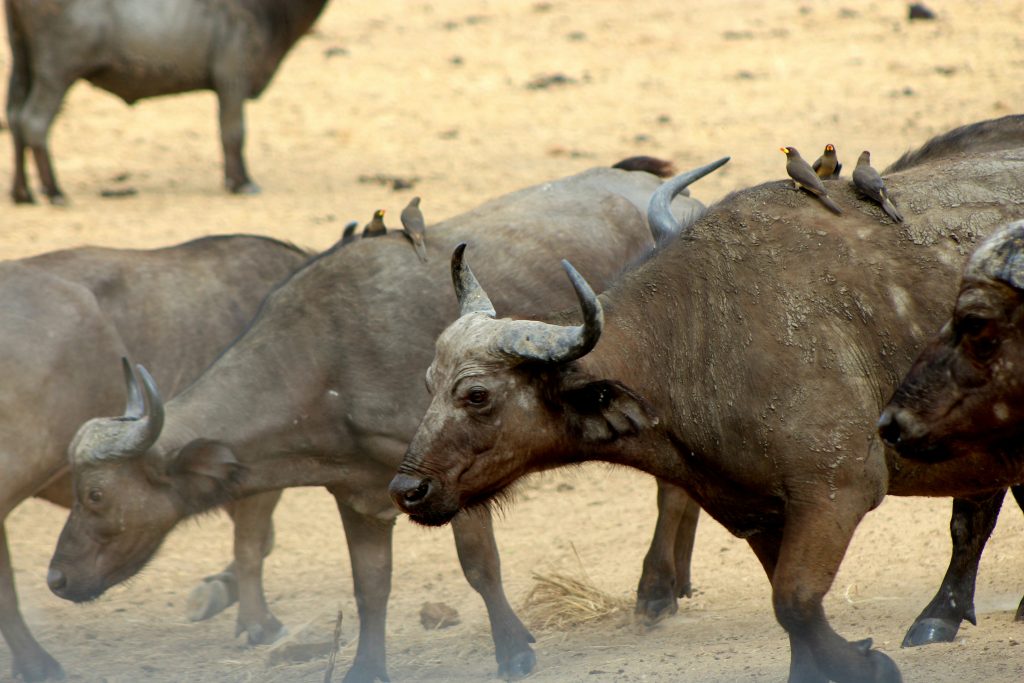
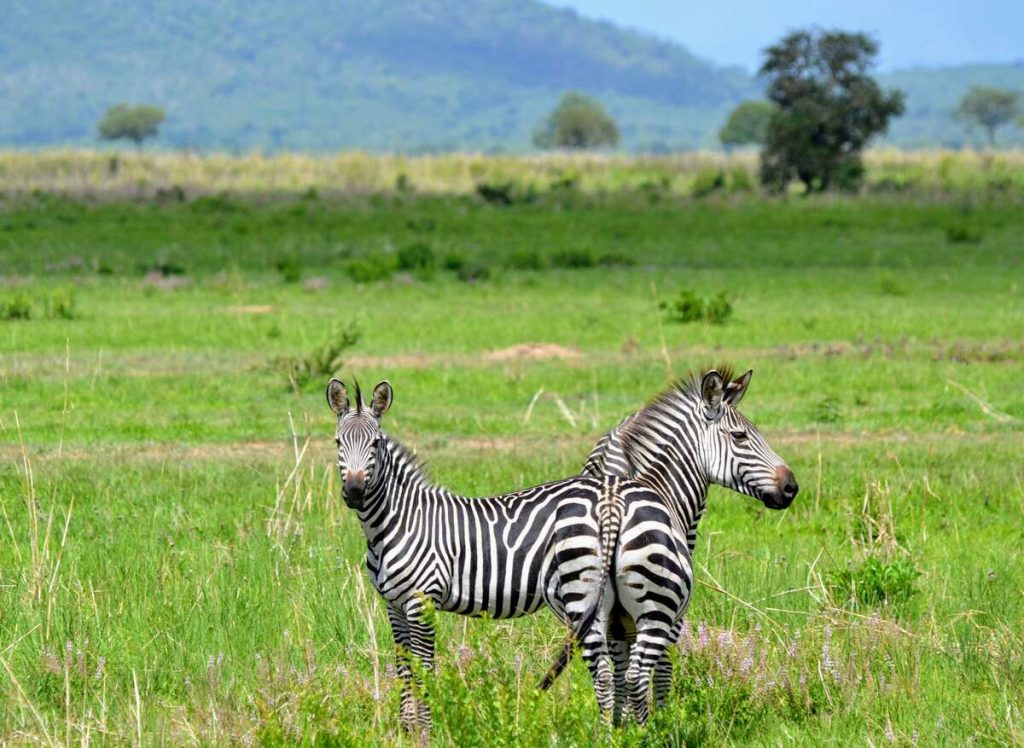
Possible sightings include elephants, buffalo, zebras, wildebeest and giraffes. Lions are also regularly reported within the park, while leopard and spotted hyena occur but are naturally more difficult to find. Tanzania Parks
Elephants can become one of the strongest highlights.
Possible encounters may include family herds feeding across the plains, individuals approaching water or animals disappearing into woodland.
Give wildlife space and allow the guide to determine an appropriate viewing position.
Mikumi’s buffalo can occur in substantial groups.
Zebra and wildebeest contribute to the classic savannah atmosphere, while giraffes are particularly photogenic against the broad Mkata landscape.
Predator sightings depend entirely on natural movement.
A lion may be visible near open plains or other productive wildlife areas, but there is no guarantee that predators will appear during a particular afternoon.
Leopard is substantially more secretive and should always be regarded as a special bonus.
The safari can also include wildlife around suitable pools and river environments.
TANAPA identifies hippos and crocodiles among animals associated with Mikumi’s pools and waterways. Tanzania Parks
Birdwatchers have plenty to observe even when large mammals are resting. TANAPA records more than 400 bird species, including rollers, bee-eaters, hornbills, eagles, storks and seasonal waterbirds. Tanzania Parks
Continue exploring through the afternoon.
Late light often creates excellent photography across the Mkata Floodplain, particularly when giraffes, elephants or antelope appear beneath wide skies.
After completing the day’s safari, travel to your selected lodge or tented accommodation in or around Mikumi.
Enjoy dinner and a relaxed evening.
The following day shifts gradually from savannah into the greener landscapes surrounding Udzungwa.
Overnight: Mikumi National Park area
Main Experience: Dar es Salaam journey, Mkata Floodplain, elephants, buffalo, giraffes, zebra, wildebeest, lion possibilities and birdlife.
Wake for an early breakfast and another opportunity to experience Mikumi before leaving the park.
The morning landscape can feel very different from the previous afternoon.
Wildlife may have moved considerably overnight.
Cooler conditions can also make the early safari period particularly pleasant.
Explore productive sections of the Mkata environment while searching for species that may have been missed on Day 1.
Perhaps yesterday’s elephants were distant.
Perhaps lions remained hidden.
Perhaps buffalo have gathered around a different water source.
There is no reason to follow exactly the same route if current wildlife information suggests another section of the park is more productive.
The principle is simple:
follow wildlife rather than a rigid checklist.
After the morning wildlife experience, leave Mikumi and continue toward Udzungwa Mountains National Park.
The character of the journey changes progressively.
TANAPA notes that most visitors approach Udzungwa through the Mikumi–Kilombero/Ifakara corridor, continuing toward Mang’ula at the edge of the park. Tanzania Parks
The plains and woodland around Mikumi gradually give way to the agricultural landscapes of the Kilombero Valley.
Ahead, the Udzungwa Mountains begin rising dramatically.
This transition is one of the most interesting parts of the itinerary.
You are moving from one of Tanzania’s classic savannah environments into an ancient tropical mountain-forest system.
Udzungwa protects approximately 1,990 square kilometres and forms part of the Eastern Arc Mountains, a region internationally significant for species found nowhere else or within extremely restricted ranges. Tanzania Parks
On arrival around Mang’ula, check into your selected lodge or guesthouse.
Depending on arrival time and the agreed program, the afternoon can remain deliberately gentle.
A short guided forest-oriented experience or time around the lower forest environment can introduce Udzungwa without trying to squeeze the main waterfall experience into the end of a long transfer day.
Listen to the forest.
Look into the canopy for monkeys.
Notice how different the air, vegetation and soundscape feel compared with Mikumi.
The Udzungwa red colobus is one of the park’s signature primates, while the Sanje mangabey is another highly distinctive species associated with these forests. Tanzania Parks
Blue monkeys and vervet monkeys may also be encountered, while bushbuck and duikers occur within forest habitat. Tanzania Parks
Birdlife changes dramatically as well.
Instead of open-plains species, the forest supports greenbuls, sunbirds and other Eastern Arc birds, while raptors may be seen above the ridges. Tanzania Parks
Later, return to your lodge.
Enjoy dinner surrounded by a completely different Tanzania from the previous night.
Overnight: Mang’ula / Udzungwa Mountains area
Main Experience: Morning Mikumi wildlife, Kilombero Valley, Eastern Arc scenery, forest primates and relaxed lodge stay.
Wake early near the Udzungwa Mountains and enjoy breakfast before beginning the principal forest experience of the trip.
Udzungwa is best experienced on foot through authorized guided routes, with the exact activity selected according to current weather, trail conditions, visitor ability and park guidance.
Rather than treating the day as a race to cover distance, the aim is to experience the rainforest environment.
The forest itself is the attraction.
Huge trees rise through layers of vegetation.
Ferns occupy wetter areas.
Mountain streams move between rocks and forest gullies.
Butterflies appear around openings in the canopy.
Primates call from trees that may initially appear empty.
TANAPA describes Udzungwa’s forests as containing evergreen and semi-evergreen habitats, bamboo, fern-lined streams and mountain gullies that provide refuge for endemic primates, birds, reptiles and amphibians. Tanzania Parks
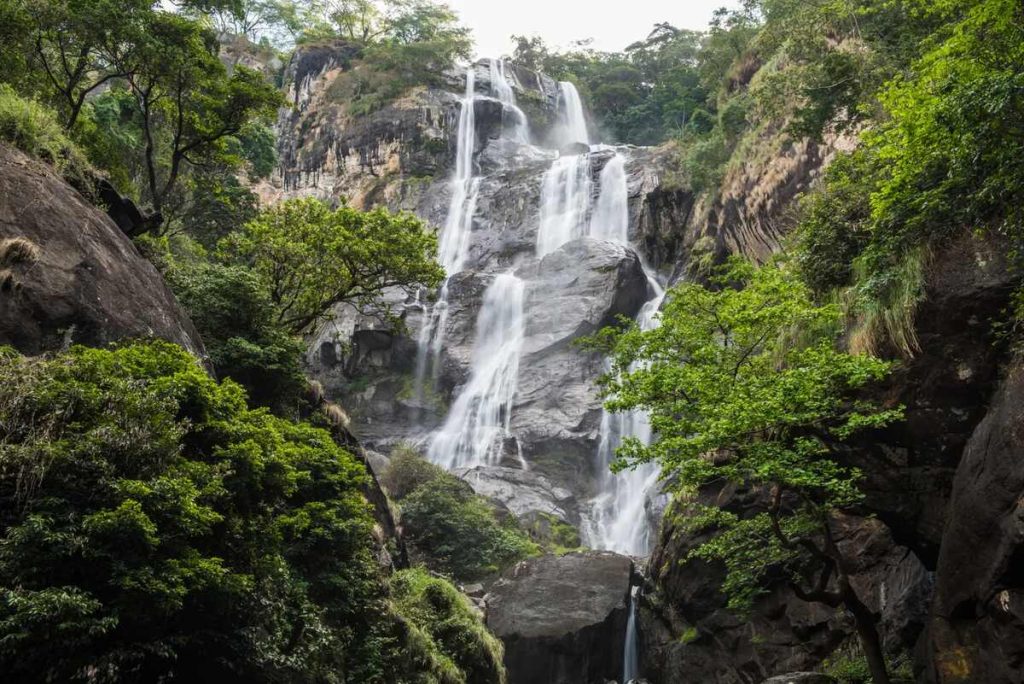
One of the park’s most celebrated natural landmarks is Sanje Waterfall.
TANAPA’s official material describes Sanje as a dramatic multi-level waterfall, with an older official park brochure recording a drop of approximately 170 metres through the forest landscape. Tanzania Parks
The surrounding forest viewpoints also open toward the Kilombero Valley, creating a dramatic contrast between mountain rainforest and the lower plains beyond.
Wildlife observation remains part of the experience.
The Udzungwa red colobus may be encountered in the canopy, while Sanje mangabeys occupy suitable forest environments elsewhere within the park. Blue and vervet monkeys are also among the primates recognized by TANAPA. Tanzania Parks
Unlike Mikumi, animals are not necessarily standing in open landscapes.
Forest wildlife may be partially hidden by leaves or heard before it is seen.
That difference makes Udzungwa rewarding in another way.
The experience becomes about observation:
movement in the canopy, bird calls, butterflies, forest plants, streams and shifting light beneath enormous trees.
Follow the authorized guide throughout the experience, particularly around waterfalls and wet forest environments where conditions can change after rain. TANAPA requires visitors to stay on designated routes and follow ranger or guide instructions. Tanzania Parks
After completing the selected forest experience, return toward the park headquarters area and enjoy lunch according to the travel arrangement.
Begin the road journey back toward Dar es Salaam through the Kilombero and Mikumi corridor.
The return journey completes an extraordinary ecological transition.
Only hours earlier you were surrounded by Eastern Arc rainforest.
The previous day you were watching elephants and buffalo across open savannah.
Continue through Morogoro and onward toward Dar es Salaam, arriving according to road and traffic conditions.
Your 3 Days Tanzania Lodge Safaris Mikumi and Udzungwa 2026-2027 then comes to an end.
Main Experience: Eastern Arc rainforest, Sanje Waterfalls, endemic primates, birdlife, Kilombero scenery and return to Dar es Salaam.
Mikumi is particularly suitable for short safaris because its open habitats can provide strong wildlife visibility without requiring travelers to spend several days reaching a remote destination.
TANAPA highlights elephant, lion, buffalo, zebra, wildebeest and giraffe as characteristic species of the park. Tanzania Parks
The Mkata Floodplain is especially important.
Open grassland and seasonal water sources attract grazing animals, while predators use the same ecosystem.
During drier conditions, wildlife may concentrate more strongly around dependable water.
Hippos and crocodiles add another dimension around suitable pools and river environments.
Birdlife is exceptional, with more than 400 species recorded across grassland, woodland, pans and wetlands. Tanzania Parks
Travelers should nevertheless avoid treating Mikumi as a zoo.
Lions can remain hidden.
Leopards may not appear.
Elephants may be elsewhere in the park.
The best safari remains flexible and appreciates whatever natural behavior the day provides.
Udzungwa is sometimes overlooked by travelers who associate Tanzania only with open savannah.
That makes it one of the most interesting additions to a southern Tanzania itinerary.
TANAPA describes the park as an Eastern Arc rainforest stronghold characterized by endemic wildlife, waterfalls, streams and mountain viewpoints. Tanzania Parks
The Udzungwa red colobus is one of its most recognizable animals.
The Sanje mangabey has a far more restricted range and represents another important part of the park’s primate conservation value. Tanzania Parks
Udzungwa is also rich in smaller biodiversity.
TANAPA notes butterflies, amphibians, reptiles and chameleons in its moist forest environments, while forest birdlife contributes to the park’s importance within the Eastern Arc. Tanzania Parks
Sanje Waterfall adds the major scenic attraction.
Its forested setting and elevated viewpoints make it much more than simply another waterfall stop.
The combination of forest, endemic primates and waterfalls explains why Udzungwa provides such a strong contrast to Mikumi.
A lodge safari uses permanent lodge, guesthouse or tented-lodge accommodation rather than basic camping.
For this three-day route, a practical arrangement is generally:
Night 1 near Mikumi National Park
followed by:
Night 2 near Mang’ula and Udzungwa Mountains National Park.
TANAPA confirms that Mikumi has lodges, tented camps and camping options in and around the park, while Udzungwa visitors can use lodges and guesthouses around Mang’ula and surrounding communities. Tanzania Parks
Accommodation can be selected at different comfort levels.
A practical lodge may emphasize clean rooms, meals and convenient location.
Higher-comfort properties may provide larger rooms, better views or more refined service.
For only two nights, location is particularly important.
Saving substantial money on a lodge located far from the next day’s activity may result in more road travel and less time enjoying the destination.
The best value is therefore:
comfort + location + reliable service + efficient access.
Both parks can be visited throughout the year, but the experience changes seasonally.
TANAPA broadly identifies June to October as Tanzania’s drier safari period, when wildlife can be easier to locate around water sources and travel conditions are generally simpler. Tanzania Parks
For Mikumi, the dry season can be particularly productive because vegetation becomes less dense and animals gather increasingly around water.
TANAPA specifically identifies June through October as a strong period for concentrated wildlife on the Mkata Floodplain. Tanzania Parks
Udzungwa remains green because it is a forest environment, but drier months can provide simpler road and forest conditions.
The older TANAPA Udzungwa guide describes the main dry period around June through September, short rains around October–November and heavier rain broadly from March into May. Tanzania Parks
The wetter months should not automatically be dismissed.
Mikumi becomes greener and can provide dramatic photography and strong birdlife.
Udzungwa’s forest becomes particularly lush, while streams and waterfalls can be visually impressive.
However, rain can change forest-route and road conditions, so current local guidance becomes especially important.
This combination is especially attractive for travelers already staying in Dar es Salaam.
Mikumi is one of the most accessible major wildlife parks from the city.
TANAPA currently estimates approximately 3–5 hours by road, depending heavily on traffic and road conditions. Tanzania Parks
After Mikumi, travelers do not need to return to Dar es Salaam before visiting Udzungwa.
Instead, the itinerary continues naturally toward Mang’ula through the Kilombero/Ifakara corridor. Tanzania Parks
That creates a logical circuit:
Dar es Salaam → Mikumi → Udzungwa → Dar es Salaam
rather than:
Dar es Salaam → Mikumi → Dar es Salaam → Udzungwa → Dar es Salaam.
The first option protects substantially more holiday time.
One of the strongest features of this package is photographic variety.
Mikumi provides classic safari subjects.
Wide photographs can include elephants, giraffes or zebra against the Mkata Floodplain.
Late-afternoon light can produce dramatic savannah skies.
Waterholes can create opportunities for reflections and groups of animals.
Udzungwa requires a completely different photographic approach.
The forest is about:
canopy light, waterfalls, primates, giant trees, streams, butterflies and mountain scenery.
The change in environment prevents the image collection from becoming repetitive.
In Mikumi, photograph wildlife within the landscape.
In Udzungwa, use the forest itself to tell the story.
A red colobus partly surrounded by green canopy communicates Udzungwa more effectively than trying to remove every leaf from the composition.
Likewise, Sanje Waterfall becomes more powerful when surrounding forest and valley scenery are included.
These two parks require different forms of responsible tourism.
In Mikumi, visitors should remain on authorized game-drive routes, avoid disturbing wildlife and follow park guidance around elephants, predators and water areas. TANAPA specifically requires visitors to stay inside vehicles except in designated or officially guided areas. Tanzania Parks
In Udzungwa, low-impact forest tourism is especially important.
Visitors should remain on designated routes, avoid feeding primates, keep respectful wildlife distances and follow authorized guides around forest and waterfall environments. Tanzania Parks
Do not disturb monkeys for photographs.
Do not leave litter.
Do not remove plants or other natural material.
Waterfall and forest conditions can also vary after rain, so the guide’s current assessment should take priority over a prewritten itinerary.
The objective is simple:
leave both ecosystems behaving naturally after you have gone.
Three days works well for a compact combination, but extra time opens several possibilities.
A fourth day could provide a slower Udzungwa experience or additional Mikumi wildlife time.
Travelers interested in a larger southern Tanzania safari can continue toward Nyerere National Park, another major protected landscape connected to the wider southern circuit.
TANAPA describes Mikumi as a natural gateway within southern Tanzania, with connections toward Udzungwa, Nyerere and Ruaha. Tanzania Parks
A longer journey could therefore evolve into:
Dar es Salaam → Mikumi → Udzungwa → Nyerere
or a wider southern Tanzania program including Ruaha.
For a strict three-day itinerary, however, keeping the focus on Mikumi and Udzungwa provides a cleaner and more enjoyable journey.
Is three days enough for Mikumi and Udzungwa? Yes. Three days works well for a focused combination with Mikumi wildlife on Days 1 and 2, followed by the main Udzungwa forest experience on Day 3.
Can the safari start from Dar es Salaam? Yes. Dar es Salaam is the most practical starting point for many short Mikumi and Udzungwa packages. TANAPA estimates approximately 3–5 hours by road to Mikumi depending on traffic. Tanzania Parks
What animals can I see in Mikumi? Possible wildlife includes elephants, lions, buffalo, zebras, wildebeest, giraffes, hippos, crocodiles, hyenas and leopards, although exact sightings are never guaranteed. Tanzania Parks
Can I see lions in Mikumi? Yes. Lions occur within Mikumi and TANAPA describes them as regularly seen, but individual encounters remain unpredictable. Tanzania Parks
Are elephants common in Mikumi? Elephants are one of the park’s characteristic large mammals and can often be encountered around the Mkata landscape. Tanzania Parks
How many bird species are found in Mikumi? TANAPA records more than 400 bird species. Tanzania Parks
What is special about Udzungwa Mountains National Park? Udzungwa protects ancient Eastern Arc forest and is known for endemic primates, waterfalls, mountain streams, birdlife and high biodiversity. Tanzania Parks
Can I see primates in Udzungwa? Yes. TANAPA highlights Udzungwa red colobus and Sanje mangabey, together with blue and vervet monkeys. Sightings remain natural rather than guaranteed. Tanzania Parks
What is Sanje Waterfall? Sanje is Udzungwa’s famous tiered rainforest waterfall. Official TANAPA material records a dramatic approximately 170-metre descent through the forest landscape. Tanzania Parks
Is Udzungwa a traditional vehicle safari? No. Udzungwa is primarily experienced through authorized guided forest routes, birding, waterfalls and nature observation rather than classic savannah game drives.
Where do we sleep during the safari? A practical lodge itinerary normally uses one night around Mikumi and one night around Mang’ula/Udzungwa. Accommodation can be selected according to budget and availability.
What is the best time for this safari? June through October generally provides strong Mikumi wildlife viewing and simpler travel conditions, although both parks can offer rewarding experiences at other times of the year. Tanzania Parks
The strongest feature of this package is not the number of destinations.
It is the contrast.
Day 1 becomes:
Dar es Salaam → Mikumi → Mkata Floodplain → elephants → lions → buffalo → lodge.
Day 2 becomes:
Morning wildlife → giraffes → zebra → savannah → Kilombero Valley → Eastern Arc rainforest.
Day 3 becomes:
Udzungwa forest → endemic primates → Sanje Waterfalls → mountain scenery → Dar es Salaam.
Within only three days, travelers experience two completely different versions of Tanzania:
classic African savannah and ancient tropical mountain rainforest.
The 3 Days Tanzania Lodge Safaris Mikumi and Udzungwa 2026-2027 begins in Dar es Salaam and travels west toward one of Tanzania’s most accessible wildlife destinations.
Enter Mikumi National Park and watch the landscape open across the Mkata Floodplain.
Elephants move through the savannah.
Buffalo gather across the grasslands.
Zebras and wildebeest graze beneath enormous skies.
Giraffes appear above the acacias.
With good fortune, lions emerge from the plains while hippos occupy the park’s water environments.
After a comfortable lodge night and another morning of wildlife, the journey changes completely.
Leave the savannah behind and travel toward the Udzungwa Mountains.
The air becomes greener.
Forest covers the slopes.
Mountain streams descend toward the Kilombero Valley.
Your second night is spent near one of Tanzania’s great Eastern Arc rainforest landscapes.
The following morning belongs to Udzungwa.
Experience the forest under authorized local guidance, search the canopy for Udzungwa red colobus, listen for forest birds and discover the dramatic setting of Sanje Waterfalls before returning toward Dar es Salaam.
The complete journey follows:
Dar es Salaam → Mikumi National Park → Mkata Floodplain → Mikumi Lodge → Udzungwa Mountains → Mang’ula → Sanje Waterfalls & Rainforest → Dar es Salaam
A final 2026–2027 quotation should be calculated according to the exact travel dates, number of travelers, lodge category, private or shared vehicle arrangement and the official TANAPA charges applying to those dates.
The itinerary can remain a focused three-day lodge safari or expand with additional days in Mikumi, Udzungwa, Nyerere or Ruaha, depending on available time.
Combine Mikumi’s elephants, lions, giraffes and sweeping Mkata plains with Udzungwa’s ancient Eastern Arc forest, endemic primates and spectacular waterfalls on a three-day southern Tanzania safari where every day introduces a completely different landscape.
No results available
ResetNo results available
ResetTanzania is a year-round safari destination with many adventures being offered all over the country. For optimal wildlife sightings, the dry season from June to October is your best bet! Read more on when to visit Tanzania
Both have their perks with Big Five national parks, the incredible Great Migration and that quintessential African experience we all dream of. Check out our article on Serengeti vs Masai Mara to help you decide.
They both have such different safari experiences! Tanzania offers Big Five game reserves on classic dusty desert plains, rather South Africa partners the Big Five animals with luscious winelands. Both are just as good, but it depends on your safari style.
That’s a tough one! Botswana is home to herds of elephants at Chobe and the sparkling Okavango Delta, and Tanzania has the iconic Mount Kilimanjaro and Great Migration. Check out our article on Botswana vs Tanzania safaris to help you decide.
Tanzania is in general a safe, hassle-free country. However, like most places, you do need to take precautions and listen to your tour guide. It also pays to read our articles on ‘Things to know before going to Tanzania’.
A camera and binoculars are a must. You’ll regret it if you don’t take them! As for clothing, definitely pack lightweight, breathable clothing. Remember, Tanzania is an arid country so the days can get quite hot. Read more on what to pack for a safari in Tanzania in our travel magazine
EXPERIENCES
BEST TOURS
copyright©2026 . Enjore Safaris