
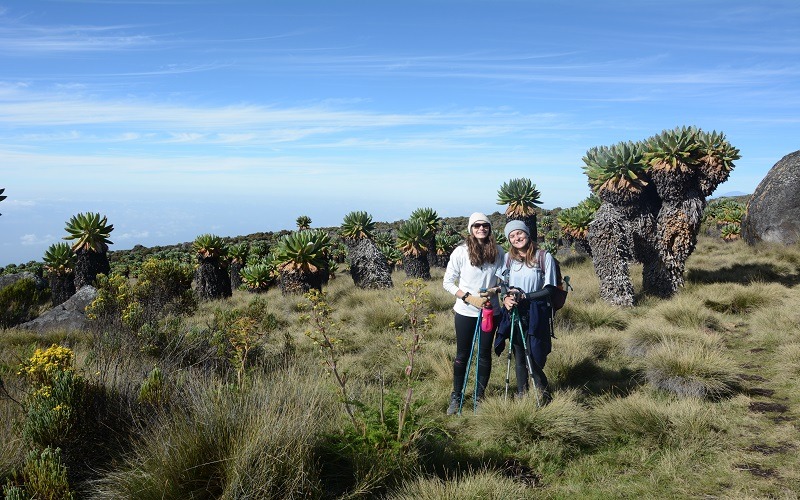
Climb Mount Kilimanjaro via the Marangu Route in 6 days and experience one of the most accessible and comfortable trekking options on Africa’s highest mountain. This hut-based route is perfect for climbers who prefer sleeping in mountain huts instead of tents, offering a more relaxed and sheltered experience throughout the journey. The Marangu Route is well-known for its gradual ascent profile, making it suitable for both beginners and experienced trekkers who want a steady pace while adjusting to altitude.
With an extra acclimatization day included in the 6-day itinerary, climbers have a better chance of adapting to the altitude, which significantly increases summit success rates. Along the way, you will pass through diverse landscapes, from lush rainforest to moorland, alpine desert, and finally the arctic summit zone. This route combines comfort, scenic beauty, and a well-established trail, making it one of the most popular and reliable ways to reach Uhuru Peak.
The 6 Days Marangu Route Kilimanjaro itinerary is one of the most popular choices for climbers aiming to reach the summit of Mount Kilimanjaro. Known widely as the “Coca-Cola Route,” this trail is unique because it is the only route that offers hut accommodation instead of camping. This makes it especially appealing for trekkers who prefer a more comfortable experience while climbing Africa’s highest mountain.
The Marangu Route approaches Kilimanjaro from the southeastern side and is considered one of the easier routes in terms of technical difficulty. However, it still requires good physical fitness, determination, and proper acclimatization. The 6-day itinerary is highly recommended over the shorter 5-day option because it includes an additional day for acclimatization at Horombo Hut. This extra day significantly increases your chances of successfully reaching Uhuru Peak.
Climbers on this route will experience diverse landscapes, starting from lush rainforest and moving through moorland, alpine desert, and finally the arctic summit zone. Each stage of the climb presents unique scenery, making the journey as rewarding as the destination.
Your Kilimanjaro adventure begins at Marangu Gate, where you will complete registration with the park authorities. After meeting your guides and porters, the trek starts through a dense tropical rainforest. This part of the trail is relatively gentle and offers a great introduction to the mountain.
The rainforest is rich in biodiversity, and you may spot blue monkeys, colobus monkeys, and a variety of bird species. The air is humid, and the trail can sometimes be muddy, especially during the rainy season, so proper footwear is essential.
After approximately 4 to 5 hours of hiking, you will arrive at Mandara Hut. This is a cluster of wooden huts nestled in the forest, providing a comfortable place to rest. After dinner, you can take a short walk to the nearby Maundi Crater for a beautiful view of the surrounding landscape.
On the second day, you will leave the rainforest behind and enter the moorland zone. The vegetation changes dramatically, with giant lobelias and groundsels becoming more prominent. The air becomes cooler and drier, and the views begin to open up.
As you ascend, you will be rewarded with stunning views of Mawenzi Peak, one of Kilimanjaro’s three volcanic cones. The trail gradually climbs to Horombo Hut, where you will spend the night.
Horombo Hut is located in a scenic valley with incredible views of both Kibo and Mawenzi peaks. It is also a busy camp, as climbers ascending and descending the mountain often meet here.
This extra day is one of the key advantages of the 6-day Marangu Route itinerary. Acclimatization is crucial when climbing high-altitude mountains, and this day allows your body to adjust to the reduced oxygen levels.
You can take a short hike to Zebra Rocks, which are named for their distinctive black-and-white striped appearance. Alternatively, you can hike toward Mawenzi Ridge for more spectacular views. After the hike, you will return to Horombo Hut for rest.
Spending an extra night at this altitude helps reduce the risk of altitude sickness and increases your chances of reaching the summit successfully.
The fourth day takes you into the alpine desert zone. This area is characterized by barren landscapes, strong winds, and minimal vegetation. The trail is long but steady, offering incredible views of Kibo Peak ahead.
You will pass the last water point before reaching Kibo Hut, so it is important to carry enough water for the journey. Upon arrival at Kibo Hut, you will have an early dinner and rest before your summit attempt, which begins around midnight.
This is a crucial preparation day, both physically and mentally. Your guides will brief you on what to expect during the summit push.
Summit day is the most challenging and rewarding part of the entire climb. You will begin your ascent around midnight, trekking slowly in the cold and darkness. The climb to Gilman’s Point is steep and demanding, requiring determination and perseverance.
From Gilman’s Point, you will continue along the crater rim to Uhuru Peak, the highest point in Africa at 5,895 meters. Reaching the summit is a moment of immense achievement, offering breathtaking views and a sense of accomplishment that is hard to match.
After celebrating at the summit, you will begin your descent back to Kibo Hut for a short rest, then continue down to Horombo Hut for the night.
On the final day, you will descend through the moorland and back into the rainforest. The trail is easier but can be slippery, so caution is needed.
Upon arrival at Marangu Gate, you will receive your summit certificate. This marks the successful completion of your Kilimanjaro climb. You will then be transferred back to your hotel for a well-deserved rest and celebration.
The cost of climbing Kilimanjaro via the Marangu Route for 6 days typically ranges between $1,500 and $2,500 per person. Prices vary depending on the tour operator, group size, and level of service.
The Marangu Route is an excellent choice for climbers who prefer a more comfortable trekking experience. The availability of huts means you do not need to sleep in tents, which can be a significant advantage, especially during cold or wet conditions.
The gradual ascent profile also makes this route suitable for beginners, although proper preparation is still essential. The extra acclimatization day included in the 6-day itinerary further improves the chances of reaching the summit.
To successfully climb Kilimanjaro, it is important to follow some key tips. First, always maintain a slow and steady pace, commonly referred to as “pole pole” in Swahili. This helps your body adjust to the altitude.
Staying hydrated is also crucial. Drink plenty of water throughout the climb to prevent dehydration and reduce the risk of altitude sickness. Listening to your guide is equally important, as they are experienced in handling different situations on the mountain.
Proper gear, including warm clothing, good hiking boots, and a sleeping bag, is essential for comfort and safety. Finally, mental preparation and a positive attitude can make a big difference during challenging moments.
This itinerary offers the perfect balance between comfort, affordability, and success rate. It is ideal for first-time climbers who want a structured and well-supported experience.
With professional guides, hut accommodation, and a proven route, the 6-day Marangu Route remains one of the best ways to climb Mount Kilimanjaro. The extra acclimatization day significantly improves your chances of reaching the summit, making it a smart choice for many trekkers.
No results available
ResetNo results available
ResetTanzania is a year-round safari destination with many adventures being offered all over the country. For optimal wildlife sightings, the dry season from June to October is your best bet! Read more on when to visit Tanzania
Both have their perks with Big Five national parks, the incredible Great Migration and that quintessential African experience we all dream of. Check out our article on Serengeti vs Masai Mara to help you decide.
They both have such different safari experiences! Tanzania offers Big Five game reserves on classic dusty desert plains, rather South Africa partners the Big Five animals with luscious winelands. Both are just as good, but it depends on your safari style.
That’s a tough one! Botswana is home to herds of elephants at Chobe and the sparkling Okavango Delta, and Tanzania has the iconic Mount Kilimanjaro and Great Migration. Check out our article on Botswana vs Tanzania safaris to help you decide.
Tanzania is in general a safe, hassle-free country. However, like most places, you do need to take precautions and listen to your tour guide. It also pays to read our articles on ‘Things to know before going to Tanzania’.
A camera and binoculars are a must. You’ll regret it if you don’t take them! As for clothing, definitely pack lightweight, breathable clothing. Remember, Tanzania is an arid country so the days can get quite hot. Read more on what to pack for a safari in Tanzania in our travel magazine
EXPERIENCES
BEST TOURS
copyright©2026 . Enjore Safaris