Nyerere National Park is one of Tanzania’s outstanding wilderness safari destinations, famous for its enormous landscapes, abundant wildlife, the Rufiji River, boat safaris, game drives and relatively uncrowded safari experience.
Located in southern Tanzania, the park was created from the northern sector of the historic Selous ecosystem. Today, Nyerere protects more than 30,000 square kilometres of wilderness containing miombo woodland, open grasslands, floodplains, riverine forests, lakes and river channels.
At the heart of the park is the Rufiji River. Its channels, lakes, sandbanks and surrounding vegetation attract an impressive variety of wildlife and create one of the most distinctive safari environments in Tanzania.
Visitors can explore Nyerere by safari vehicle, boat and on selected guided walking safaris.
A typical visit may include an early morning game drive searching for lions, elephants and African wild dogs followed by an afternoon boat safari where hippos, crocodiles and waterbirds can be observed along the Rufiji River.
For travelers looking for wildlife, wilderness and a safari experience away from Tanzania’s busier northern circuit, Nyerere National Park is an excellent destination.
| Information | Details |
|---|---|
| Country | Tanzania |
| Region | Southern Tanzania |
| Main Feature | Rufiji River |
| Size | More than 30,000 km² |
| Famous For | Wildlife, boat safaris and wilderness |
| Main Activities | Game drives, boat safaris and walking safaris |
| Major Wildlife | Lions, elephants, buffalo, hippos, crocodiles and wild dogs |
| Birdlife | More than 430 recorded species |
| Popular Safari Period | June to October |
| Access | Road or light aircraft |
| Good Combinations | Ruaha, Mikumi, Zanzibar and Dar es Salaam |
Nyerere National Park is located in southern Tanzania within the wider Selous ecosystem.
It belongs to Tanzania’s Southern Safari Circuit and offers a very different experience from northern safari destinations such as Serengeti National Park, Ngorongoro Crater, Tarangire and Lake Manyara.
Its location also makes it an attractive safari destination for travelers starting from Dar es Salaam or combining wildlife experiences with a Zanzibar beach holiday.
Nyerere is much more than a traditional game-drive destination.
Its combination of enormous wilderness areas, wildlife, rivers, lakes and different safari activities gives visitors several ways to experience southern Tanzania.
One of the strongest reasons to visit Nyerere is the sense of wilderness.
Because of its enormous size and relatively lower visitor numbers, travelers can enjoy game drives without constantly encountering large numbers of other safari vehicles.
This can create a quieter and more private safari atmosphere.
The Rufiji River is one of the defining features of Nyerere National Park.
Its river channels, lakes and floodplains provide vital water for wildlife and create excellent habitats for hippos, crocodiles, elephants, buffalo and numerous bird species.
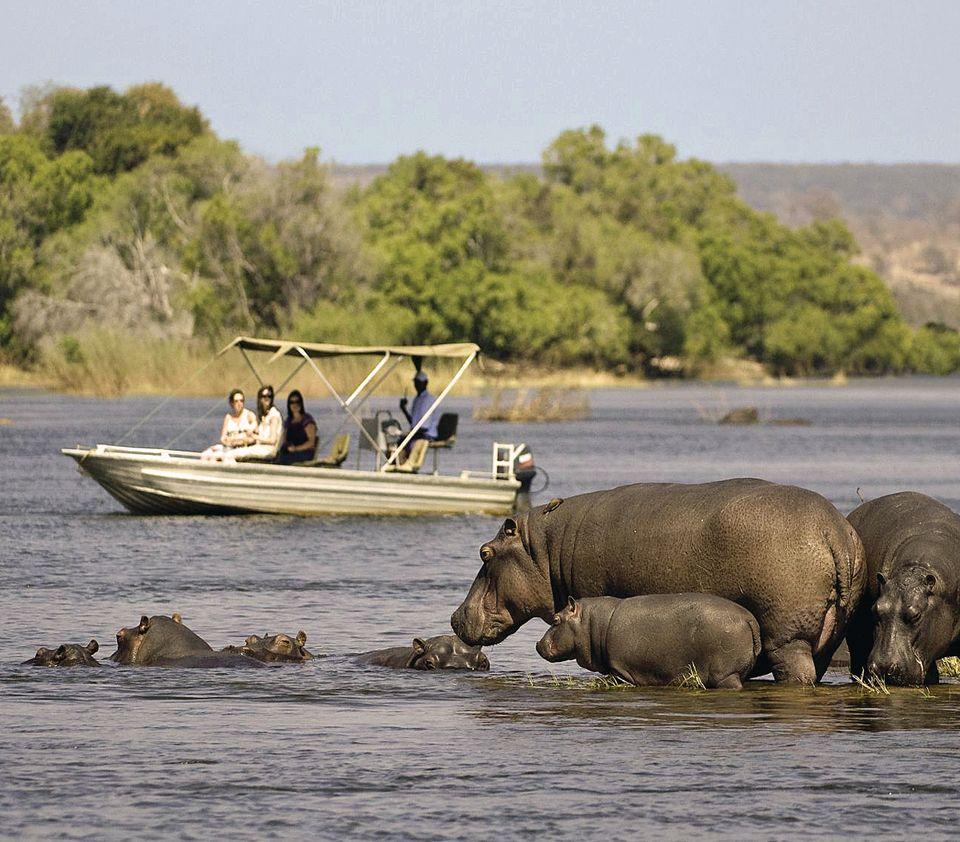
One of the experiences that makes Nyerere different from many Tanzanian parks is the opportunity to enjoy a boat safari on the Rufiji River.
Instead of observing wildlife only from a safari vehicle, travelers can experience the park from the water.
Possible sightings include:
Hippos
Nile crocodiles
Elephants
Waterbirds
Kingfishers
African fish eagles
Bee-eaters
Nyerere is particularly well known as an important habitat for African wild dogs.
Wild dogs move across large territories, so sightings can never be guaranteed, but finding a pack can become one of the most memorable moments of a Nyerere safari.
Nyerere offers greater activity variety than many destinations.
Travelers can combine:
Game drives
Boat safaris
Guided walking safaris
Bird watching
Wildlife photography
The Rufiji River is central to the Nyerere National Park experience.
Its channels and associated lakes create an important source of water for animals and birds.
During the dry season, wildlife increasingly depends on reliable water sources, making the river system particularly important for safari viewing.
Animals around the Rufiji may include:
Hippos
Crocodiles
Elephants
Buffalo
Waterbuck
Antelopes
Fish eagles
Kingfishers
Wading birds
The combination of water, palm trees, woodland and open spaces also makes the Rufiji an excellent area for landscape photography.
Nyerere supports a diverse range of wildlife across its woodland, grassland, riverine and wetland habitats.
Visitors may encounter predators, large herbivores and numerous smaller species.
Lions are among the major predators found in Nyerere.
They may be seen resting beneath trees, moving across open areas or searching for prey.
Early mornings and late afternoons can be particularly rewarding for predator viewing.
African wild dogs are among Nyerere’s most sought-after wildlife species.
They are highly mobile predators and may travel significant distances while hunting.
Elephants are found throughout different habitats within the park.
Sightings around rivers and water sources can be especially impressive during drier periods.
Buffalo occur throughout Nyerere and may be seen individually, in small groups or in larger herds.
The Rufiji River and its associated lakes provide excellent habitat for hippos.
Boat safaris can offer visitors a different perspective on these large semi-aquatic mammals.
Nile crocodiles inhabit the Rufiji River system.
Visitors may see them swimming through the water or resting along riverbanks and sandbanks.
Giraffes are frequently associated with woodland and savanna areas and create impressive photographic opportunities against the southern Tanzania landscape.
Leopards are also present in Nyerere, although their solitary behavior and excellent camouflage can make them more difficult to locate.
Depending on the area and season, visitors may also see:
Zebras
Impalas
Waterbucks
Warthogs
Hyenas
Sable antelopes
Lichtenstein’s hartebeest
Various other antelope species
Nyerere National Park is also an excellent destination for bird enthusiasts.
Its rivers, lakes, woodland and open landscapes support hundreds of bird species.
Birds that may be encountered include:
African fish eagles
Kingfishers
Bee-eaters
Herons
Egrets
Storks
Raptors
Woodland birds
Waterbirds
Boat safaris can be particularly rewarding for visitors interested in bird photography.
Nyerere provides several ways to explore its wildlife and landscapes.
Game drives are one of the main activities in Nyerere.
Customized 4×4 safari vehicles allow visitors to explore:
Riverbanks
Open plains
Miombo woodland
Floodplains
Lakes
Game drives provide opportunities to search for lions, elephants, wild dogs, buffalo, giraffes and other wildlife.
A Rufiji River boat safari is one of the signature experiences of Nyerere.
From the water, visitors may observe:
Hippos
Crocodiles
Elephants near the river
Waterbirds
Riverine vegetation
Sunset scenery
Boat safaris provide a completely different perspective from traditional vehicle-based game drives.
A guided walking safari allows visitors to explore the African bush on foot with qualified guides.
Walking safaris focus not only on large animals but also on smaller details such as:
Animal tracks
Plants
Insects
Birds
Droppings
Animal behavior
Ecology
Nyerere is an attractive destination for photographers because of its wildlife diversity, lower vehicle density and varied landscapes.
Photography opportunities include:
Lions
Wild dogs
Elephants
Hippos
Crocodiles
Birds
Rufiji River
Sunrise
Sunset
Travelers who are serious about photography may prefer a private safari vehicle.
Depending on the safari arrangements, visitors may enjoy an afternoon game drive or boat safari extending toward sunset.
The evening light over the Rufiji River can create a beautiful ending to the safari day.
Nyerere changes significantly throughout the year.
The best time depends on your interests, including wildlife viewing, photography, bird watching and green landscapes.
June through October generally forms the main dry-season safari period.
As the landscape becomes drier, wildlife tends to concentrate around permanent water sources.
This period is particularly good for:
Wildlife viewing
Game drives
Boat safaris
Photography
First-time visitors
November usually marks a transition toward the short-rain period.
The landscape begins becoming greener while wildlife viewing continues.
December through February can provide beautiful green landscapes.
This period can be attractive for:
Photography
Bird watching
Green scenery
Travelers preferring a different seasonal atmosphere
March through May is generally the wetter period.
Heavy rains may affect roads and accessibility in some parts of the park.
Travelers visiting during these months should confirm road conditions, accommodation availability and activity schedules.
Most travelers should consider approximately 2 to 4 nights, depending on the type of safari they want.
Suitable for visitors with limited time.
A short itinerary may combine a game drive with a boat safari depending on arrival and departure times.
Three days provides a stronger introduction to the park.
Travelers can enjoy:
Game drives
Boat safari
Photography
Time around camp
Four days allows a slower safari pace and more time to explore different areas.
Longer stays are useful for:
Wildlife photographers
Bird watchers
Safari enthusiasts
Travelers looking for a deeper wilderness experience
Visitors can reach Nyerere mainly by road or air.
Nyerere can be reached from Dar es Salaam by road.
Road travel allows visitors to experience more of the Tanzanian countryside and can work well as part of a longer southern circuit safari.
A suitable 4×4 vehicle is particularly important during periods when road conditions may be challenging.
Flying is the fastest and most convenient option for many travelers.
Scheduled or charter light aircraft services may connect Nyerere with:
Dar es Salaam
Zanzibar
Other Tanzanian safari destinations
This option is particularly useful for travelers with limited time.
Nyerere is one of the strongest safari destinations to combine with Zanzibar.
Travelers already enjoying a Zanzibar beach holiday can add a short fly-in safari to southern Tanzania.
Suitable for travelers looking for a quick wildlife experience.
Provides more time for both land-based game drives and a Rufiji River boat safari.
A more relaxed option that allows visitors to explore the park without rushing.
Nyerere offers several accommodation categories, ranging from simple safari camps to premium riverside properties.
Budget accommodation is suitable for travelers who want to concentrate more of their budget on wildlife experiences than luxury facilities.
Mid-range tented camps usually provide a strong combination of wilderness atmosphere and comfort.
Facilities may include:
Comfortable beds
Private bathrooms
Restaurant
Lounge
Electricity or solar power
Safari views
Luxury camps provide higher levels of:
Comfort
Privacy
Personalized service
Dining
Location
Room design
Some properties are located near the Rufiji River or other productive wildlife areas.
Accommodation location is important.
Staying closer to wildlife-viewing areas can reduce travel time and provide more time for actual safari activities.
Before booking, check:
Exact location
Distance from wildlife areas
Distance from airstrip
Meal plan
Activities included
Boat safari availability
Electricity
Family policy
Seasonal operation dates
Nyerere can be a rewarding safari destination for families.
A private safari vehicle can make the experience more flexible because parents can adjust schedules according to the needs of children.
Families should check:
Children’s age policies
Family rooms
Triple rooms
Boat safari restrictions
Walking safari age restrictions
Meal requirements
Driving distances
Nyerere’s quiet wilderness environment can work particularly well for couples.
Highlights for honeymoon travelers may include:
Private game drives
Riverside accommodation
Boat safaris
Sunset experiences
Intimate safari camps
A popular combination is:
Nyerere National Park Safari + Zanzibar Beach Holiday
Photographers may particularly appreciate Nyerere because of:
Lower vehicle density
African wild dogs
Large mammals
River wildlife
Birdlife
Boat safari opportunities
Varied landscapes
A private safari vehicle provides greater control over vehicle position and how long you remain at a particular wildlife sighting.
Nyerere and Serengeti provide very different safari experiences.
| Feature | Nyerere National Park | Serengeti National Park |
|---|---|---|
| Location | Southern Tanzania | Northern Tanzania |
| Famous Feature | Rufiji River | Serengeti plains |
| Boat Safari | Available | Not a standard activity |
| Great Migration | No | Yes |
| Wild Dogs | Important wildlife attraction | Present but less central |
| Visitor Density | Generally lower | Can be higher in popular areas |
| Landscape | River, woodland and floodplains | Plains, kopjes and woodland |
| Safari Style | Wilderness and varied activities | Classic game drives and migration |
Neither park is automatically better.
Travelers interested in the Great Migration will normally prioritize Serengeti.
Travelers wanting boating, river scenery and a quieter southern wilderness may prefer adding Nyerere.
Many travelers still recognize this safari area by the historic name Selous.
Nyerere National Park was created from the northern portion of the larger historic Selous protected landscape.
Because of this, visitors searching online may still encounter phrases such as:
Selous safari
Selous Tanzania
Selous wildlife safari
Selous Game Reserve safari
For current travel content, however, the national park should be referred to as Nyerere National Park where appropriate.
Useful items include:
Lightweight safari clothing
Neutral-colored clothes
Comfortable shoes
Sun hat
Sunglasses
Sunscreen
Insect repellent
Camera
Spare batteries
Binoculars
Small day bag
Reusable water bottle
Light jacket
Personal medication
Travel documents
For early morning or evening boat safaris, a light jacket may also be useful.
Nyerere can be visited independently or combined with other destinations in southern Tanzania and Zanzibar.
A short safari suitable for travelers with limited time.
Depending on arrival and departure schedules, it can include game drives and a boat safari.
A popular short itinerary offering enough time to experience different parts of the park.
A strong choice for travelers wanting multiple game drives, a boat safari and a more relaxed itinerary.
Ideal for visitors interested in more extensive wildlife viewing and photography.
Combining Nyerere with Mikumi National Park creates a longer southern Tanzania wildlife itinerary.
Combining Nyerere National Park and Ruaha National Park creates one of Tanzania’s strongest southern safari combinations.
Nyerere provides river ecosystems and boat safaris, while Ruaha provides vast landscapes and a different wildlife environment.
Nyerere combines particularly well with Zanzibar.
A sample itinerary could be:
Day 1–3: Nyerere National Park
Day 4: Fly to Zanzibar
Day 5–8: Zanzibar Beach Holiday
A safari day may begin early in the morning with tea, coffee or breakfast before departing camp.
Morning game drives can provide opportunities to search for lions, African wild dogs, elephants and other wildlife while temperatures remain cooler.
Guests may then return to camp for lunch and rest during the warmer part of the day.
Later in the afternoon, visitors can take another game drive or enjoy a boat safari on the Rufiji River.
As sunset approaches, birds become active and the river landscape can be particularly beautiful.
Guests then return to camp for dinner and overnight.
The exact safari schedule depends on the lodge, weather conditions, itinerary and activities selected.
Nyerere National Park is particularly rewarding for travelers who want a large wilderness destination offering more than traditional game drives.
Some of its strongest attractions include:
Rufiji River
Boat safaris
African wild dogs
Elephants
Lions
Hippos
Crocodiles
Birdlife
Walking safari opportunities
Relatively lower visitor density
Easy safari and Zanzibar combinations
Its landscapes and safari style provide a different experience from Tanzania’s northern safari circuit.
Nyerere National Park is located in southern Tanzania and forms part of the country’s Southern Safari Circuit.
Nyerere is particularly famous for the Rufiji River, boat safaris, wilderness, African wild dogs, elephants, lions, hippos, crocodiles and birdlife.
Yes. Boat safaris on the Rufiji River are among the most distinctive activities available in the park.
Yes. Nyerere is an important habitat for African wild dogs, although wildlife sightings can never be guaranteed.
Possible wildlife includes lions, elephants, buffalo, wild dogs, giraffes, hippos, crocodiles, leopards, hyenas, antelopes and many bird species.
The dry-season months from approximately June to October are particularly popular for wildlife viewing.
Around three to four days is a good choice for many visitors because it provides time for game drives and other activities such as a boat safari.
Yes. Nyerere can be combined with Zanzibar using scheduled or charter flight arrangements depending on availability.
Yes. Road safaris from Dar es Salaam to Nyerere can be organized.
Yes. Its rivers, wetlands, woodland and floodplains support hundreds of bird species.
Yes. Its wilderness atmosphere, river scenery and safari camps make it a good destination for couples and honeymooners.
Nyerere generally receives lower visitor density than some of Tanzania’s most heavily visited safari destinations.
Discover Nyerere National Park through a safari designed around your travel dates, preferred accommodation, budget and interests.
Tanzania is a year-round safari destination with many adventures being offered all over the country. For optimal wildlife sightings, the dry season from June to October is your best bet! Read more on when to visit Tanzania
Both have their perks with Big Five national parks, the incredible Great Migration and that quintessential African experience we all dream of. Check out our article on Serengeti vs Masai Mara to help you decide.
They both have such different safari experiences! Tanzania offers Big Five game reserves on classic dusty desert plains, rather South Africa partners the Big Five animals with luscious winelands. Both are just as good, but it depends on your safari style.
That’s a tough one! Botswana is home to herds of elephants at Chobe and the sparkling Okavango Delta, and Tanzania has the iconic Mount Kilimanjaro and Great Migration. Check out our article on Botswana vs Tanzania safaris to help you decide.
Tanzania is in general a safe, hassle-free country. However, like most places, you do need to take precautions and listen to your tour guide. It also pays to read our articles on ‘Things to know before going to Tanzania’.
A camera and binoculars are a must. You’ll regret it if you don’t take them! As for clothing, definitely pack lightweight, breathable clothing. Remember, Tanzania is an arid country so the days can get quite hot. Read more on what to pack for a safari in Tanzania in our travel magazine
EXPERIENCES
BEST TOURS
copyright©2026 . Enjore Safaris