
The 3 Days Tanzania Safaris Nyerere National Park – Enjore Safaris 2026-2027 is a short southern Tanzania wildlife adventure combining traditional game drives with one of Nyerere’s signature experiences: a boat safari on the Rufiji River.
Formerly part of the historic Selous landscape, Nyerere National Park protects more than 30,000 square kilometres of miombo woodland, open grassland, floodplains, riverine forest, wetlands, oxbow lakes and the channels of the Rufiji River. TANAPA describes it as one of Africa’s great wilderness areas and highlights lions, elephants, buffalo, hippos, crocodiles, leopards and African wild dogs among its major wildlife attractions. Tanzania Parks
Unlike many classic vehicle-only safaris, a Nyerere trip can combine the wildlife of the plains with the completely different perspective of the river.
A practical three-day route follows:
Dar es Salaam → Nyerere National Park → Rufiji River Boat Safari → Full-Day Nyerere Game Drive → Final Morning Wildlife Experience → Dar es Salaam
The experience develops naturally through:
Dar es Salaam countryside → miombo wilderness → Rufiji River → hippos and crocodiles → elephants and buffalo → lions and wild-dog possibilities → final morning safari → Dar es Salaam.
For travelers visiting Tanzania in 2026-2027, this is particularly attractive as a short safari from Dar es Salaam or as a wildlife extension before or after Zanzibar. Instead of traveling all the way to Tanzania’s northern circuit, visitors can experience an enormous southern wilderness with a distinctly different style of safari.
Nyerere is particularly well suited to travelers who want more than a standard game drive.
The park’s immense scale creates a powerful sense of wilderness, but the Rufiji River is what gives the destination its distinctive identity.
One day may involve elephants crossing open country, buffalo grazing on a floodplain and lions resting beneath woodland shade. Later, the safari can move onto the river, where hippos occupy channels, crocodiles use sandbanks and fish eagles or kingfishers appear around the water.
TANAPA describes Nyerere as a mosaic of miombo woodland, riverine forest, open grasslands, floodplains and Rufiji wetlands, with seasonal changes in rainfall and river levels shaping wildlife movement throughout the year. Tanzania Parks
The park is also particularly important for African wild dogs. TANAPA identifies Nyerere as one of East Africa’s principal refuges for the species, alongside populations of lions, leopards, elephants and other large mammals. Tanzania Parks
This means a three-day safari can offer:
classic game viewing + river wildlife + rare predator possibilities + exceptional birdlife + a low-density wilderness atmosphere.
It is that combination, rather than simply a checklist of famous animals, that makes Nyerere special.
Nyerere was created from the northern portion of the wider historical Selous Game Reserve landscape. Today TANAPA describes the national park as covering more than 30,000 km², making it one of the largest protected wildlife landscapes in Africa. Tanzania Parks
The landscape does not look the same everywhere.
Vast areas are dominated by miombo woodland, an ecosystem characteristic of large parts of southern Tanzania.
Elsewhere, the land opens into grassland and floodplain.
Near the Rufiji River, the scenery changes again.
Channels divide around islands and sandbanks.
Oxbow lakes occupy old sections of the river.
Palm and riverine vegetation line stretches of shoreline.
Animals move between these habitats according to season, water and food availability.
This diversity is particularly valuable during a short safari because the scenery changes even when travelers remain inside one national park.
Nyerere therefore feels very different from the wide treeless plains commonly associated with the Serengeti.
The southern Tanzania experience is more strongly characterized by:
woodland → river → wetlands → floodplain → scattered open savannah.
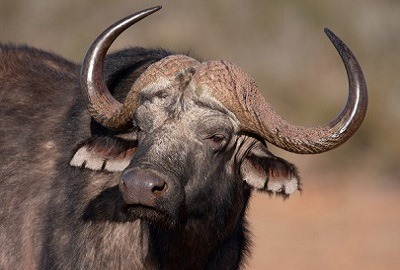
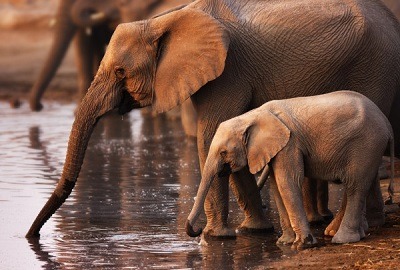
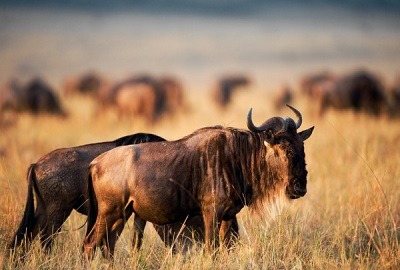
Your 3 Days Nyerere National Park Safari with Enjore Safaris begins in Dar es Salaam after breakfast or from another agreed pickup point.
Meet your professional safari driver-guide and begin traveling south toward the Nyerere ecosystem.
TANAPA currently identifies road access from Dar es Salaam through the Kibiti–Utete direction, while scheduled and charter flights provide another option for travelers who prefer to reduce road travel. Tanzania Parks
For the road safari, the journey becomes part of the transition from Tanzania’s largest coastal city into the rural landscapes of the south.
Dense urban development gradually disappears.
The surroundings become increasingly open.
Small communities, agricultural areas and wider countryside replace the city before the route approaches the Nyerere region.
Because road and seasonal conditions can vary, the exact arrival schedule should remain realistic rather than depending on an overly tight timetable.
After arriving near the park and completing the necessary entry or accommodation arrangements, settle into your lodge or tented camp.
Depending on arrival time, river level and the confirmed safari program, the afternoon can introduce one of Nyerere’s defining experiences: a boat safari on the Rufiji River.
TANAPA officially lists Rufiji boat safaris among the park’s principal tourism activities and describes the river system as a particularly productive environment for hippos, crocodiles, elephants, buffalo and birdlife. Tanzania Parks
From the water, the safari feels completely different from a vehicle game drive.
Attention shifts toward riverbanks, sandbars, islands and channels.
Hippos may surface in deeper sections.
Nile crocodiles can sometimes be seen along exposed banks.
Waterbuck or buffalo may appear close to shore.
Elephants occasionally use riverine environments for drinking or feeding.
Nothing is guaranteed, and wildlife should always be viewed according to the authorized boat crew’s guidance and appropriate distances.
The boat experience is also excellent for birdlife.
Fish eagles may call from trees above the river.
Kingfishers occupy the banks.
Bee-eaters and other colorful species can appear around exposed soils and vegetation.
Waterbirds use shallow margins and oxbow lakes.
TANAPA records more than 430 bird species across Nyerere’s riverine, wetland, woodland and floodplain habitats. Tanzania Parks
Late afternoon can be particularly beautiful.
The stronger midday light begins softening.
The river surface reflects the surrounding vegetation.
Hippos may become increasingly active.
Birds move between feeding and roosting areas.
The boat safari therefore provides a calm introduction to Nyerere before the following day’s full wildlife drive.
After the river experience, return to your accommodation.
Enjoy dinner and your first night in southern Tanzania’s wilderness.
Overnight: Nyerere National Park / Rufiji area
Main Experience: Dar es Salaam journey, Nyerere arrival, Rufiji River boat safari, hippos, crocodiles and river birdlife.
Wake early for the main game-viewing day of your safari.
Day 2 is devoted to exploring Nyerere by vehicle.
The exact route should respond to season, recent sightings, road conditions, river levels and your wildlife interests rather than following exactly the same circuit every day.
This flexibility matters in a park of more than 30,000 km².
Begin during the cooler morning hours.
Wildlife may be more active than during the hotter middle of the day.
The landscapes can move between miombo woodland, riverine areas, floodplains and more open grassland.
Possible sightings include:
elephants, buffalo, giraffes, waterbuck, impala, wildebeest, Lichtenstein’s hartebeest, sable antelope, lions, spotted hyenas and leopard possibilities.
TANAPA specifically highlights buffalo, sable, Lichtenstein’s hartebeest, waterbuck, impala and giraffe among Nyerere’s characteristic plains and woodland wildlife. Tanzania Parks
One of the most exciting possibilities is the African wild dog.
Nyerere is internationally significant for this endangered predator and TANAPA describes the park as one of East Africa’s strongholds for the species. Tanzania Parks
Wild dogs can travel considerable distances, however, so a sighting should never be guaranteed.
A pack observed one day may be far away the next morning.
That unpredictability makes an encounter particularly valuable.
Lions are another important predator.
They use both more open environments and woodland edges.
Possible observations may include pride members resting, adult males, females moving between habitats or lions watching grazing animals.
Spend time observing natural behavior when possible.
A relaxed safari should not immediately leave an interesting sighting simply to search for another famous animal.
Leopards also occur within Nyerere, but they remain naturally secretive.
Woodland and riverine habitats provide considerable cover, so even experienced guides may need patience.
Spotted hyenas complete another important part of the predator community and may be encountered across suitable areas.
Elephants provide some of the park’s most impressive large-mammal encounters.
TANAPA notes that Nyerere’s Rufiji system and surrounding habitats support significant elephant populations. Tanzania Parks
A family group moving between woodland and floodplain can create one of the most memorable scenes of the safari.
Buffalo may occur individually or in substantial herds.
Giraffes bring another visual dimension, especially where taller woodland meets open country.
Antelope diversity is also particularly interesting in southern Tanzania, where species such as sable and Lichtenstein’s hartebeest add something different from many standard northern Tanzania itineraries.
As the day progresses, explore areas influenced by the Rufiji and its associated lakes.
Hippos and crocodiles remain important inhabitants of this environment, even when viewed from land.
TANAPA describes the Rufiji as a network of channels, sandbars and oxbow lakes that supports major concentrations of aquatic and terrestrial wildlife. Tanzania Parks
Enjoy lunch according to the selected safari arrangement.
The middle of the day can be quieter for predators, but this does not make it unproductive.
Elephants continue feeding.
Giraffes browse.
Buffalo remain active around suitable areas.
Birds provide constant interest.
Later in the afternoon, wildlife activity may begin increasing again as temperatures become more comfortable.
This is also one of the best periods for photography.
Warm light moves through the woodland.
Dust behind buffalo or elephants can create atmosphere.
Giraffes stand against open skies.
The Rufiji floodplains take on softer tones.
Rather than photographing only close animal portraits, include the southern Tanzania environment.
A wild dog or elephant framed by woodland tells the Nyerere story more effectively than an image that could have been created in any African park.
Eventually return to your lodge or tented camp.
Enjoy dinner and your second night in the wilderness.
Overnight: Nyerere National Park / Rufiji area
Main Experience: Full-day game drive, African wild-dog possibilities, lions, elephants, buffalo, giraffes, antelope, predators and Rufiji landscapes.
Wake early for one final wildlife experience.
This extra morning is one of the reasons a three-day Nyerere safari is more rewarding than a rushed overnight visit.
Wildlife can move substantially between days.
The elephants seen yesterday may have changed location.
Lions may be active in a different area.
A wild-dog pack could suddenly appear where the previous afternoon was quiet.
Begin with a shorter final game drive according to the location of your accommodation and departure plan.
Morning light can be particularly attractive for photography.
Possible wildlife includes elephants, buffalo, giraffes, antelope, lions, hyenas, wild dogs and numerous birds.
Leopard remains a possibility rather than an expectation.
Use the final safari period to enjoy the complete ecosystem rather than turning the morning into a stressful checklist.
Nyerere is not best understood by asking whether every famous African species was seen.
Its identity comes from the combination of:
vast wilderness + African wild dogs + Rufiji River + woodland + elephants + low-density safari atmosphere.
After the final wildlife experience, return for breakfast or complete the lodge’s departure arrangements.
Travel back toward Dar es Salaam.
Road conditions and traffic influence the exact arrival time, so onward international flights should be planned with an appropriate buffer rather than using an unrealistic same-day connection.
Travelers choosing a fly-in version can instead depart from one of the park-serving airstrips. TANAPA currently identifies air access including areas such as Mtemere and other park airstrips, while its current Nyerere page also notes connections from Dar es Salaam. Tanzania Parks
Arrive at your agreed Dar es Salaam destination, completing your 3 Days Tanzania Safaris Nyerere National Park – Enjore Safaris 2026-2027.
Main Experience: Final morning wildlife, southern Tanzania landscapes and return to Dar es Salaam.
African wild dogs are one of the strongest reasons wildlife enthusiasts choose Nyerere.
These highly social predators require large connected landscapes, making extensive protected wilderness particularly important for their survival.
TANAPA identifies Nyerere as one of East Africa’s major wild-dog refuges and highlights continued conservation attention toward wild dogs and elephant movements. Tanzania Parks
Finding them still requires luck.
Unlike an animal that repeatedly uses a small territory close to a tourist road, wild dogs can move long distances.
A pack may appear unexpectedly and then disappear deep into the park.
That is why Enjore Safaris should present Nyerere as providing excellent wild-dog possibilities, never guaranteed wild-dog sightings.
Lions are more widely associated with the park’s floodplains and woodland.
Leopards remain secretive.
Spotted hyenas also occupy the ecosystem.
Large herbivores include elephants, buffalo, giraffes and numerous antelope species.
The river contributes enormous numbers of hippos and Nile crocodiles to the wildlife experience.
Nyerere is therefore a major big-game destination without needing to be marketed primarily as a traditional “Big Five checklist” safari.
Its strongest identity is different:
wild dogs + elephants + lions + Rufiji River + hippos + crocodiles + southern Tanzania wilderness.
The Rufiji River boat safari is the experience that most clearly separates Nyerere from many standard game-drive destinations.
TANAPA describes the Rufiji as Tanzania’s largest river and the ecological heart of the park, feeding channels, wetlands and oxbow lakes that sustain wildlife throughout the northern Nyerere landscape. Tanzania Parks
From a safari vehicle, travelers normally look across land.
From a boat, the perspective changes to water level.
Riverbanks become the focus.
Sandbars reveal crocodiles.
Hippos surface from channels.
Waterbirds occupy islands and reeds.
Elephants, buffalo, waterbuck and other mammals may occasionally approach the shoreline.
The experience can also be more scenic than species-focused.
Palm-lined river edges, reflections and evening skies create a completely different visual character from a normal game drive.
For a three-day itinerary, including one boat safari provides variety without requiring another national park.
All boating should take place through authorized operations under current park rules. TANAPA’s visitor guidance specifically requires compliance with river-use procedures and the use of appropriate safety equipment during boat activities. Tanzania Parks
Nyerere is an excellent destination for travelers interested in more than large mammals.
Current TANAPA wildlife information records more than 430 bird species, while the main park overview currently highlights a total exceeding 440 recorded species. The difference reflects the way official park pages summarize an evolving species record; either way, the park’s bird diversity is exceptional. Tanzania Parks
Riverine environments can produce opportunities for fish eagles, kingfishers, bee-eaters and wetland waders.
Woodland creates a different bird community.
Open floodplains introduce still more species.
Photography also benefits from this habitat variety.
A three-day trip may produce images of elephants in miombo woodland, buffalo on floodplains, giraffes against open sky, hippos in river channels and birds reflected in the Rufiji.
Nyerere photography therefore tends to feel more varied than a safari that remains entirely within one open-grassland ecosystem.
The most effective images often show animal + habitat together.
The landscape is part of the story.
Nyerere can provide rewarding wildlife experiences during different parts of the year, but seasonal conditions matter.
TANAPA’s general Tanzania planning guidance identifies June through October as the principal dry-season period, when wildlife is often easier to locate around water and road conditions are generally more straightforward. Tanzania Parks
Older official Nyerere material extends its broad dry period into approximately November, while describing December through February as greener but still attractive in many accessible areas. Tanzania Parks
For most wildlife-focused visitors, June to October is an excellent planning period.
Water becomes increasingly important.
Animals use floodplains, lakes and river environments.
Vegetation can become less dense in some areas.
Traditional game viewing can therefore be particularly productive.
The green season should not automatically be dismissed.
After seasonal rain, woodland and plains become greener, birdlife can be exceptional and the overall landscape looks dramatically different.
December through February can provide beautiful scenery and strong wildlife experiences when road and river conditions remain suitable.
The heavier rains, broadly concentrated around the March–May period, can affect road access, lodge operations and river conditions. TANAPA advises checking current road and river information during wetter periods. Tanzania Parks
For 2026-2027, the final decision should therefore consider both wildlife priorities and the accessibility of the chosen accommodation.
Nyerere can be arranged in several ways.
A road safari from Dar es Salaam is attractive for travelers who want a more affordable overland experience and enjoy watching the landscape change between the coast and the park.
TANAPA currently identifies the Kibiti–Utete approach as a principal Dar es Salaam road route and recommends suitable vehicles, particularly when conditions are wet. Tanzania Parks
A fly-in safari is particularly attractive when time is more important than cost.
Flights can connect Dar es Salaam with park airstrips, reducing transfer time and allowing a larger proportion of the three days to be spent on wildlife activities. Tanzania Parks
Accommodation ranges from campsites to tented camps and lodges, including properties around the Rufiji River. TANAPA recommends reserving early for peak travel periods and coordinating game-drive and boating arrangements with the selected accommodation. Tanzania Parks
For a three-day package, lodge location matters significantly.
A beautiful lodge positioned conveniently for both game drives and the river may provide better overall value than more elaborate accommodation requiring long transfers to every activity.
There is no single fixed price for every three-day Nyerere safari.
The total depends on several major variables:
road or fly-in travel, private or shared vehicle, lodge category, group size, boat safari arrangements, meals and current national-park charges.
As a current 2026 planning reference, TANAPA’s Nyerere page lists an international park-entry charge of US$70 for adults and US$20 for children, while additional vehicle, activity, accommodation or concession-related charges may apply depending on the package. Tanzania Parks
That park-entry figure is not the price of a complete three-day safari.
A road safari additionally needs transport from Dar es Salaam, professional guiding, fuel, accommodation, meals and the selected activities.
A fly-in package additionally reflects air tickets and lodge transfers.
Private safaris generally cost more per person for one or two travelers because vehicle and guide costs are divided among fewer guests. A larger private group or shared arrangement can reduce the per-person cost.
For 2027, official park charges should be checked against the tariff valid for the actual travel dates rather than assuming the current 2026 rate will remain unchanged. TANAPA itself advises travelers to confirm the latest tariff before travel. Tanzania Parks
Enjore Safaris can therefore structure the final quotation around the traveler’s preferred balance of:
price + accommodation + travel time + privacy + wildlife time.
Both Nyerere and Mikumi work well from Dar es Salaam, but they offer different experiences.
Mikumi National Park is particularly known for the open Mkata Floodplain and relatively straightforward traditional game driving, with elephants, lions, buffalo, giraffes, zebras and wildebeest among its characteristic wildlife. TANAPA also emphasizes Mikumi’s accessibility from Dar es Salaam. Tanzania Parks
Nyerere is much larger and feels more wilderness-oriented.
Its advantages include:
Rufiji boat safaris, African wild-dog possibilities, hippo and crocodile concentrations, vast miombo woodland and a lower-density atmosphere.
For someone who wants the simplest short classic game-drive safari, Mikumi can be an excellent choice.
For someone who wants a deeper southern Tanzania wilderness experience with both land and river safari, Nyerere is particularly compelling.
Nyerere fits naturally into a broader southern Tanzania holiday.
For beach travelers, one of the strongest combinations is:
Zanzibar → Nyerere National Park → Zanzibar
or:
Dar es Salaam → Nyerere → Zanzibar.
A flight connection can make this especially practical when holiday time is limited.
The contrast is exceptional.
Nyerere provides:
lions + wild dogs + elephants + Rufiji River + hippos + crocodiles.
Zanzibar provides:
Indian Ocean beaches + Stone Town + coastal culture + relaxation.
Travelers with more safari time can also combine Nyerere with Mikumi National Park or continue into the wider southern circuit toward Ruaha National Park.
Those longer programs should receive additional days rather than forcing several vast destinations into one three-day itinerary.
For a strict three-day safari, keeping Nyerere as the only national park usually creates the most satisfying balance.
Nyerere’s enormous scale does not make it immune to pressure.
Responsible tourism remains important.
TANAPA currently emphasizes protecting the Rufiji catchment, maintaining wildlife corridors, strengthening anti-poaching work and supporting low-impact tourism around the park. Tanzania Parks
Visitors should remain on designated game-drive tracks, follow guide and ranger instructions and maintain appropriate distances from wildlife.
Animals should never be fed.
Vehicles should not pressure predators or elephants simply to create a photograph.
During boat safaris, travelers should follow the authorized crew’s safety guidance and wildlife-viewing rules. TANAPA specifically advises the use of lifejackets and caution around hippos, crocodiles and other wildlife during river activities. Tanzania Parks
African wild dogs deserve particular respect.
A pack should be observed quietly and without blocking natural movement.
Responsible wildlife tourism is successful when the animal continues behaving naturally after visitors arrive.
Where is Nyerere National Park? Nyerere lies in southern Tanzania and can be reached from Dar es Salaam by road or by scheduled and charter air services. TANAPA currently identifies road access through Kibiti–Utete as one principal approach. Tanzania Parks
How large is Nyerere National Park? TANAPA currently describes the park as covering more than 30,000 square kilometres. Tanzania Parks
Was Nyerere formerly part of Selous Game Reserve? Yes. Nyerere National Park was created from the northern part of the historic Selous landscape. Tanzania Parks
What animals can I see in Nyerere? Possible wildlife includes African wild dogs, lions, leopards, spotted hyenas, elephants, buffalo, giraffes, hippos, crocodiles, sable antelope, Lichtenstein’s hartebeest, waterbuck and impala. Tanzania Parks
Are African wild dogs found in Nyerere? Yes. TANAPA identifies Nyerere as one of East Africa’s important wild-dog strongholds, but sightings cannot be guaranteed. Tanzania Parks
Can I take a boat safari in Nyerere? Yes. Boat safaris on the Rufiji River are one of the park’s signature authorized activities and can provide opportunities to see hippos, crocodiles, birds and occasionally mammals along the banks. Tanzania Parks
How many bird species are found in Nyerere? Current TANAPA pages record more than 430 species, with the main park overview highlighting more than 440 recorded species. Tanzania Parks
What is the best time to visit Nyerere? June through October is generally an excellent dry-season period for wildlife viewing. December through February can also offer greener landscapes and good wildlife conditions, while heavier rains can affect some roads and activities. Tanzania Parks
Is three days enough for Nyerere? Yes. Three days works well for a focused safari combining an arrival-day Rufiji boat experience, a full wildlife day and a final morning game drive before returning to Dar es Salaam.
Can I fly to Nyerere instead of driving? Yes. TANAPA currently lists scheduled and charter access to park airstrips, making a fly-in safari attractive for travelers wanting to maximize wildlife time. Tanzania Parks
Can Nyerere be combined with Zanzibar? Yes. Nyerere and Zanzibar make a particularly strong southern Tanzania safari-and-beach combination, especially when air connections are used.
Is wildlife guaranteed? No. Nyerere is a natural protected wilderness, and every wildlife sighting depends on animal movement, weather, water levels, vegetation and seasonal conditions.
The strength of this itinerary comes from keeping the journey focused on one enormous ecosystem while changing the style of safari each day.
Day 1 becomes:
Dar es Salaam → Nyerere → Rufiji River → hippos → crocodiles → sunset birdlife.
Day 2 becomes:
Full game drive → elephants → buffalo → giraffes → lions → African wild-dog possibilities → floodplains and miombo woodland.
Day 3 becomes:
Final morning game drive → last wildlife encounters → Dar es Salaam.
Within only three days, travelers experience:
river safari + traditional game drive + rare predator possibilities + big mammals + wetlands + woodland + southern Tanzania wilderness.
There is no need to add another distant park simply to make the itinerary look larger.
Nyerere already provides enough ecological and wildlife diversity to support a complete three-day safari.
The 3 Days Tanzania Safaris Nyerere National Park – Enjore Safaris 2026-2027 begins in Dar es Salaam and travels toward one of Tanzania’s greatest southern wilderness landscapes.
The city gradually disappears.
Miombo woodland expands around the road.
Then the Rufiji River transforms the safari.
Hippos surface between channels.
Crocodiles rest along sandbanks.
Fish eagles call above the water while elephants or buffalo may appear along the riverbank.
The following morning belongs to Nyerere’s wildlife.
Travel through woodland, grassland and floodplain searching for elephants, giraffes, buffalo and antelope.
Watch for lions and spotted hyenas.
Remain patient for leopard.
And hope for one of southern Tanzania’s most special encounters: a pack of African wild dogs moving naturally through their immense protected range.
Spend a second night beside the wilderness before waking for one final wildlife experience and returning toward Dar es Salaam.
The complete journey follows:
Dar es Salaam → Nyerere National Park → Rufiji River Boat Safari → Full-Day Wildlife Safari → Final Morning Game Drive → Dar es Salaam
Enjore Safaris can structure the final 2026-2027 quotation according to the exact travel dates, number of travelers, road or fly-in preference, private or shared safari arrangement and selected lodge category.
The package can remain a focused three-day Nyerere safari or expand with additional time for Mikumi, Ruaha, Zanzibar or a longer southern Tanzania wildlife circuit.
Experience African wild dogs, elephants, lions, buffalo, hippos, crocodiles, more than 430 bird species and the extraordinary Rufiji River inside a vast southern Tanzania wilderness where traditional game drives and river safaris create a completely different way to experience Africa.
No results available
ResetNo results available
ResetTanzania is a year-round safari destination with many adventures being offered all over the country. For optimal wildlife sightings, the dry season from June to October is your best bet! Read more on when to visit Tanzania
Both have their perks with Big Five national parks, the incredible Great Migration and that quintessential African experience we all dream of. Check out our article on Serengeti vs Masai Mara to help you decide.
They both have such different safari experiences! Tanzania offers Big Five game reserves on classic dusty desert plains, rather South Africa partners the Big Five animals with luscious winelands. Both are just as good, but it depends on your safari style.
That’s a tough one! Botswana is home to herds of elephants at Chobe and the sparkling Okavango Delta, and Tanzania has the iconic Mount Kilimanjaro and Great Migration. Check out our article on Botswana vs Tanzania safaris to help you decide.
Tanzania is in general a safe, hassle-free country. However, like most places, you do need to take precautions and listen to your tour guide. It also pays to read our articles on ‘Things to know before going to Tanzania’.
A camera and binoculars are a must. You’ll regret it if you don’t take them! As for clothing, definitely pack lightweight, breathable clothing. Remember, Tanzania is an arid country so the days can get quite hot. Read more on what to pack for a safari in Tanzania in our travel magazine
EXPERIENCES
BEST TOURS
copyright©2026 . Enjore Safaris