
The 2-Day Tanzania Lodge Safari to Tarangire and Ngorongoro is designed for travelers who want a short but rewarding northern Tanzania safari while enjoying the comfort of an overnight lodge rather than camping.
In just two days, the journey connects two of Tanzania’s most distinctive wildlife landscapes.
The first day takes you into Tarangire National Park, a beautiful wilderness of ancient baobab trees, open savanna, seasonal wetlands and the Tarangire River. The park is particularly well known for elephants, but its ecosystem also supports lions, leopards, buffalo, giraffes, zebras, wildebeest, antelope and exceptional birdlife.
After a full game drive, you continue toward Karatu or the Ngorongoro Highlands, where you spend the night in a comfortable safari lodge.
This overnight location creates an important transition between the two wildlife areas.
Instead of sleeping in a tent or returning to Arusha, you enjoy a proper room, private facilities, dinner and time to relax before the second day’s safari.
The following morning, the landscape changes dramatically as the road climbs toward the Ngorongoro Conservation Area.
You reach the rim of the Ngorongoro Crater before descending onto its floor for one of the most memorable wildlife experiences in Tanzania.
Within the crater, grasslands, wetlands, woodland and freshwater areas support large populations of wildebeest, zebras, buffalo, hippos, hyenas and gazelles, as well as lions, elephants and the possibility of seeing the endangered black rhino.
The complete safari follows a simple but highly rewarding route:
Arusha → Tarangire National Park → Karatu/Ngorongoro Lodge → Ngorongoro Crater → Arusha
It is an excellent option for travelers who want wildlife, beautiful scenery and comfortable accommodation without committing to a long safari itinerary.
A two-day safari is short, which makes the choice of destinations extremely important.
Trying to include too many parks would create excessive driving and reduce the time available for wildlife viewing.
Tarangire and Ngorongoro work particularly well together because each offers a completely different environment.
The first day is defined by:
It immediately creates the feeling of being on a genuine African safari.
The second day takes place inside an enormous volcanic caldera.
Instead of baobab savanna, you encounter:
The difference between the two destinations makes the safari feel much more varied than its two-day duration might suggest.
After a full day of game viewing, you can return to a comfortable room rather than setting up camp.
This is especially valuable for couples, families, first-time safari travelers and anyone who wants adventure during the day but more comfort at night.
Tarangire, Karatu and Ngorongoro fit naturally into the northern Tanzania safari circuit.
There is no need to force Serengeti into an unrealistic two-day itinerary.
The safari moves from lower savanna into the volcanic highlands.
Arusha is the usual starting point for the journey.
An early departure helps maximize wildlife-viewing time inside Tarangire.
The first major wildlife destination introduces elephants, baobabs and dry savanna ecosystems.
Karatu sits conveniently between Lake Manyara and the Ngorongoro highlands.
It offers a wide selection of comfortable safari lodges and makes an excellent overnight base.
The second morning brings cooler temperatures and greener mountain scenery.
The crater becomes the grand finale of the journey before the return to Arusha.
Your safari begins in Arusha after breakfast or an early morning pickup from your hotel.
Meet your professional safari driver-guide and begin traveling toward Tarangire National Park.
As Arusha disappears behind you, the journey passes through rural northern Tanzania before entering increasingly open landscapes.
After reaching the national park entrance and completing the necessary formalities, your first game drive begins.
Tarangire has a character of its own.
It is not simply a smaller version of Serengeti.
The enormous baobab trees immediately give the park a distinctive appearance, while the Tarangire River creates a natural corridor through the landscape.
Depending on the season, wildlife may be spread widely across the ecosystem or concentrated closer to permanent water sources.
Elephants are among the most memorable animals in Tarangire.
Possible encounters may include:
A good safari does not require rushing away after the first photograph.
Take time to observe how elephants communicate, move and interact with one another.
Tarangire supports much more than elephants.
Possible sightings include:
Predator sightings depend entirely on natural movement and should never be guaranteed.
Even when the large cats remain hidden, the park’s landscapes and herbivore populations provide rewarding game viewing.
One of Tarangire’s defining features is its baobab trees.
Their enormous trunks and unusual shapes create some of northern Tanzania’s most memorable safari scenery.
They are particularly impressive when elephants, giraffes or antelope move through the landscape beneath them.
For photographers, this creates opportunities for images that show wildlife within its environment rather than only close-up animal portraits.
The Tarangire River is an important feature of the ecosystem.
During dry periods, it becomes especially valuable to wildlife.
Animals may travel considerable distances toward reliable water, which can increase wildlife activity around riverine areas.
Your guide will use seasonal knowledge and current conditions to decide which parts of the park are most productive.
Depending on the selected game-drive route, the safari may explore wetland environments such as the wider Silale area.
These habitats can attract:
The transition between dry savanna and wetter habitats adds variety to the day’s wildlife experience.
Tarangire is also an excellent destination for travelers interested in birds.
Even visitors who arrive focused mainly on elephants and lions often begin noticing the extraordinary variety of birdlife.
You may encounter:
Bird activity often provides excellent viewing between larger mammal sightings.
Around midday, stop at a designated picnic area for lunch.
This provides time to rest before continuing with the afternoon game drive.
The exact location depends on the safari route and park conditions.
Continue exploring Tarangire after lunch.
Wildlife movement can change considerably during the day.
An area that appeared quiet in the morning may become active in the afternoon.
Your guide may adjust the route according to:
Later in the afternoon, leave Tarangire and travel toward Karatu or the Ngorongoro Highlands.
The landscape gradually changes from lower savanna toward greener agricultural country.
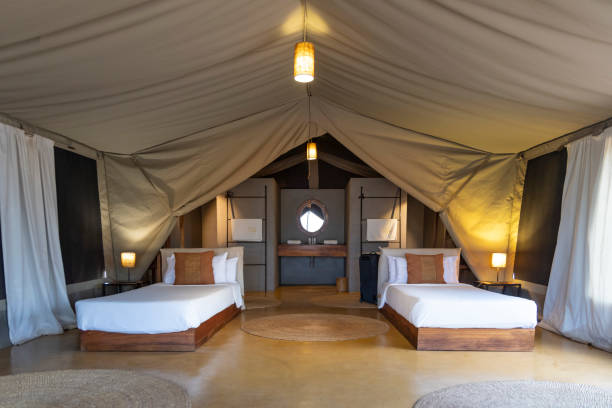
Arrive at your lodge and check into your room.
This is one of the main advantages of choosing the lodge version of the safari.
After several hours in the safari vehicle, you have a comfortable place to relax.
Depending on the lodge category, you may enjoy:
Enjoy dinner and rest before the early departure toward Ngorongoro the following morning.
Overnight: Karatu / Ngorongoro Highlands lodge
Main Experience: Tarangire elephants, baobabs, wildlife and comfortable lodge stay
Wake early and enjoy breakfast at the lodge.
Today provides the major wildlife finale of the journey.
Leave Karatu and begin climbing into the Ngorongoro Conservation Area.
The road enters cooler and greener highland landscapes before eventually reaching the crater rim.
The first view from the crater rim is one of the most memorable moments of the safari.
Far below lies an enormous natural amphitheatre surrounded by steep volcanic walls.
From above, the crater floor appears as a mixture of:
Then the safari begins descending toward the floor.
The road winds down from the highlands.
As you descend, the scale of the crater becomes increasingly apparent.
Once on the floor, begin several hours of game viewing.
The Ngorongoro Crater is famous for its high density of wildlife.
Possible sightings include:
The wider Ngorongoro Conservation Area supports the traditional Big Five:
The crater can provide particularly valuable opportunities to search for black rhino.
However, responsible safari planning never guarantees a Big Five sighting.
Wild animals move freely, and some species are much more difficult to locate than others.
The possibility of seeing black rhino is one of the reasons Ngorongoro attracts wildlife enthusiasts.
Rhinos may sometimes be visible only at a considerable distance.
Binoculars can therefore be extremely useful.
A distant but respectful sighting is far better than disturbing wildlife to get closer.
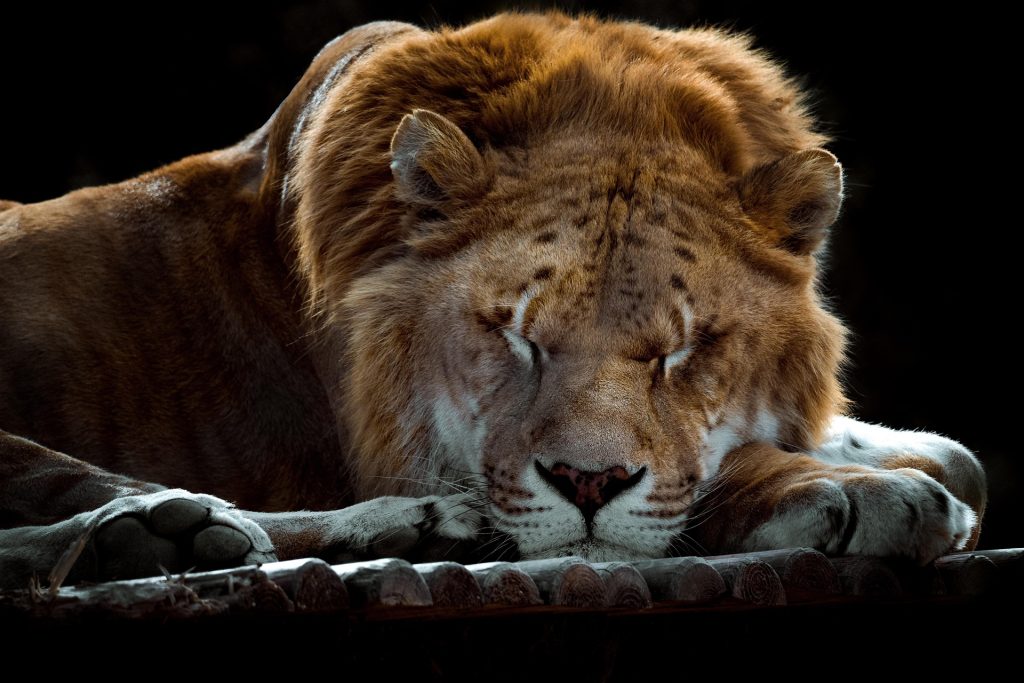
Lions form an important part of the crater ecosystem.
Possible encounters may involve:
If you find an interesting lion sighting, allow time for the animals to behave naturally.
Ngorongoro also supports a strong spotted hyena population.
Hyenas are highly capable predators and form an important part of the ecosystem.
They may be encountered moving through grassland, resting or interacting with other wildlife.
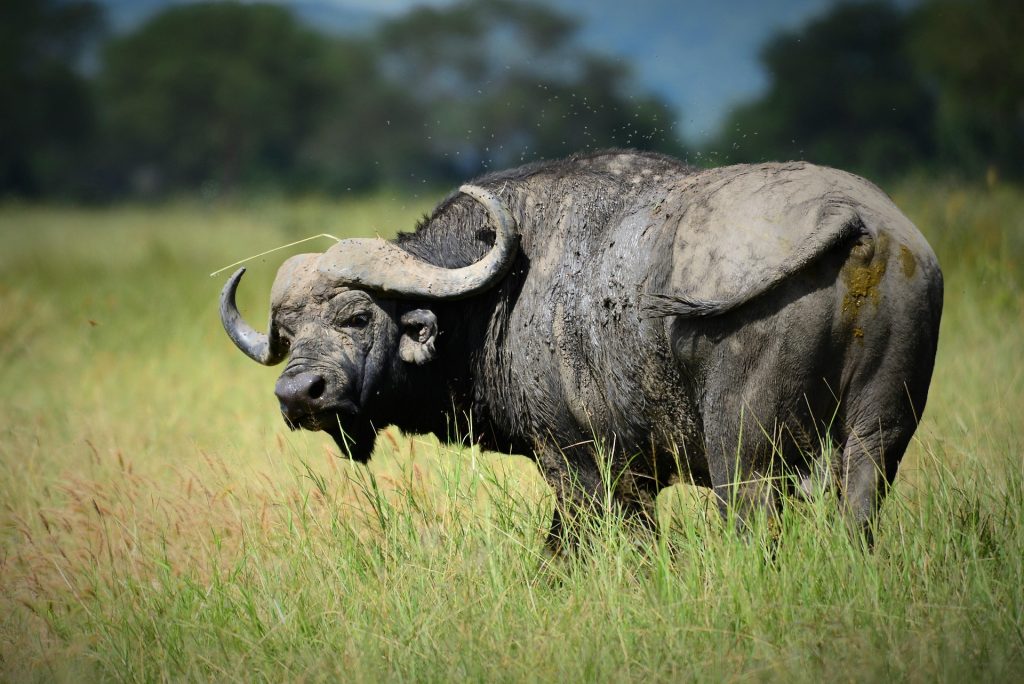
Buffalo are among the prominent large herbivores on the crater floor.
They may be seen individually or in groups depending on location and conditions.
Elephants also occur within the Ngorongoro ecosystem.
Mature bulls are among the animals visitors may encounter around wooded sections and other suitable habitats.
Large populations of grazing animals help define the crater floor.
Zebras and wildebeest are important components of the ecosystem and also provide prey for the crater’s predator populations.
Freshwater environments provide habitat for hippos.
Designated areas may offer opportunities to observe hippos while also enjoying the surrounding wetland scenery.
Lake Magadi is a shallow alkaline lake within the crater.
Depending on water conditions and season, it can attract flamingos and other birdlife.
The lake adds another visual dimension to the crater landscape.
Do not overlook the birds while focusing on large mammals.
Depending on habitat and season, you may encounter:
During the game drive, stop at an approved picnic location for lunch.
This provides time to rest while remaining within the extraordinary crater environment.
Follow your guide’s instructions carefully, particularly regarding food and wildlife.
Never feed animals.
Continue exploring after lunch.
By now, you may already have encountered many species.
There is no need to turn the final part of the safari into a race.
Enjoy the environment.
Watch the wildlife.
Look toward the crater walls.
Observe how grazing animals, predators and birds use different habitats.
The complete ecosystem is what makes Ngorongoro remarkable.
Later in the afternoon, begin ascending from the crater floor.
Leave the conservation area and start the journey back toward Arusha.
The route descends through the highlands and continues across northern Tanzania.
Arrival in Arusha is normally later in the day depending on road conditions, traffic and the time spent in the crater.
Your 2-Day Tanzania Lodge Safari to Tarangire and Ngorongoro ends after two very different wildlife experiences.
Main Experience: Ngorongoro Crater, Big Five possibilities, highland scenery and return to Arusha
One of the strongest advantages of this itinerary is contrast.
Tarangire offers:
The wildlife is spread across a broad natural landscape.
Ngorongoro offers:
The second day therefore feels entirely different from the first.
This package is designed for travelers who want the safari adventure without sacrificing overnight comfort.
After Tarangire, you can shower, change clothes, enjoy dinner and sleep in a proper bed.
Most lodge arrangements provide private bathroom facilities, though the exact room standard depends on the accommodation category selected.
Travelers who have never camped in Africa may find a lodge safari easier and more relaxing.
A lodge provides more privacy than basic camping.
Families can select properties offering family rooms or suitable room arrangements.
The same safari route can usually be arranged with:
The exact property can be selected according to budget and availability.
Karatu works particularly well between Tarangire and Ngorongoro.
It lies close enough to the Ngorongoro highlands to support an early crater departure.
Travelers can choose between practical guesthouses and more comfortable safari lodges.
After Tarangire’s warmer savanna, Karatu provides a different atmosphere.
Staying here avoids returning to Arusha after Day 1 and repeating unnecessary road travel the following morning.
This allows more time to be spent inside the wildlife areas.
Although the safari lasts only two days, there is potential for considerable wildlife diversity.
Tarangire is particularly famous for elephants.
Ngorongoro also supports elephants, creating opportunities in both destinations.
Lions occur in both parks.
Their visibility varies according to location, weather, prey and time of day.
Leopards occur within the wider ecosystems but are naturally secretive.
A leopard sighting should always be considered a bonus.
Ngorongoro provides one of the strongest possibilities on this route for encountering black rhino.
Buffalo occur across both ecosystems.
Tarangire is excellent giraffe country.
Giraffes generally do not occur on the Ngorongoro Crater floor, which is another interesting ecological difference between the two destinations.
Both can occur in Tarangire, while they are especially characteristic of the Ngorongoro Crater floor.
Ngorongoro’s freshwater habitats provide opportunities for hippo viewing.
Spotted hyenas are particularly important within the crater ecosystem.
Travelers visiting Africa for the first time sometimes assume they need seven or ten days to experience a meaningful safari.
A longer safari certainly provides greater depth.
But a well-planned two-day itinerary can still create an excellent introduction.
There is no wasted arrival day once the safari leaves Arusha.
Tarangire and Ngorongoro are major wildlife destinations rather than minor alternatives.
The change from baobab savanna to volcanic crater makes the journey feel much broader.
The lodge stay makes the safari accessible even for travelers who do not enjoy camping.
The safari can operate during different seasons.
The dry season is particularly attractive for Tarangire.
Wildlife can become increasingly associated with permanent water sources as the surrounding landscape dries.
These months are popular for travelers primarily interested in game viewing.
Ngorongoro mornings can be cold, especially around the crater rim.
These months can provide warm temperatures, green landscapes and strong general wildlife viewing.
This is generally a wetter period.
The northern Tanzania landscape can become lush and green.
Rainfall may occasionally influence roads and daily safari timing.
Short rains may occur, creating greener scenery while wildlife viewing remains possible.
There is no single month when Ngorongoro’s animals disappear, making the crater an important year-round wildlife destination.
The safari fits comfortably into a short Tanzania visit.
A private vehicle combined with comfortable lodge accommodation creates an excellent short safari for two.
Families can enjoy wildlife without the additional complexity of camping.
The safari can be added before or after a Kilimanjaro climb.
It can also form the wildlife section of a longer Tanzania and Zanzibar holiday.
Tarangire and Ngorongoro provide a strong introduction to the northern Tanzania safari experience.
Travelers who prefer a proper bed and private bathroom after game drives may find the lodge format more comfortable than basic camping.
The combination of Tarangire’s baobab landscapes and Ngorongoro’s crater scenery provides considerable photographic variety.
A short safari can still produce a surprisingly diverse collection of images.
Look for:
Possible subjects include:
Some of the strongest safari photographs show animals within their habitat.
An elephant beneath a baobab or zebra herd beneath the crater walls can tell a stronger story than a tightly cropped animal portrait.
Because you are staying in a lodge rather than camping, packing can remain simple.
Bring:
Ngorongoro’s highlands may be cool early in the morning.
Pack:
Useful items include:
Bring:
Keep personal medication, travel documents and toiletries easily accessible.
There is little reason to bring large luggage for only one safari night.
This route can work in different styles.
A private safari generally provides:
A group-joining arrangement may reduce the overall cost by sharing transport with other travelers.
However, departure dates, vehicle arrangements and accommodation categories may be less flexible.
The better option depends on budget and travel style.
Both versions visit the same wildlife destinations.
The main difference is the overnight experience.
A lodge safari generally provides:
Camping generally provides:
Travelers should choose according to the experience they actually enjoy rather than assuming one style is automatically better.
Even on a short safari, responsible wildlife viewing matters.
Never pressure your guide to move dangerously close for a photograph.
Feeding animals alters natural behavior.
This protects habitat and follows park regulations.
Animals should always have space to move naturally.
Major predator or rhino sightings can attract other safari vehicles.
Responsible positioning creates a better experience for wildlife and visitors.
Because time is limited, a few planning decisions make a major difference.
An early start protects valuable Tarangire game-viewing time.
The overnight property should make the following morning’s Ngorongoro journey easier.
Two major parks are enough.
Adding several extra stops can make the trip feel rushed.
This is especially useful for distant rhino sightings and birdwatching.
The quality of a safari should not be judged by whether every famous animal appears.
Wildlife unpredictability is part of the experience.
For travelers visiting Tanzania in 2026, this itinerary offers a practical balance between safari time, driving distance and comfort.
It concentrates on two destinations that work naturally together rather than attempting to fit the entire northern circuit into forty-eight hours.
Tarangire delivers elephants, baobabs, wildlife and broad savanna landscapes.
After the safari, you have time to shower, eat comfortably and sleep properly.
Ngorongoro introduces a completely different ecosystem and exceptional wildlife opportunities.
The rhythm becomes:
Arusha → Tarangire wildlife → comfortable lodge → Ngorongoro Crater → Arusha.
Simple, realistic and rewarding.
This is often the best balance between comfort and price.
Travelers wanting more privacy and premium service can choose a higher-end property around Karatu or the Ngorongoro Highlands.
The itinerary can also begin from Moshi, although this creates additional driving on Day 1.
Travelers continuing with Kilimanjaro arrangements can finish in Moshi instead of Arusha.
The safari can be followed by a flight or wider travel arrangements toward Zanzibar.
A private vehicle is especially useful for couples, families and photographers.
Adding a third day creates space for Lake Manyara or another wildlife experience without making the schedule unnecessarily tight.
Travelers whose priority is Serengeti should add several days instead of attempting to force it into this two-day itinerary.
The 2-Day Tanzania Lodge Safari to Tarangire and Ngorongoro 2026 is built for travelers who want a short safari without sacrificing either wildlife quality or overnight comfort.
The adventure begins in Tarangire National Park, where giant baobab trees rise above the savanna and elephant families move through a landscape shaped by the Tarangire River.
Throughout the day, you search for lions, giraffes, buffalo, zebras, wildebeest, antelope, predators and the remarkable birdlife that makes Tarangire much more than an elephant destination.
As afternoon turns toward evening, you leave the park and continue into the greener highlands around Karatu and Ngorongoro.
Instead of spending the night in a tent, you settle into a comfortable lodge.
A proper room, shower, dinner and peaceful night’s sleep prepare you for the following morning.
Then Tanzania changes completely.
You climb toward the rim of the Ngorongoro Crater and descend into a huge volcanic caldera supporting one of the greatest concentrations of wildlife on the northern safari circuit.
Lions, buffalo, elephants, black rhinos, hippos, hyenas, zebras, wildebeest and gazelles may all form part of the day’s experience.
By evening, the journey returns toward Arusha.
Only two days have passed, yet the landscapes have changed from:
Baobab savanna → green highlands → volcanic crater.
The complete route is:
Arusha → Tarangire National Park → Karatu/Ngorongoro Lodge → Ngorongoro Crater → Arusha.
For 2026, the journey can be customized according to:
Share your preferred travel date, number of travelers and preferred lodge level to begin planning your short Tarangire and Ngorongoro safari.
Choose the accommodation category, private or shared travel style and preferred starting or finishing location.
Travel from Tarangire’s elephant-filled baobab landscapes to the wildlife-rich Ngorongoro Crater, with a comfortable safari lodge connecting two unforgettable days in northern Tanzania.
No results available
ResetNo results available
ResetTanzania is a year-round safari destination with many adventures being offered all over the country. For optimal wildlife sightings, the dry season from June to October is your best bet! Read more on when to visit Tanzania
Both have their perks with Big Five national parks, the incredible Great Migration and that quintessential African experience we all dream of. Check out our article on Serengeti vs Masai Mara to help you decide.
They both have such different safari experiences! Tanzania offers Big Five game reserves on classic dusty desert plains, rather South Africa partners the Big Five animals with luscious winelands. Both are just as good, but it depends on your safari style.
That’s a tough one! Botswana is home to herds of elephants at Chobe and the sparkling Okavango Delta, and Tanzania has the iconic Mount Kilimanjaro and Great Migration. Check out our article on Botswana vs Tanzania safaris to help you decide.
Tanzania is in general a safe, hassle-free country. However, like most places, you do need to take precautions and listen to your tour guide. It also pays to read our articles on ‘Things to know before going to Tanzania’.
A camera and binoculars are a must. You’ll regret it if you don’t take them! As for clothing, definitely pack lightweight, breathable clothing. Remember, Tanzania is an arid country so the days can get quite hot. Read more on what to pack for a safari in Tanzania in our travel magazine
EXPERIENCES
BEST TOURS
copyright©2026 . Enjore Safaris