The 3 Days Pilanesberg (Malaria Free) Safari Package 2026–2027 is a compact South African wildlife adventure combining Big Five game viewing, volcanic landscapes, open bushveld, waterholes, birdlife and comfortable safari accommodation within easy reach of Johannesburg and Pretoria.
Pilanesberg is particularly attractive to travelers who want a genuine safari without adding a long domestic flight or an extended journey to a distant wildlife region. South African Tourism describes Pilanesberg as a malaria-free Big Five destination approximately two hours from Johannesburg, making it especially convenient for short South Africa holidays, family trips and first-time safari visitors. SA Specialist
The park lies within the crater of an ancient volcanic complex formed roughly 1.3 billion years ago. North West Parks describes Pilanesberg as one of the world’s largest alkaline volcanic complexes and records a wildlife population of more than 7,000 animals, over 300 bird species and approximately 200 kilometres of visitor roads. Parks Northwest
Pilanesberg also supports the traditional African Big Five:
Lion → Leopard → Elephant → Rhino → Buffalo
alongside cheetah, African wild dog, brown hyena, giraffe, zebra, wildebeest, hippo, sable antelope and numerous other species. SA Specialist
A practical three-day route follows:
Johannesburg/Pretoria → Pilanesberg National Park → Afternoon Safari → Full-Day Big Five Experience → Final Morning Game Drive → Johannesburg/Pretoria
The journey develops naturally through:
City departure → ancient volcanic landscape → first Big Five search → sunrise wildlife → full safari day → sunset bushveld → final morning safari.
For travelers visiting South Africa in 2026–2027, two nights provide a much stronger Pilanesberg experience than a rushed day trip because the park can be explored during several different wildlife periods.
Pilanesberg works particularly well for a short safari because its location, wildlife diversity and accommodation infrastructure allow travelers to experience a genuine protected wildlife area without spending several days simply reaching the destination.
South African Tourism recommends a minimum stay of approximately two nights, which fits naturally with a three-day safari package. South Africa Travel Guide
One of Pilanesberg’s best-known advantages is its location in a malaria-free safari region.
South African Tourism specifically markets Pilanesberg as a malaria-free Big Five destination. South Africa Travel Guide
This makes the park particularly attractive for:
Travelers visiting other parts of southern Africa during the same holiday should still obtain health guidance relevant to their complete route.
Pilanesberg supports:
The Big Five should always be described as possible sightings rather than guaranteed sightings.
Leopard in particular can remain difficult to locate because of its secretive behavior.
The reserve is easily accessible from South Africa’s major Gauteng cities.
South African Tourism describes Pilanesberg as around a two-hour drive from Johannesburg, while other official tourism guidance places it within approximately three hours depending on starting point, traffic and route. SA Specialist
This accessibility makes a two-night safari realistic even within a relatively short South Africa itinerary.
Pilanesberg is not simply another grassland reserve.
The park occupies the landscape of an enormous ancient volcanic structure.
Its hills, valleys, rocky outcrops and ring-shaped formations create a safari backdrop very different from flat open plains.
One of the most fascinating things about Pilanesberg is its geology.
North West Parks explains that the park occupies the crater of a long-extinct volcano associated with an alkaline volcanic complex formed approximately 1.3 billion years ago. Parks Northwest
The resulting landscape contains:
This unusual geography influences both wildlife distribution and the visual character of the safari.
Instead of endless flat savanna, the park continually changes.
One moment you may be driving through open grassland.
The next, the road enters thicker bush.
Farther ahead, ancient volcanic ridges rise dramatically above the landscape.
Pilanesberg lies within an ecological transition zone between the drier Kalahari environment and the wetter Lowveld vegetation systems.
North West Parks specifically identifies this transitional position as one of the reasons for the park’s ecological diversity. Northwest Parks
This meeting of environments contributes to the variety of:
found within a relatively compact protected area.
It also helps explain why species associated with different southern African environments can occur in the same park.
Modern Pilanesberg has an unusual conservation history.
North West Parks describes Operation Genesis, launched during the late 1970s, as one of the most ambitious wildlife restoration programs undertaken at the time. Large areas were fenced and wildlife species that had disappeared from the region were reintroduced. Parks Northwest
Today, the park supports thousands of animals.
That restoration history makes Pilanesberg not only a safari destination but also an important example of large-scale protected-area rehabilitation.
Your 3 Days Pilanesberg Safari begins in Johannesburg, Pretoria or another agreed Gauteng pickup location.
Meet your safari guide and begin traveling toward South Africa’s North West Province.
Unlike safaris that require a domestic flight or a full day of road travel, Pilanesberg can be reached relatively quickly.
As the urban environment disappears, the journey moves through increasingly open countryside toward the ancient volcanic landscape surrounding the park.
Depending on the exact starting point, traffic and route, the journey generally takes several hours.
The objective should be to arrive without rushing and protect enough time for the first afternoon safari.
Arrival in Pilanesberg. As you approach the protected area, the ancient ring-shaped hills begin becoming more visible. The terrain immediately distinguishes Pilanesberg from more familiar flat savanna landscapes.
After completing the necessary entry and accommodation arrangements, check into your lodge, camp or selected safari property.
Take time to settle in before heading out for the first wildlife experience.
First afternoon game drive. Later, begin exploring Pilanesberg in search of the Big Five and the wider wildlife community.
Possible sightings include:
The park supports the Big Five as well as cheetahs, wild dogs, brown hyenas and sable antelope, although every individual sighting depends on natural wildlife movement. SA Specialist
Early in the drive, it can be tempting to focus immediately on lions and other famous predators.
However, Pilanesberg becomes much more rewarding when you watch the entire ecosystem.
A herd of wildebeest moving between grassland and water can be just as interesting as a sleeping lion.
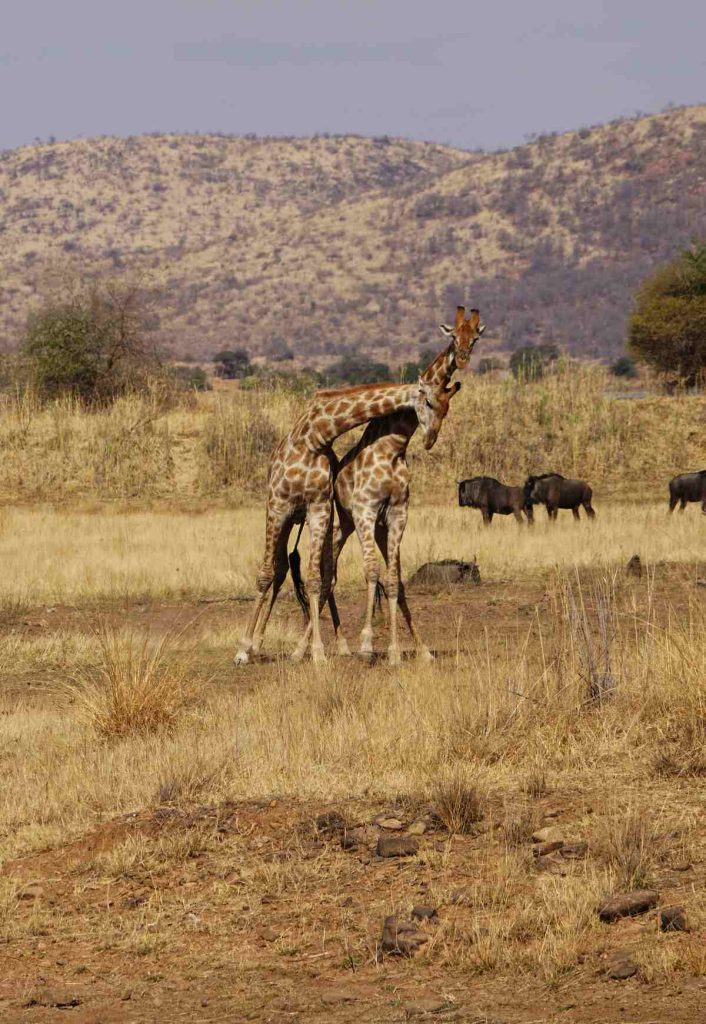
A giraffe crossing beneath volcanic ridges can create a stronger photograph than a close-up portrait.
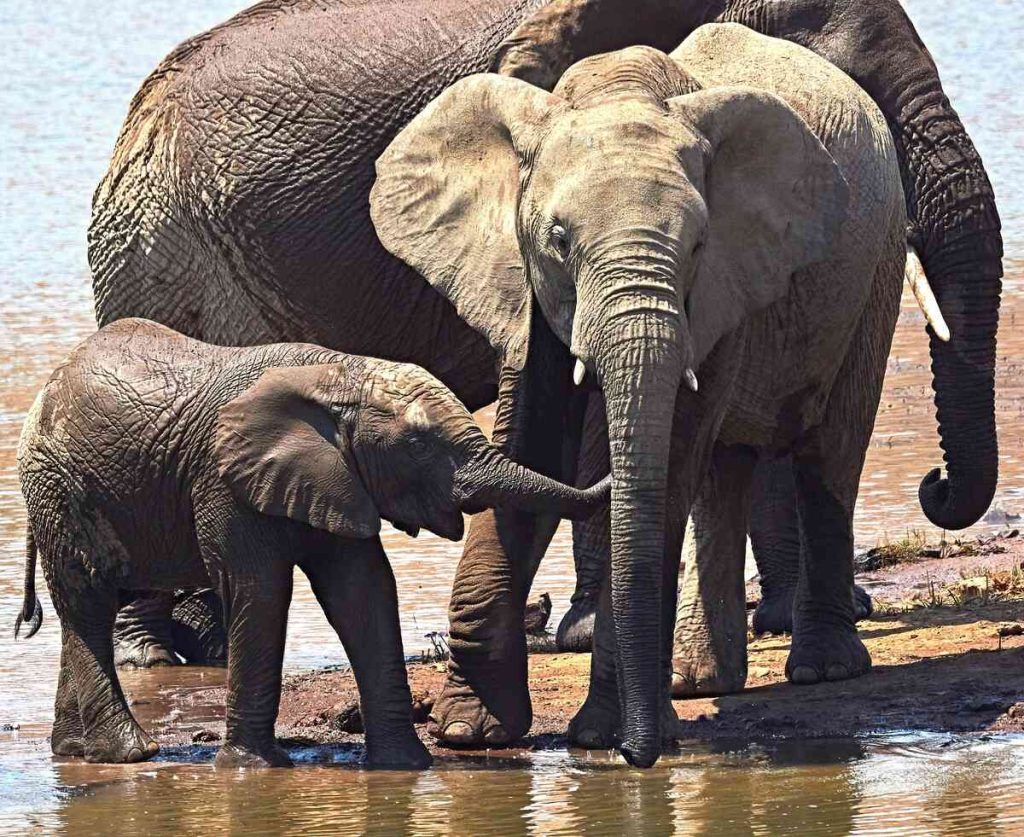
A group of elephants using a waterhole can reveal complex family behavior.
Searching for elephants. Elephants are among the park’s most impressive residents.
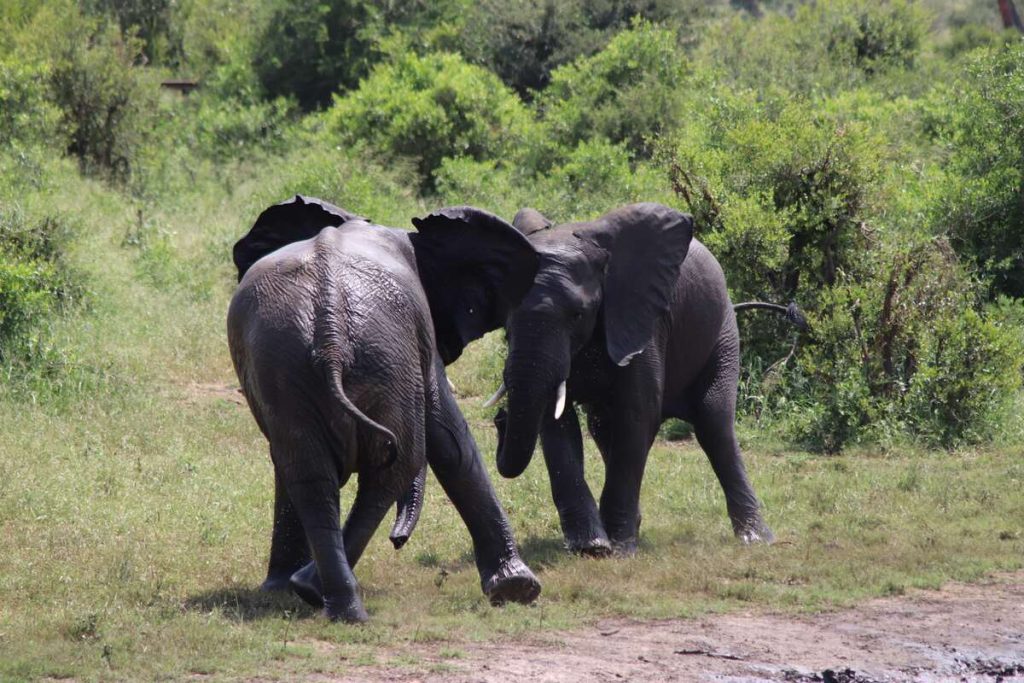
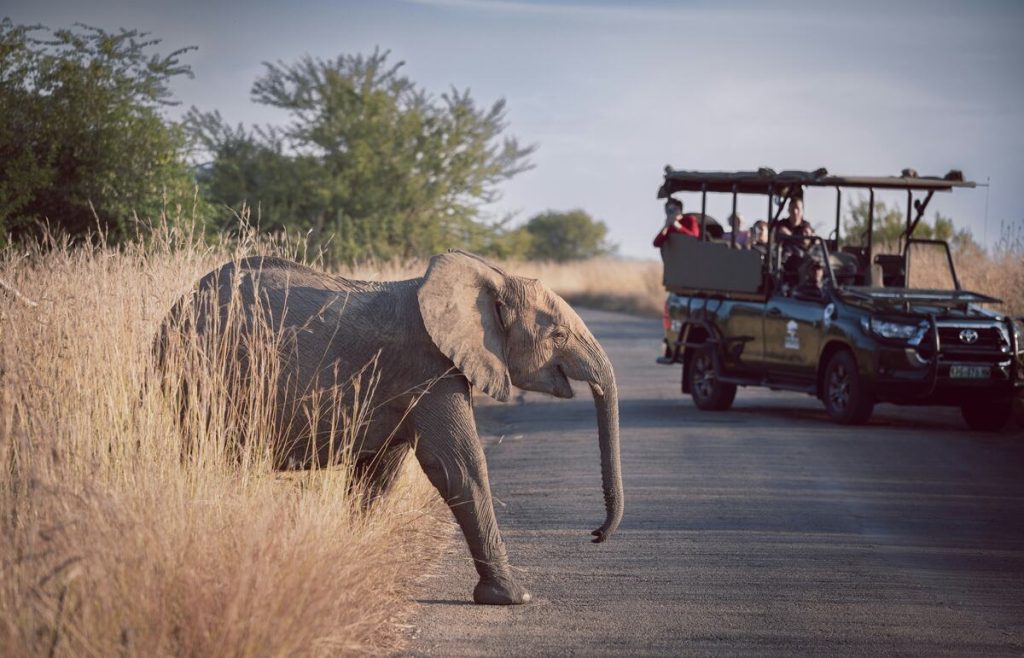
Possible encounters may include family groups, adult bulls, young calves and animals feeding between woodland and open areas.
Give elephants space and allow your professional guide to manage viewing distance.
Rhino possibilities. Pilanesberg also supports rhinos, making them an important Big Five target.
Sightings may occur in open grassland, bush or around water.
The exact location and conservation management of sensitive species should always be respected.
Buffalo. Cape buffalo may occur individually or in larger groups.
Older bulls can sometimes remain separated from larger herds, while other animals congregate around feeding or watering areas.
First lion search. Lions are one of the most anticipated species.
Possible observations may include resting prides, individual males, females with younger animals when present or lions moving through grassland.
There is never a guarantee that lions will be active during the first drive.
Much of their day can be spent resting.
Patience matters.
Leopard possibilities. Leopard is typically one of the more difficult Big Five animals to locate.
Rocky terrain, woodland and thick vegetation can provide excellent concealment.
A leopard sighting should therefore be considered a special safari moment rather than something promised by the itinerary.
Cheetah and African wild dog possibilities. South African Tourism specifically identifies both species among Pilanesberg’s notable wildlife. SA Specialist
These predators can cover substantial distances, making sightings unpredictable.
Late-afternoon safari atmosphere. As temperatures begin falling, the landscape changes.
Golden light spreads across the grass.
Ancient volcanic hills cast longer shadows.
Animals may begin moving toward water or new feeding areas.
This can create excellent opportunities for wider environmental photography.
Instead of photographing only animals tightly, include:
These elements make it clear that the photograph was created in Pilanesberg.
Return to your accommodation according to park and lodge schedules.
Enjoy dinner and your first night near or inside the reserve.
Overnight: Pilanesberg National Park area
Main Experience: Johannesburg/Pretoria transfer, ancient volcanic landscape and first Big Five game drive
Wake early for the main wildlife day of the safari.
Day 2 provides the greatest opportunity to understand the park because there is no long-distance transfer.
The day can focus on wildlife from early morning until the late-afternoon safari period.
Start with an early game drive when the bush is cooler and the light is softer.
Wildlife may have moved considerable distances overnight.
Areas that were completely quiet yesterday afternoon may now contain elephants, antelope or predators.
Morning predator search. Early hours can provide opportunities to search for lion, leopard, cheetah, brown hyena and African wild dog.
Nothing is guaranteed.
The strongest approach is to allow the guide to interpret:
Rather than simply driving between known locations, the safari becomes an exercise in understanding the landscape.
Big Five search continues. With a full day available, there is less need to rush.
If elephants are showing interesting family behavior, remain patient.
If rhinos are encountered responsibly, allow time for observation.
If lions are awake and moving, the experience may become one of the highlights of the trip.
And if a leopard remains hidden, remember that a safari is defined by natural encounters rather than a guaranteed checklist.
Giraffes and plains wildlife. Pilanesberg supports numerous herbivores that contribute strongly to the visual character of the reserve.
Possible species include:
These animals also influence where predators move.
A good guide therefore pays attention to herbivore behavior.
Sudden alertness among antelope can sometimes indicate the presence of a predator.
Mankwe Dam. One of Pilanesberg’s important central wildlife areas is Mankwe Dam.
South African Tourism identifies it as a focal point for birdlife and wildlife viewing. SA Specialist
Depending on season and water conditions, the surrounding area may provide opportunities for:
The exact experience varies naturally.
Water is particularly important during drier periods when animals may concentrate around dependable sources.
Birdlife. North West Parks records more than 300 bird species in Pilanesberg. Parks Northwest
This makes binoculars valuable even for travelers primarily interested in the Big Five.
Possible birding environments include:
Birds of prey can also provide fascinating observations.
South African Tourism notes species such as snake-eagles, hawk-eagles and Verreaux’s eagles among the birds associated with the park. South Africa Travel Guide
Midday break. After the morning safari, return to the lodge or suitable designated rest area.
There is no need to turn every hour into an activity.
A three-day safari feels considerably better when travelers have time for:
The quieter middle of the day provides a useful pause before the late-afternoon safari.
Afternoon game drive. Return to the park as the temperature begins falling.
The second safari of Day 2 provides another opportunity to explore areas you have not yet visited.
Because Pilanesberg has approximately 200 kilometres of visitor roads, there is enough variety to avoid repeating exactly the same circuit. Parks Northwest
Different sections can reveal different habitat.
One area may be rocky.
Another may contain open grassland.
Elsewhere, thicker vegetation dominates.
This habitat variation influences wildlife distribution.
Searching for the Big Five at sunset. Late afternoon can become particularly rewarding for elephants, buffalo and predators.
Possible experiences include:
Cheetahs and wild dogs may also be encountered when natural movements align.
Sunset across the volcanic landscape. Pilanesberg’s hills provide dramatic depth to evening photographs.
Instead of the completely flat horizon associated with some safari regions, overlapping ridges can create a layered scene.
A giraffe, elephant or antelope in the foreground may be framed against ancient volcanic hills behind it.
Return to your lodge in the evening.
Enjoy dinner and your second safari night.
By now, you will have experienced Pilanesberg during at least three distinct wildlife periods:
Day 1 afternoon → Day 2 morning → Day 2 afternoon.
The following morning provides one final opportunity.
Overnight: Pilanesberg National Park area
Main Experience: Sunrise safari, Big Five search, Mankwe Dam, birdlife, volcanic scenery and sunset game drive
Wake early for your final morning in Pilanesberg.
A two-night stay becomes particularly valuable at this point.
Perhaps one species has remained elusive.
Perhaps yesterday’s lions were sleeping.
Perhaps elephants were distant.
Perhaps you still have not seen a rhino.
The final morning creates another opportunity, but it should not become a frantic race to complete a checklist.
Safari is about experiencing wildlife naturally.
Begin the last game drive through the cooler morning landscape.
The exact route can depend on previous sightings, guide knowledge and wildlife movements.
Possible sightings may include:
Morning light can provide excellent photography.
Look beyond the individual animal and include the volcanic landscape.
Pilanesberg’s geological setting is one of the qualities that makes it visually distinctive.
Final predator possibilities. If lion or leopard remained elusive, the guide may concentrate on habitats where signs suggest recent movement.
However, there is no reason for the morning to feel unsuccessful if a particular species remains unseen.
A relaxed elephant encounter, a large herd of zebra or a striking eagle can become equally memorable.
Return for breakfast. After the final wildlife experience, return to the lodge for breakfast or complete the planned check-out arrangement.
Take one final look across the bushveld before leaving the reserve.
The complete two-night stay may now have provided several safari periods rather than a single hurried game drive.
Begin the journey back toward Johannesburg or Pretoria.
Travelers continuing elsewhere in South Africa can connect Pilanesberg with:
Those staying near the park can also combine the journey with nearby Sun City, which South African Tourism describes as immediately adjacent to the Pilanesberg region. South Africa Travel Guide
Arrive at your agreed final destination and complete the 3 Days Pilanesberg Malaria-Free Safari Package.
Main Experience: Final sunrise safari, last Big Five search and return to Johannesburg/Pretoria
Pilanesberg contains all five traditional Big Five species.
Lions are among the park’s main predators.
Possible encounters range from resting pride members to animals moving across open terrain.
Leopards occur within Pilanesberg but are naturally secretive.
Rocky hills and wooded habitat can provide excellent cover.
Sightings should therefore never be guaranteed.
Elephants can provide some of the most rewarding observations.
Family behavior, feeding and waterhole interactions can make them fascinating even after repeated sightings.
Rhinos form another important component of Pilanesberg’s Big Five experience.
Responsible viewing and conservation-sensitive guiding are essential.
Cape buffalo occur throughout suitable habitats and may be encountered in groups or as individual older bulls.
Seeing all five within three days is possible, but wildlife moves freely and no operator can guarantee a complete Big Five checklist.
Pilanesberg should never be reduced to only five species.
South African Tourism specifically highlights other wildlife such as:
alongside the Big Five. SA Specialist
The park also supports a broad range of plains and woodland animals.
Possible sightings may include:
The complete wildlife community is what allows predators and herbivores to coexist within the reserve.
Cheetahs are not part of the Big Five, but for many travelers they can become a major safari highlight.
They are associated particularly with more open terrain where visibility supports their hunting strategy.
A sighting might involve:
Sightings remain unpredictable.
African wild dogs are among Africa’s most fascinating and endangered large carnivores.
South African Tourism confirms their presence in Pilanesberg. SA Specialist
Because packs can travel substantial distances, finding them is never guaranteed.
If encountered, allow time to appreciate their complex social behavior.
Pilanesberg is also associated with brown hyenas, another distinctive southern African carnivore.
They are generally much less frequently encountered than many common herbivores.
A sighting can therefore become a memorable addition to the safari.
Water is central to wildlife distribution.
Mankwe Dam, positioned near the center of the reserve, is one of the best-known aquatic environments.
Depending on season and wildlife movement, visitors may encounter:
South African Tourism also identifies the dam as an important focal point for Pilanesberg birdlife. SA Specialist
Several wildlife hides and viewing locations around the park can provide another perspective on animal behavior. North West Parks notes the availability of hides and scenic picnic areas along the reserve’s extensive road network. Northwest Parks
Pilanesberg is widely marketed by official South African tourism authorities as a malaria-free wildlife destination. South Africa Travel Guide
This is one of the reasons it is particularly popular for shorter safaris from Johannesburg.
The malaria-free positioning should not be confused with a statement that travelers need no general health preparation.
South Africa journeys can involve several regions, and health advice should always reflect the complete itinerary rather than Pilanesberg alone.
A malaria-free Big Five reserve close to Johannesburg can be particularly practical for families.
A three-day itinerary avoids excessively long transfers while still providing enough safari time.
Families can also choose accommodation according to their preferred comfort level.
The greatest advantage is flexibility.
Rather than spending all day driving from one distant destination to another, the family can enjoy:
morning safari → midday rest → afternoon safari.
This rhythm is often more comfortable than a compressed itinerary.
Game-drive participation and accommodation policies for younger children should be confirmed with the selected lodge for the actual 2026–2027 booking.
Pilanesberg also works exceptionally well for couples looking for a short wildlife escape from Johannesburg.
Two nights can combine:
Private game-drive arrangements may be available through selected properties, while standard lodge safaris generally use shared open safari vehicles.
The exact format depends on the accommodation selected.
For someone taking their first African safari, Pilanesberg has several practical advantages.
It provides:
Because the park is relatively compact compared with enormous reserves such as Kruger, it can also feel less overwhelming during a short trip.
Photography in Pilanesberg is strongly influenced by the volcanic landscape.
Possible subjects include:
Look for:
Possible subjects include:
The park’s more than 300 recorded species make bird photography particularly rewarding. Parks Northwest
The ancient volcanic formations provide excellent depth.
Instead of photographing only animals tightly, include hills, waterholes and sky.
These images communicate the identity of Pilanesberg much more clearly.
Pilanesberg can be visited throughout the year.
The experience changes with seasons.
South African Tourism identifies the park as a year-round destination while noting that vegetation and wildlife visibility change considerably between winter and summer. South Africa Travel Guide
South African winter generally brings:
South African Tourism notes that lower winter vegetation can make animals easier to spot. South Africa Travel Guide
Early morning and evening drives can become cold, so warm clothing is useful.
Temperatures begin increasing.
The environment may still be relatively dry before stronger summer rains.
Wildlife viewing can remain productive.
Summer can bring:
South African Tourism notes that summer vegetation can become more luxuriant, which may make some wildlife harder to spot, while migrant birds and younger animals add interest. South Africa Travel Guide
The landscape can remain green following summer rain.
Temperatures may begin becoming more moderate.
This can provide attractive conditions for photography and birdlife.
Winter is particularly popular with travelers focused on game viewing.
Water availability becomes more important and vegetation may become less dense.
Morning game drives can, however, be surprisingly cold in open safari vehicles.
Bring a warm layer even if daytime temperatures are comfortable.
Summer provides a very different experience.
The reserve becomes greener.
Birdlife can be exceptional.
Young animals may also be present.
The landscape can look particularly beautiful after rain.
The trade-off is that dense vegetation may sometimes hide wildlife more effectively.
Pilanesberg offers accommodation ranging from practical camps to luxury safari lodges.
North West Parks notes a broad range of accommodation around the reserve, while South African Tourism highlights both affordable properties and premium lodges. Northwest Parks
Suitable for travelers who want to prioritize wildlife and affordability.
A popular option for couples, families and first-time visitors who want greater comfort while keeping the safari as the main focus.
Higher-end properties may provide:
Luxury should not be defined only by the room.
For a short safari, genuine luxury can mean:
good location + fewer transfers + professional guiding + time at sightings + comfortable pacing.
Pilanesberg supports both guided and self-drive safari experiences.
South African Tourism notes that visitors can use the park’s approximately 200 kilometres of tourist roads independently or join guided game drives. SA Specialist
For this 3 Days Pilanesberg Safari Package, guided game drives provide several advantages:
Self-drive travel can work well for experienced independent travelers, but a professionally guided package is often easier for first-time safari visitors.
Pilanesberg lies immediately beside Sun City, making it easy to combine wildlife and resort relaxation within one South African holiday.
South African Tourism describes Sun City as very close to Pilanesberg and highlights its hotels, family leisure facilities, golf and water-based attractions. South Africa Travel Guide
A longer itinerary can therefore become:
Johannesburg → Pilanesberg Safari → Sun City → Johannesburg
or:
Johannesburg → Sun City → Pilanesberg → onward South Africa journey.
For a three-day safari package, however, wildlife should remain the main focus.
The simplest route is:
Johannesburg → Pilanesberg → Johannesburg.
This works especially well for travelers:
Because road access is relatively straightforward, Pilanesberg can become a natural beginning or end to a broader South Africa holiday.
Pretoria also provides convenient access to the North West Province.
Travelers staying in the Pretoria area can arrange the same two-night safari structure:
Pretoria → Pilanesberg → Pretoria.
This makes the park attractive for business travelers or visitors with limited leisure time in Gauteng.
A popular broader South Africa journey can become:
Johannesburg → Pilanesberg Safari → Johannesburg → Cape Town
Pilanesberg provides:
Cape Town provides:
The contrast creates a varied South African holiday.
Travelers with more time can continue toward South Africa’s southern coast.
A complete journey could follow:
Johannesburg → Pilanesberg → Cape Town → Garden Route
This creates several completely different environments:
Big Five bushveld → Cape mountains → ocean coastline → forest and lagoons.
Pilanesberg and Kruger both provide major wildlife experiences, but they serve different travel needs.
Pilanesberg is especially attractive for:
Kruger is dramatically larger and better suited to travelers wanting a longer safari across a vast ecosystem.
Neither has to be considered a replacement for the other.
The right choice depends on the traveler’s time, route and priorities.
Both Pilanesberg and Madikwe are well-known wildlife destinations in South Africa’s North West Province.
Pilanesberg is particularly convenient because of:
Madikwe is generally known for a more lodge-focused safari experience.
Travelers should choose according to their preferred style rather than assuming one destination is universally better.
Safari clothing does not need to be complicated.
Comfort and seasonal conditions matter more than appearance.
Bring comfortable lightweight clothing for daytime, along with warmer layers for early morning and evening drives.
South African Tourism recommends items including:
Neutral clothing can be practical but elaborate safari outfits are unnecessary.
Comfortable shoes are useful around camps and lodges.
During the wetter summer season, lightweight rain protection can also be helpful.
A successful safari should never depend on disturbing wildlife.
Responsible viewing means allowing animals to behave naturally.
Keep noise controlled and follow the instructions of the professional guide.
Never feed wildlife.
Never pressure a guide to move closer simply for a photograph.
If several vehicles gather around a predator, good safari practice should prioritize animal welfare and respectful positioning.
Rhino conservation is particularly sensitive, so exact information that could create unnecessary risk to individual animals should not be sought or shared.
The strongest wildlife encounter is one that leaves animal behavior unchanged.
Pilanesberg is close enough to Johannesburg that day trips are possible.
However, a two-night stay provides a much deeper safari.
A day visitor may experience only one wildlife period.
A three-day package can provide several:
Day 1 afternoon
Day 2 morning
Day 2 afternoon
Day 3 morning
Wildlife movement can change completely between these periods.
A lion pride unseen during one drive may appear the next morning.
Elephants may move toward water later in the day.
Predators may become more active as temperatures change.
Multiple drives significantly improve the overall safari experience even though no particular species is guaranteed.
It is possible, but not guaranteed.
Pilanesberg supports all five species. Parks Northwest
However, each animal behaves differently.
Elephant and buffalo may be relatively visible during suitable conditions.
Lion sightings depend on location and movement.
Rhino observations remain natural.
Leopard can be particularly elusive.
A safari should therefore focus on quality wildlife experiences rather than completing a checklist.
Seeing four Big Five species plus cheetahs, giraffes, elephants at a waterhole and exceptional birdlife could be a much richer safari than briefly spotting all five.
Pilanesberg combines several qualities that are difficult to find together in one short safari:
Malaria-free setting
Big Five wildlife
Close to Johannesburg
Ancient volcanic scenery
More than 300 bird species
Extensive safari-road network
Accommodation for different budgets
Sun City nearby
North West Parks records approximately 50,000 hectares of protected landscape, over 7,000 animals and roughly 200 kilometres of roads within the reserve. Parks Northwest
These characteristics make Pilanesberg particularly suitable for travelers who want a substantial safari experience without committing to a much longer expedition.
Is Pilanesberg malaria-free? Yes. South African Tourism describes Pilanesberg as a malaria-free Big Five safari destination. South Africa Travel Guide
Where is Pilanesberg National Park? Pilanesberg lies in South Africa’s North West Province, close to Sun City and within relatively easy road access of Johannesburg and Pretoria.
How far is Pilanesberg from Johannesburg? South African Tourism describes the reserve as approximately two hours from Johannesburg, although actual travel time depends on departure point, traffic and road conditions. SA Specialist
Can I visit Pilanesberg from Pretoria? Yes. Pilanesberg is accessible from both Johannesburg and Pretoria and works well as a short Gauteng safari extension.
Does Pilanesberg have the Big Five? Yes. Lion, leopard, elephant, rhino and buffalo occur within the park. Parks Northwest
Can I see all Big Five in three days? It is possible, but wildlife sightings are never guaranteed. Leopard can be particularly difficult to locate.
Does Pilanesberg have lions? Yes. Lions form part of the park’s Big Five population.
Are leopards found in Pilanesberg? Yes. Leopards occur in the reserve but are naturally secretive.
Can I see rhinos in Pilanesberg? Yes. Rhinos form part of the reserve’s Big Five wildlife community, although exact sightings remain natural and unpredictable.
Are elephants common in Pilanesberg? Elephants are one of the park’s important large mammals and may be encountered in family groups or as individual animals.
Does Pilanesberg have buffalo? Yes. Cape buffalo occur in the reserve.
Are cheetahs found in Pilanesberg? Yes. South African Tourism lists cheetah among the park’s notable predators. SA Specialist
Are African wild dogs found in Pilanesberg? Yes. Wild dogs occur within Pilanesberg, but packs can move widely and sightings cannot be guaranteed. SA Specialist
Are brown hyenas found in the park? Yes. South African Tourism identifies brown hyena among Pilanesberg’s notable wildlife. South Africa Travel Guide
How large is Pilanesberg? North West Parks describes the reserve as covering approximately 50,000 hectares. Northwest Parks
How many animals are in Pilanesberg? North West Parks states that the park supports more than 7,000 animals. Parks Northwest
How many bird species are found in Pilanesberg? Official park information records more than 300 bird species. Parks Northwest
Why does Pilanesberg have volcanic hills? The park occupies an ancient volcanic complex formed about 1.3 billion years ago. North West Parks describes it as one of the largest alkaline volcanic complexes of its kind. Parks Northwest
Is Pilanesberg a real volcano? The park landscape formed through ancient volcanic activity, but the volcanic system has been extinct for an immense period of geological time.
What is Mankwe Dam? Mankwe Dam is an important central water feature and wildlife-viewing area known particularly for birdlife and animals attracted to water. SA Specialist
Can I self-drive in Pilanesberg? Yes. The park has approximately 200 kilometres of visitor roads and supports self-drive tourism as well as guided safaris. SA Specialist
Is a guided safari better for first-time visitors? Guided game drives can be particularly useful for first-time visitors because professional guides interpret wildlife behavior and manage navigation while travelers focus on viewing and photography.
Is three days enough for Pilanesberg? Yes. Three days and two nights provide a strong short safari and allow several separate wildlife-viewing periods. South African Tourism recommends at least two nights for the destination. South Africa Travel Guide
Can Pilanesberg be visited as a day trip? Yes, but a two-night stay gives substantially more opportunity for morning and afternoon wildlife viewing.
Is Pilanesberg suitable for families? Yes. Its malaria-free positioning, proximity to Johannesburg and range of accommodation make it popular with family travelers.
Is Pilanesberg suitable for couples? Yes. Two nights provide a good balance between safari activity and lodge relaxation.
Is Pilanesberg suitable for photographers? Yes. Big Five wildlife, predators, birds, waterholes and ancient volcanic scenery provide varied photography opportunities.
What is the best time to visit Pilanesberg? The park can be visited throughout the year. Winter generally brings thinner vegetation and easier wildlife visibility, while summer produces greener scenery, young animals and strong migratory birdlife. South Africa Travel Guide
Is June a good month for Pilanesberg? Yes. June falls within the cooler, drier winter period when vegetation may be less dense.
Is August good for Pilanesberg? Yes. August can provide good wildlife visibility, although early morning game drives can be cold.
Is December good for Pilanesberg? Yes. December generally brings greener summer landscapes and excellent birdlife, though thicker vegetation can sometimes make wildlife harder to see.
Can I combine Pilanesberg with Sun City? Yes. Sun City is immediately adjacent to the Pilanesberg region and can easily be added before or after the safari. South Africa Travel Guide
Can I combine Pilanesberg with Cape Town? Yes. A common South Africa itinerary can include Johannesburg, Pilanesberg and Cape Town.
Can I combine Pilanesberg with the Garden Route? Yes. Additional days can connect the safari with Cape Town and the Garden Route.
What should I pack? Binoculars, camera equipment, sunscreen, a hat, comfortable clothing and a warm jacket for early or late game drives are useful. South Africa Travel Guide
Is wildlife guaranteed? No. Pilanesberg is a genuine wildlife environment, and individual animals move naturally throughout the reserve.
The strength of the itinerary comes from keeping the safari focused on one wildlife reserve rather than using three days to rush between distant destinations.
Day 1 becomes:
Johannesburg/Pretoria → Pilanesberg → volcanic landscape → first Big Five safari → sunset.
Day 2 becomes:
Sunrise game drive → lions and predators → elephants → rhinos → Mankwe Dam → birdlife → afternoon safari → sunset.
Day 3 becomes:
Final morning game drive → last wildlife encounters → Johannesburg/Pretoria.
Within only three days, travelers experience:
Big Five wildlife + ancient geology + waterholes + birdlife + bushveld + lodge relaxation.
The multiple game-drive periods provide time for the park to reveal itself naturally.
Before confirming the journey, consider:
Accommodation can range from practical camps to premium safari lodges, so the package can be adapted to different travel budgets.
For a short stay, priority should be given to good positioning and enough wildlife time rather than trying to include too many unrelated activities.
The 3 Days Pilanesberg (Malaria Free) Safari Package 2026–2027 offers one of South Africa’s easiest ways to turn a short Johannesburg stay into a genuine Big Five wildlife experience.
Leave Johannesburg or Pretoria and travel into South Africa’s North West Province.
The city gradually disappears.
Ancient volcanic hills rise ahead.
Soon, you enter a protected landscape inhabited by elephants, lions, buffalo, rhinos, leopards, giraffes, zebras, wildebeest, cheetahs, wild dogs and hundreds of bird species.
Your first afternoon introduces Pilanesberg during the softer evening light.
The next morning begins again in the bush.
Search for predators across open grassland.
Watch giraffes beneath ancient volcanic ridges.
Follow elephant families toward water.
Explore around Mankwe Dam.
Remain patient for rhino, lion and the elusive leopard.
After a relaxed middle of the day, return for another late-afternoon safari.
Spend a second night within the Pilanesberg wilderness before waking for one final game drive.
Then travel back toward Johannesburg or Pretoria—or continue into a wider South African journey.
The complete safari follows:
Johannesburg/Pretoria → Pilanesberg National Park → Big Five Safari → Mankwe Dam → Full Wildlife Day → Final Morning Safari → Johannesburg/Pretoria
For 2026–2027, the package can be customized around private or shared game drives, budget or premium accommodation, family travel, couples, photographers and extensions to Sun City, Cape Town or the Garden Route.
Share your travel dates, number of travelers and preferred accommodation level so the safari can be structured around a comfortable two-night stay and several productive wildlife-viewing periods.
The journey can remain a focused Johannesburg–Pilanesberg–Johannesburg safari or become part of a longer South Africa itinerary combining Sun City, Cape Town and the Garden Route.
Travel from Johannesburg into a malaria-free Big Five reserve shaped by a 1.3-billion-year-old volcanic complex, where elephants, lions, rhinos, buffalo, elusive leopards and extraordinary birdlife inhabit one of South Africa’s most distinctive safari landscapes.
No results available
ResetNo results available
ResetTanzania is a year-round safari destination with many adventures being offered all over the country. For optimal wildlife sightings, the dry season from June to October is your best bet! Read more on when to visit Tanzania
Both have their perks with Big Five national parks, the incredible Great Migration and that quintessential African experience we all dream of. Check out our article on Serengeti vs Masai Mara to help you decide.
They both have such different safari experiences! Tanzania offers Big Five game reserves on classic dusty desert plains, rather South Africa partners the Big Five animals with luscious winelands. Both are just as good, but it depends on your safari style.
That’s a tough one! Botswana is home to herds of elephants at Chobe and the sparkling Okavango Delta, and Tanzania has the iconic Mount Kilimanjaro and Great Migration. Check out our article on Botswana vs Tanzania safaris to help you decide.
Tanzania is in general a safe, hassle-free country. However, like most places, you do need to take precautions and listen to your tour guide. It also pays to read our articles on ‘Things to know before going to Tanzania’.
A camera and binoculars are a must. You’ll regret it if you don’t take them! As for clothing, definitely pack lightweight, breathable clothing. Remember, Tanzania is an arid country so the days can get quite hot. Read more on what to pack for a safari in Tanzania in our travel magazine
EXPERIENCES
BEST TOURS
copyright©2026 . Enjore Safaris