
Serengeti National Park is internationally known for its immense plains, exceptional predator populations, the Great Wildebeest Migration, granite kopjes and opportunities to search for Africa’s traditional Big Five: lion, leopard, elephant, buffalo and black rhino. Tanzania National Parks confirms that all five occur within the Serengeti and that the park also supports more than 500 recorded bird species. Tanzania Parks
The park’s habitats extend far beyond open grassland. TANAPA identifies a mosaic of grasslands, riverine forests, swamps, woodlands and rocky kopjes, with places such as the Seronera Valley and Grumeti River playing important ecological roles. Tanzania Parks
A practical three-day road safari follows:
Arusha → Ngorongoro Highlands → Serengeti National Park → Central Serengeti/Seronera → Full-Day Big Five Safari → Final Morning Game Drive → Arusha
The journey develops naturally through:
Northern Tanzania countryside → Serengeti plains → lions and elephants → sunset wildlife → full Big Five search → migration possibilities → final morning safari → Arusha.
For travelers visiting Tanzania in 2026-2027, three days can provide a rewarding Serengeti introduction when the itinerary remains centered on the park. Travelers who want even more wildlife time can also choose a fly-in or one-way flight arrangement instead of spending both Day 1 and Day 3 on long road transfers.
Serengeti is large enough to justify an entire holiday by itself.
TANAPA currently estimates the road journey from Arusha at roughly 7–8 hours, depending on the route, traffic and travel conditions. Scheduled flights also serve airstrips such as Seronera, making flying an attractive option for travelers with limited time. Tanzania Parks
This is why a strong three-day Serengeti safari should not attempt to include Tarangire, Lake Manyara, Ngorongoro Crater and Serengeti all within the same short package.
Doing so can turn the holiday into a sequence of transfers.
A Serengeti-focused itinerary creates more time for what travelers actually came to experience:
wildlife, landscapes, predators and the atmosphere of the Serengeti itself.
Multiple wildlife periods also improve the overall experience.
Day 1 provides an afternoon introduction.
Day 2 provides a complete wildlife day.
Day 3 provides another morning opportunity.
Animals can move considerable distances overnight, so each safari period can feel completely different.
Serengeti is one of Africa’s most celebrated protected landscapes.
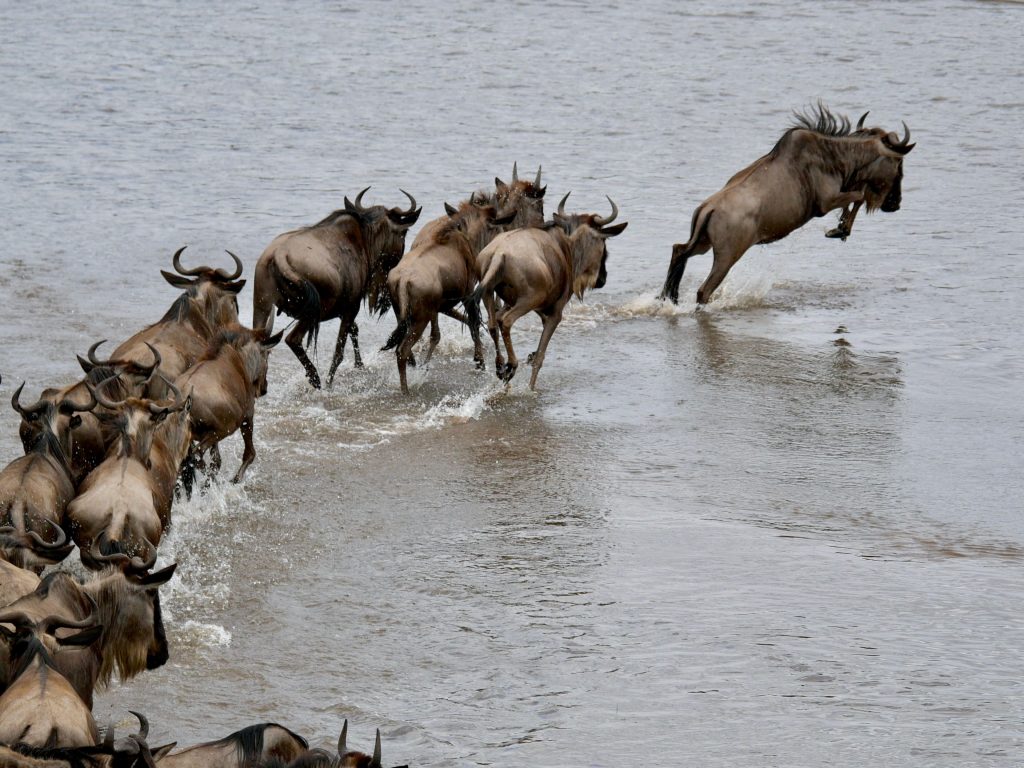
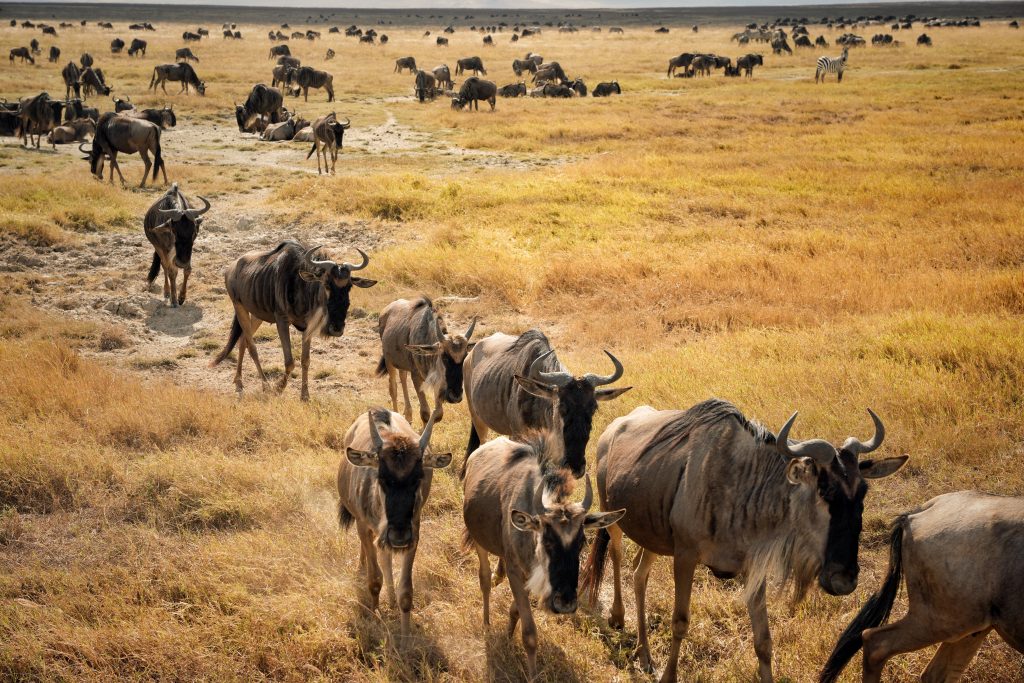
TANAPA describes it as home to the world’s largest remaining terrestrial mammal migration, with more than 1.5 million wildebeest moving through the ecosystem together with zebras and other grazing animals. Tanzania Parks
The Great Migration is only one part of the story.
Serengeti also contains major resident wildlife populations.
Even when the largest wildebeest herds are far from Central Serengeti, visitors can still search for:
lions, leopards, cheetahs, elephants, buffalo, giraffes, zebras, hyenas, gazelles and numerous other species.
TANAPA specifically highlights Serengeti’s exceptional concentration of carnivores, including lions, leopards, cheetahs and hyenas. Tanzania Parks
This makes Serengeti a genuinely year-round wildlife destination rather than a park that is only worth visiting during migration season.
The traditional African Big Five are:
Lion → Leopard → Elephant → Buffalo → Rhino
TANAPA confirms that all five occur naturally within Serengeti National Park. Tanzania Parks
That does not mean every three-day safari will see all five.
Lion, elephant and buffalo can provide strong possibilities in appropriate areas.
Leopards are naturally secretive.
Black rhinos are rare and much more restricted in distribution.
The best safari therefore focuses on the quality of wildlife encounters rather than treating the Serengeti like a checklist.
A relaxed hour watching elephants interact or lions behaving naturally can be more memorable than briefly seeing five species simply to say they were found.
Your 3 Days Tanzania Safari in Serengeti National Park begins in Arusha after breakfast or at an agreed pickup location.
Meet your professional safari driver-guide and begin traveling toward Tanzania’s northern wildlife circuit.
The landscape changes steadily as the city disappears behind you.
Depending on the final route, you may travel toward Mto wa Mbu and Karatu before continuing through the Ngorongoro highlands toward the Serengeti.
The journey itself introduces several characteristic northern Tanzania landscapes.
Cultivated countryside gives way to highlands.
Highland vegetation gradually opens into increasingly broad plains.
Eventually, the vast Serengeti ecosystem begins revealing itself.
TANAPA identifies Arusha as the most common gateway for Serengeti and notes that road journeys offer extensive scenery even though they require substantially more travel time than flying. Tanzania Parks
Once inside Serengeti National Park, the transfer becomes a wildlife experience.
The open country may reveal zebras almost immediately.
Giraffes appear above woodland.
Gazelles spread across the plains.
Elephants may move between feeding areas.
Buffalo can occupy both woodland and grassland.
With good fortune, predators may also begin appearing during the first afternoon.
Central Serengeti is particularly valuable for short safaris because the combination of grasslands, riverine environments and kopjes supports substantial resident wildlife throughout the year.
The rocky kopjes are among Serengeti’s most distinctive landscape features. TANAPA highlights these granite formations as part of the park’s famous scenery alongside the endless plains and river landscapes. Tanzania Parks
Kopjes can provide useful elevated positions for wildlife.
Lions may rest near or upon them.
Other animals use the surrounding habitat for shade, observation and shelter.
Continue through the afternoon while searching for your first major wildlife encounters.
Lions are among the principal targets.
Possible observations may include pride members resting in grass, adult males, females with younger animals or lions moving between feeding and resting areas.
No specific sighting should be guaranteed.
Sometimes an entire pride may be visible.
At other times, the same animals can disappear almost completely into tall grass.
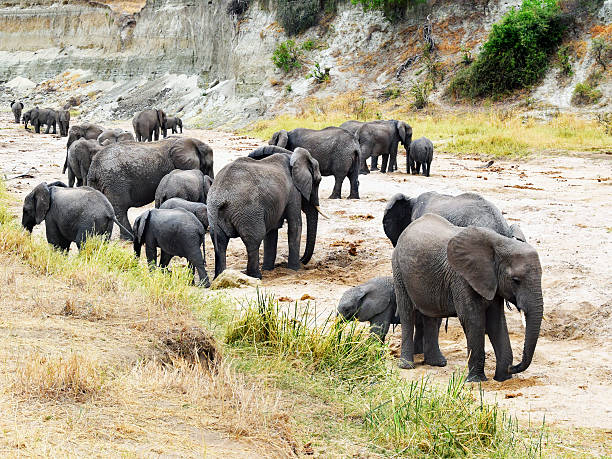
Elephants provide another major possibility.
Family groups may travel between woodland and open terrain, while adult bulls can occur alone.
Watching an elephant herd slowly crossing the Serengeti landscape is one of the classic experiences of the park.
Buffalo may appear in substantial groups.
Their dark shapes can be especially dramatic against golden grass during the drier months.
Leopard is possible but considerably more difficult to locate.
Riverine vegetation and trees provide excellent concealment, and even experienced guides can drive close to a leopard without immediately seeing it.
A leopard sighting should therefore be regarded as a particularly rewarding bonus.
Cheetahs are not part of the Big Five, but many travelers consider them one of the highlights of Serengeti.
Open grassland provides suitable habitat for these fast predators.
TANAPA includes cheetahs among the park’s celebrated carnivore community. Tanzania Parks
As afternoon light softens, wildlife photography becomes particularly attractive.
Giraffes may stand against enormous skies.
Elephants cross grassland beneath warmer light.
Lions become increasingly active as temperatures drop.
Zebras and wildebeest may create silhouettes against the horizon.
Continue toward your lodge or tented camp in the Central Serengeti or another suitably positioned area.
For a short three-day safari, accommodation location matters greatly.
A property close to productive wildlife habitat can save substantial driving and protect more time for actual game viewing.
TANAPA confirms that Serengeti accommodation ranges from lodges and tented camps to campsites, with advance booking particularly important during peak migration periods. Tanzania Parks
Enjoy dinner and your first night surrounded by the Serengeti wilderness.
Overnight: Serengeti National Park
Main Experience: Arusha to Serengeti, first Big Five search, lions, elephants, buffalo, giraffes, plains wildlife and sunset game viewing.
Wake early for the most important wildlife day of the safari.
Day 2 belongs entirely to the Serengeti.
There is no need to hurry toward another national park.
After breakfast, begin exploring while temperatures are still relatively cool and wildlife may be active.
The exact game-drive route should remain flexible.
Your professional guide can consider recent sightings, weather, season, water availability and wildlife movement rather than following exactly the same road for every traveler.
This flexibility is particularly important in Serengeti because the park contains dramatically different habitats.
TANAPA identifies open grasslands, riverine forests, swamps, woodland and kopjes, all supporting different wildlife communities. Tanzania Parks
Searching for lions. Serengeti is internationally famous for its lions.
Early morning can provide opportunities to find pride members before the hotter part of the day.
Possible observations might include lions moving across grassland, adults interacting socially or pride members resting around rocky formations.
Instead of simply taking one photograph and moving away, spend time observing behavior when conditions allow.
Watch body language.
Notice how younger animals interact.
Observe the response of surrounding herbivores.
This turns the sighting into a wildlife experience rather than a checklist stop.
Searching for leopards. Leopards are considerably more difficult.
A guide may pay particular attention to riverine habitats, woodland edges and suitable trees.
Sometimes other animals provide clues.
Antelope alarm behavior or unusual attention among nearby animals may indicate predator activity.
Even so, leopard sightings remain unpredictable.
Elephants. Continue across suitable habitats looking for elephant families and individual bulls.
Serengeti’s varied vegetation provides food and movement corridors across different parts of the ecosystem.
Elephants may appear in woodland one moment and then walk into broad grassland.
For photography, wider compositions can be particularly effective.
An elephant framed against a huge Serengeti sky tells more of the destination’s story than a close portrait alone.
Buffalo. Large buffalo groups provide another Big Five opportunity.
Some herds may contain substantial numbers of animals, while older bulls may sometimes occur separately.
Buffalo are particularly impressive when photographed against open plains.
Black rhino possibilities. Black rhinos occur within Serengeti, and TANAPA specifically includes rhino among the park’s Big Five and endangered wildlife attractions. Tanzania Parks
However, visitors should maintain realistic expectations.
Rhinos are much rarer and more restricted than many of Serengeti’s other large mammals.
Exact locations should also be treated sensitively for conservation reasons.
A sighting is possible, not guaranteed.
Cheetahs and spotted hyenas. Serengeti’s predator experience extends well beyond lion and leopard.
Cheetahs may use open plains where they can scan long distances.
Spotted hyenas can appear around grazing areas and are highly capable predators as well as scavengers.
TANAPA identifies both species as important members of Serengeti’s carnivore community. Tanzania Parks
As the morning continues, the safari may reveal enormous herbivore communities.
Zebras and gazelles graze across the plains.
Wildebeest may occur in smaller resident groups or, depending on the season and location, in enormous migratory concentrations.
Serengeti hosts the world-famous Great Migration involving more than 1.5 million wildebeest accompanied by zebras and other herbivores. Tanzania Parks
The migration should never be advertised as though the main herds remain around Seronera all year.
Their broad position changes seasonally in response to rainfall, water and grazing.
During the southern season, large concentrations may gather toward Ndutu and the southern plains.
At other times, the herds move toward central, western or northern Serengeti.
If the major herds are accessible within your itinerary, the safari can include migration viewing.
If they are far away, focus on resident Serengeti wildlife instead of spending the entire day racing across the park.
Enjoy lunch according to the safari arrangement and continue exploring through the afternoon.
This part of the day can be particularly rewarding around water, woodland edges and grazing areas.
Wildlife may begin moving again as temperatures decrease.
Birdwatching also remains important.
TANAPA records more than 500 species, including ostriches, eagles, flamingos and many other grassland, woodland and wetland birds. Tanzania Parks
Even visitors who arrive focused entirely on lions may become interested in:
secretary birds, raptors, bustards, ostriches and colorful smaller species.
Toward late afternoon, allow time for the atmosphere of Serengeti itself.
Wildlife is only one part of the experience.
The scale of the plains, changing light, isolated acacias, kopjes and dramatic skies make Serengeti visually powerful even when animals are distant.
Return to your lodge or tented camp for dinner.
After a full day inside the park, you will have experienced several completely different Serengeti habitats and wildlife communities.
Overnight: Serengeti National Park
Main Experience: Full-day Big Five search, lions, leopard possibility, elephants, buffalo, rhino possibility, cheetahs, hyenas, migration wildlife and birdlife.
Wake early for your final morning inside Serengeti National Park.
Do not assume this drive will simply repeat yesterday.
Wildlife may have moved substantially during the night.
A lion pride encountered yesterday may now be several kilometres away.
Elephants can use a different feeding area.
A previously empty grassland may suddenly contain giraffes, zebras or predators.
Begin with an early morning game drive according to the location of your accommodation and your departure route.
Possible wildlife includes lions, elephants, buffalo, giraffes, zebras, wildebeest, gazelles, cheetahs, hyenas and numerous birds.
Leopard and rhino remain possibilities rather than expectations.
If one Big Five species has not yet been seen, your guide may concentrate on suitable habitats, but the final morning should not become a frantic search.
Serengeti offers much more than completing five boxes.
A cheetah watching the plains, elephants interacting within a family group or giraffes walking beneath sunrise light may become the strongest memory of the trip.
Take one final look across the enormous landscape.
After three wildlife periods, the Serengeti begins to feel less like a famous name and more like a functioning ecosystem.
Predators depend on herbivores.
Herbivore distribution changes with water and grass.
Birds use different habitats.
Season influences movement.
Every species occupies part of the wider landscape.
Eventually, begin leaving the park and travel back toward the Ngorongoro Highlands.
The journey then continues toward Karatu, the Rift Valley region and Arusha.
TANAPA currently notes that the full road journey between Arusha and Serengeti can require approximately 7–8 hours, so travelers should avoid arranging an overly tight onward flight from Arusha on the same evening unless the timing has been planned carefully. Tanzania Parks
Arrive at your agreed Arusha hotel or other drop-off location.
Your 3 Days Tanzania Safari in Serengeti National Park – Big Five Adventure 2026-2027 then comes to an end.
Main Experience: Final morning game drive, last Big Five possibilities, Serengeti scenery and return to Arusha.
For many travelers, lions become the defining animals of Serengeti.
TANAPA specifically highlights the park’s extraordinary carnivore population, including lions, leopards, cheetahs and hyenas. Tanzania Parks
Serengeti’s mixture of plains, kopjes and riverine environments provides excellent predator habitat.
Lion sightings may involve:
resting pride members, adult males, family interactions or animals moving through open terrain.
The most rewarding encounters are often quiet ones.
Watching a pride for an extended period can reveal relationships and behavior that are missed when safari vehicles constantly move from one sighting to another.
Leopard and cheetah offer two completely different predator experiences.
Leopards are built around concealment.
They may use woodland, riverine habitat and trees and can remain almost invisible even at relatively short distances.
Cheetahs are more strongly associated with open terrain.
The Serengeti plains provide visibility that allows them to monitor potential prey and competing predators.
TANAPA includes both among Serengeti’s signature carnivore attractions. Tanzania Parks
Neither should ever be guaranteed on a short safari.
Serengeti is sometimes marketed so heavily around lions and wildebeest that its other large mammals receive less attention.
Elephants can provide extraordinary family encounters.
Buffalo can appear in large herds.
Both form part of the park’s Big Five. Tanzania Parks
The strongest photographs often show these animals within the wider landscape.
An elephant walking beneath an acacia or a buffalo herd spread across grassland immediately communicates Serengeti’s sense of scale.
Black rhino is the most difficult Big Five species for many Serengeti visitors.
TANAPA confirms that rhinos remain among Serengeti’s rare and endangered wildlife. Tanzania Parks
For conservation reasons, exact information concerning individual animals should always be handled responsibly.
Travelers should never expect guides to provide sensitive location information outside appropriate wildlife-viewing contexts.
A rhino encounter should be appreciated as a major conservation privilege rather than treated as a guaranteed package feature.
Serengeti hosts the largest remaining terrestrial mammal migration on Earth.
TANAPA reports more than 1.5 million wildebeest, accompanied by vast numbers of zebras and other grazing animals, moving through the ecosystem each year. Tanzania Parks
The migration can enhance a three-day Serengeti safari when the chosen region and month align.
Broadly, southern Serengeti becomes important during the early-year calving period.
The herds then move through central and western areas before substantial numbers reach northern Serengeti during parts of the dry season.
Later, seasonal rain encourages movement south again.
These are broad patterns only.
Rainfall determines the real story.
For migration-focused travel, accommodation and safari region should therefore be selected according to the travel dates rather than using one permanent itinerary all year.
Serengeti is a year-round wildlife destination.
TANAPA highlights June through October for dry-season wildlife and migration viewing and January through February for the calving season. Tanzania Parks
The dry season can provide:
more open vegetation, easier long-distance viewing and significant wildlife activity around dependable water.
The green season provides a completely different visual experience.
Fresh vegetation transforms the plains.
Birdlife becomes particularly attractive.
Clouds can create dramatic photography.
The early-year southern plains can also support major migration concentrations and calving activity.
There is therefore no single month that is best for everyone.
The correct season depends on whether priority is:
Big Five wildlife, migration, calving, photography, birding or quieter travel periods.
For many three-day trips, Central Serengeti is the most practical region.
Seronera combines grasslands, riverine habitats, kopjes and woodland and supports substantial resident wildlife throughout the year.
TANAPA specifically identifies the Seronera Valley as one of Serengeti’s ecologically important areas. Tanzania Parks
Central Serengeti can provide opportunities for:
lion, leopard, cheetah, elephant, buffalo, giraffe, zebra, hyena and numerous antelope.
Its year-round wildlife makes it especially valuable when travelers cannot schedule their safari around a particular migration phase.
Both approaches can work well.
A road safari provides the broader northern Tanzania journey.
Travelers experience changing countryside, Rift Valley landscapes and Ngorongoro highlands before reaching the Serengeti.
The trade-off is time.
TANAPA currently estimates approximately 7–8 hours between Arusha and Serengeti by road. Tanzania Parks
A fly-in safari reduces transfer time.
Scheduled flights serve Seronera and other seasonal Serengeti airstrips.
For travelers with only three days and a larger budget, flying one or both directions can create substantially more wildlife time.
The best choice therefore depends on whether priority is:
road scenery and value
or
maximum time inside Serengeti.
Serengeti accommodation ranges from practical campsites to tented camps and luxury lodges.
TANAPA confirms a broad variety of accommodation types within Tanzania’s national parks, including permanent camps, lodges and camping facilities. Tanzania Parks
For a three-day itinerary, location deserves particular attention.
A cheaper camp located far from the intended wildlife area can add several hours of driving.
A strategically positioned property may cost more but protect valuable safari time.
The best value therefore comes from balancing:
price + comfort + location + wildlife access.
A budget safari can use practical camps or shared transportation while retaining access to the same national park.
The wildlife does not change according to accommodation category.
A budget traveler may still experience lions, elephants, cheetahs and migration herds.
The differences usually involve:
accommodation comfort, privacy, transportation and service style.
For a short three-day safari, avoiding excessively distant accommodation remains important even when keeping costs lower.
Mid-range travel is one of the most popular choices.
A well-positioned tented camp may provide:
private sleeping accommodation, en-suite facilities, meals and excellent access to wildlife areas.
For many travelers, this creates a strong balance between comfort and total safari cost.
A mid-range safari can still use a private vehicle if requested.
Luxury accommodation may provide premium tented suites, excellent dining, exceptional locations, high service levels and greater privacy.
A fly-in arrangement can also be added to protect time.
However, genuine safari luxury should not be measured only by room design.
For a three-day Serengeti trip, the most meaningful luxury is:
good location + excellent guiding + private wildlife time + comfortable pacing.
A private safari provides your own vehicle and guide for the booking party.
This is particularly useful for:
couples, families, photographers and travelers with specific wildlife interests.
If lions are displaying interesting behavior, the group can remain longer.
If a traveler is interested in birds, the guide can spend more time on birdlife.
A joining safari shares the vehicle with other travelers and can reduce the per-person cost.
The trade-off is less flexibility.
For a short three-day trip, both formats can work depending on budget and travel style.
Serengeti provides far more photographic opportunities than close wildlife portraits.
Strong subjects include:
lions on kopjes, elephants beneath acacias, cheetahs in open grassland, giraffes against the skyline, wildebeest herds, zebra patterns, dramatic clouds and sunset across the plains.
Wide environmental images are especially powerful.
A lion surrounded by grassland communicates Serengeti more clearly than a photograph that removes all sense of place.
Early and late light can provide warm tones and longer shadows.
Midday can still be productive for wildlife behavior, even if the light is stronger.
Photography should always remain secondary to wildlife welfare.
Animals should not be pressured simply to obtain a closer image.
Serengeti’s international importance creates a responsibility for every visitor.
TANAPA requires visitors to respect designated areas, avoid feeding wildlife and follow park rules and guide instructions. Tanzania Parks
Responsible wildlife viewing means giving animals appropriate space.
Keep noise controlled around predators and sensitive sightings.
Do not pressure a guide to drive too close.
Do not leave waste.
Avoid encouraging wildlife to change direction simply for photography.
The strongest safari encounter is one where the animal continues behaving naturally.
Yes, particularly for first-time visitors who want a focused short safari.
The itinerary provides:
Day 1: Arusha → Serengeti → first afternoon game drive.
Day 2: Full-day Serengeti Big Five and wildlife safari.
Day 3: Morning game drive → return to Arusha.
The main limitation is road travel.
Travelers who want several complete days of wildlife viewing should consider four or five days or use a flight for one direction.
But for a short Tanzania holiday, three days provides a meaningful Serengeti experience when the itinerary does not try to include too many additional parks.
With additional time, Serengeti combines exceptionally well with Ngorongoro Crater.
The environments are completely different.
Serengeti provides:
endless plains + predators + migration + large-scale ecosystems.
Ngorongoro provides:
volcanic scenery + concentrated resident wildlife + black-rhino possibility.
A four- or five-day itinerary provides a much better balance than attempting to squeeze both extensively into three days.
Another longer northern Tanzania safari can include:
Tarangire → Serengeti → Ngorongoro
Tarangire contributes elephants and baobabs.
Serengeti contributes predators and enormous plains.
Ngorongoro adds its famous volcanic caldera.
Together, they create three dramatically different safari landscapes.
A Serengeti safari can also be followed by a beach holiday in Zanzibar.
The contrast is particularly strong:
Serengeti → wildlife, savannah and predators
followed by
Zanzibar → Indian Ocean, beaches, Stone Town and coastal culture.
This combination is popular with couples, families and travelers wanting both safari and relaxation.
Is Serengeti a Big Five destination? Yes. TANAPA confirms that lion, leopard, elephant, buffalo and rhino all occur within Serengeti National Park. Tanzania Parks
Can I see all Big Five in three days? It is possible, but it cannot be guaranteed. Leopard and black rhino are generally more difficult to locate than several of the other Big Five species.
Can I see lions in Serengeti? Yes. Serengeti is famous for its large predator population and TANAPA lists lions among the park’s principal wildlife attractions. Tanzania Parks
Can I see leopards? Leopards occur within Serengeti but are secretive. Riverine woodland and trees can provide good habitat, yet sightings remain unpredictable.
Are elephants found in Serengeti? Yes. Elephants are part of Serengeti’s Big Five wildlife and can be encountered across suitable habitats. Tanzania Parks
Can I see buffalo? Yes. Buffalo occur naturally within the park and may appear in substantial herds.
Can I see black rhinos? Black rhinos occur in Serengeti, but they are rare and localized. TANAPA identifies rhinos among the park’s endangered wildlife. Tanzania Parks
Are cheetahs found in Serengeti? Yes. TANAPA identifies cheetahs among Serengeti’s characteristic carnivores. Tanzania Parks
Can I see the Great Migration during a three-day safari? Possibly. The migration moves through different parts of the wider ecosystem during the year, so the itinerary needs to match the travel dates and current herd position.
How many wildebeest participate in the migration? TANAPA reports more than 1.5 million wildebeest moving through the Serengeti ecosystem together with large numbers of zebras and other grazing animals. Tanzania Parks
How many bird species are found in Serengeti? TANAPA records more than 500 bird species. Tanzania Parks
What is the best time for Serengeti? TANAPA highlights June through October for dry-season migration and wildlife viewing and January through February for the calving period. Tanzania Parks
Is Central Serengeti good throughout the year? Yes. Central Serengeti supports substantial resident wildlife and is especially practical for short safaris.
How long is the drive from Arusha to Serengeti? TANAPA currently estimates approximately 7–8 hours by road, depending on conditions and the final destination inside the park. Tanzania Parks
Can I fly into Serengeti? Yes. TANAPA notes regular air access including flights serving Seronera Airstrip. Tanzania Parks
Is three days enough? Yes, particularly for a focused Serengeti-only safari. Flying one direction can provide even more wildlife time.
Can I stay inside Serengeti? Yes. Accommodation options include lodges, tented camps and campsites. Advance booking is recommended during popular migration periods. Tanzania Parks
Is a private safari better? Private safaris provide greater flexibility around wildlife sightings and photography, while group-joining safaris can reduce the cost.
Can Serengeti be combined with Ngorongoro? Yes. Additional days are recommended so that both destinations receive enough wildlife time.
Can I combine Serengeti with Zanzibar? Yes. Serengeti followed by Zanzibar creates an excellent Tanzania safari-and-beach holiday.
Is wildlife guaranteed? No. Serengeti is a natural ecosystem, and every animal moves independently according to habitat, season, water and food availability.
The strength of the itinerary comes from keeping the Serengeti itself at the center of the journey.
Day 1 becomes:
Arusha → Ngorongoro Highlands → Serengeti → first Big Five search → sunset.
Day 2 becomes:
Full Serengeti wildlife day → lions → elephants → buffalo → leopard possibility → rhino possibility → cheetahs → migration possibilities.
Day 3 becomes:
Morning game drive → final predators and plains wildlife → return to Arusha.
Within three days, travelers experience:
Big Five possibilities + predators + Great Migration possibilities + birdlife + kopjes + open plains + sunrise and sunset wildlife.
That is far stronger than spending three days trying to collect several national parks while barely experiencing any of them.
A successful 2026-2027 Serengeti trip should begin with the travel dates, number of travelers and preferred accommodation category.
Travel dates matter because they influence:
migration possibilities, weather, accommodation availability and which Serengeti region provides the strongest experience.
The mode of transport also matters.
Road travel provides a classic northern Tanzania journey, while flying can significantly increase actual game-viewing time.
Current park fees and other Tanzania National Parks charges should be verified against the official tariff applying to the exact travel dates rather than assuming that an older fee schedule will remain unchanged. TANAPA maintains its official tariff and visitor-planning information online. Tanzania Parks
The 3 Days Tanzania Safari in Serengeti National Park – Big Five Adventure 2026-2027 places travelers inside one of the world’s greatest wildlife landscapes.
Leave Arusha and travel through northern Tanzania toward the Serengeti.
The highlands eventually open.
The horizon expands.
The first zebras appear.
Giraffes rise above the woodland.
Then the plains seem to continue without end.
Spend the first afternoon searching for lions, elephants, buffalo and other Serengeti wildlife before settling into a lodge or tented camp surrounded by wilderness.
The following morning belongs entirely to the park.
Explore grassland, kopjes, river valleys and woodland.
Watch elephants interacting as families.
Search the grass for lions.
Remain patient for leopard.
Look across the plains for cheetah.
Observe buffalo herds and, with exceptional fortune, encounter the endangered black rhino.
During the appropriate season, wildebeest and zebras may transform entire sections of the landscape as part of the Great Migration.
Spend a second night in Serengeti before waking for one final morning game drive.
Then travel back through northern Tanzania toward Arusha.
The complete safari follows:
Arusha → Ngorongoro Highlands → Serengeti National Park → Central Serengeti → Full-Day Big Five Safari → Final Morning Game Drive → Arusha
A final 2026-2027 quotation should be based on the exact dates, number of travelers, accommodation category, private or group safari preference and the current official park charges applying to those travel dates.
The safari can remain a focused three-day Serengeti experience or expand with additional days for Ngorongoro Crater, Tarangire, a Serengeti balloon safari, the Great Migration or Zanzibar.
Travel into the Serengeti and experience lions among granite kopjes, elephants crossing endless plains, buffalo herds, elusive leopards, rare black-rhino possibilities and one of the greatest concentrations of wildlife on Earth during a focused three-day Tanzania Big Five safari.
No results available
ResetNo results available
ResetTanzania is a year-round safari destination with many adventures being offered all over the country. For optimal wildlife sightings, the dry season from June to October is your best bet! Read more on when to visit Tanzania
Both have their perks with Big Five national parks, the incredible Great Migration and that quintessential African experience we all dream of. Check out our article on Serengeti vs Masai Mara to help you decide.
They both have such different safari experiences! Tanzania offers Big Five game reserves on classic dusty desert plains, rather South Africa partners the Big Five animals with luscious winelands. Both are just as good, but it depends on your safari style.
That’s a tough one! Botswana is home to herds of elephants at Chobe and the sparkling Okavango Delta, and Tanzania has the iconic Mount Kilimanjaro and Great Migration. Check out our article on Botswana vs Tanzania safaris to help you decide.
Tanzania is in general a safe, hassle-free country. However, like most places, you do need to take precautions and listen to your tour guide. It also pays to read our articles on ‘Things to know before going to Tanzania’.
A camera and binoculars are a must. You’ll regret it if you don’t take them! As for clothing, definitely pack lightweight, breathable clothing. Remember, Tanzania is an arid country so the days can get quite hot. Read more on what to pack for a safari in Tanzania in our travel magazine
EXPERIENCES
BEST TOURS
copyright©2026 . Enjore Safaris