This itinerary is designed for travelers who have limited time but still want the essential northern Tanzania safari experience—vast Serengeti plains, lions and other big cats, elephants, buffalo, wildebeest and zebra, followed by the extraordinary wildlife concentration inside the Ngorongoro volcanic caldera.
Arusha → Ngorongoro Highlands → Serengeti National Park → Central Serengeti → Ngorongoro Conservation Area → Ngorongoro Crater → Arusha
The journey progresses through:
Northern Tanzania countryside → endless Serengeti plains → predators and plains wildlife → volcanic highlands → Ngorongoro Crater → Big Five possibilities → Arusha.
Serengeti supports the traditional Big Five—lion, leopard, elephant, buffalo and rhino—alongside cheetahs, hyenas, giraffes, zebras and enormous seasonal wildebeest herds. TANAPA also records more than 500 bird species across the park’s grasslands, woodland, riverine forest, wetlands and rocky kopjes. Tanzania Parks
Ngorongoro then delivers a completely different safari environment. The Ngorongoro Lengai Geopark describes the crater as the world’s largest intact and unfilled volcanic caldera, covering roughly 260 km² and dropping about 610 metres from rim to floor. Current NCAA information estimates approximately 26,000–28,000 animals within the crater ecosystem, including black rhino, lion, elephant and buffalo. Geopark
For 2026-2027, this short-and-sweet safari is especially suitable for couples, families, solo travelers and small groups who want Serengeti and Ngorongoro without stretching a three-day itinerary across too many parks.
Serengeti and Ngorongoro complement each other exceptionally well.
Serengeti provides enormous scale.
Its grasslands, kopjes, woodland and river valleys support wildlife that may be spread across a vast landscape. Game drives can reveal lions resting beside granite rocks, cheetahs scanning open plains, elephants moving between woodland and grassland, giraffes feeding among trees and large zebra or wildebeest herds.
Ngorongoro works differently.
Its crater concentrates several habitats into a comparatively compact volcanic basin. Grasslands, wetlands, springs, woodland and a shallow alkaline lake support a substantial resident wildlife population throughout the year. Geopark
The combination therefore becomes:
Serengeti for scale and predators.
Ngorongoro for concentration and dramatic volcanic scenery.
That contrast is the reason these two destinations work so well within a short Tanzania safari.
Serengeti is Tanzania’s most internationally recognized national park and one of the world’s great terrestrial wildlife ecosystems.
TANAPA describes the park as home to the planet’s last great large-mammal migration, involving more than 1.5 million wildebeest together with zebras and other grazing animals. The park also supports the Big Five and a particularly important carnivore community of lions, leopards, cheetahs and hyenas. Tanzania Parks
Yet the Serengeti experience should not be reduced to the Great Migration.
Resident wildlife makes the park rewarding throughout the year.
Central Serengeti around the Seronera Valley is especially useful for a short itinerary because its mixture of grasslands, riverine habitat, woodland and kopjes supports substantial resident wildlife even when the main migratory herds are elsewhere. Tanzania Parks
Possible sightings include:
lion, leopard, cheetah, elephant, buffalo, giraffe, zebra, wildebeest, gazelles, hyenas and numerous bird species.
No particular species should ever be guaranteed.
That unpredictability is part of an authentic safari.
Ngorongoro feels completely different from Serengeti.
The crater was created when an enormous ancient volcano collapsed inward, forming the spectacular caldera visible today.
The official Ngorongoro Lengai Geopark records the crater at approximately 260 km², roughly 20 kilometres across and about 610 metres deep. It describes the ecosystem as containing grasslands, swamps, rivers and woodland supporting more than 25,000 animals. Geopark
NCAA’s more recent wildlife information estimates the crater wildlife population at approximately 26,000–28,000 animals. NCAA
Possible sightings include:
lion, black rhino, elephant, buffalo, wildebeest, zebra, hippo, spotted hyena, eland, gazelles and numerous birds.
Leopard also occurs within the wider conservation area but is considerably more secretive.
One interesting ecological detail is that NCAA notes giraffes occur within the wider Ngorongoro Conservation Area but are generally absent from the crater floor.


Your 3 Days Tanzania Safari to Serengeti and Ngorongoro begins in Arusha.
After breakfast, meet your professional safari driver-guide and start traveling toward Tanzania’s northern safari circuit.
The journey gradually leaves Arusha behind and moves through changing countryside toward the Ngorongoro highlands.
For travelers using the standard road itinerary, this is a substantial travel day. TANAPA currently estimates the road journey between Arusha and Serengeti at approximately 7–8 hours, depending on traffic, route and the final destination within the park. Tanzania Parks
That travel time is one reason this itinerary remains focused only on Serengeti and Ngorongoro instead of adding Tarangire or Lake Manyara.
As you continue west, the landscape changes dramatically.
Cultivated areas gradually give way to highlands and protected landscapes.
Beyond the Ngorongoro region, the horizon begins opening.
Then the Serengeti plains appear.
Once inside Serengeti National Park, the transfer itself becomes part of the game drive.
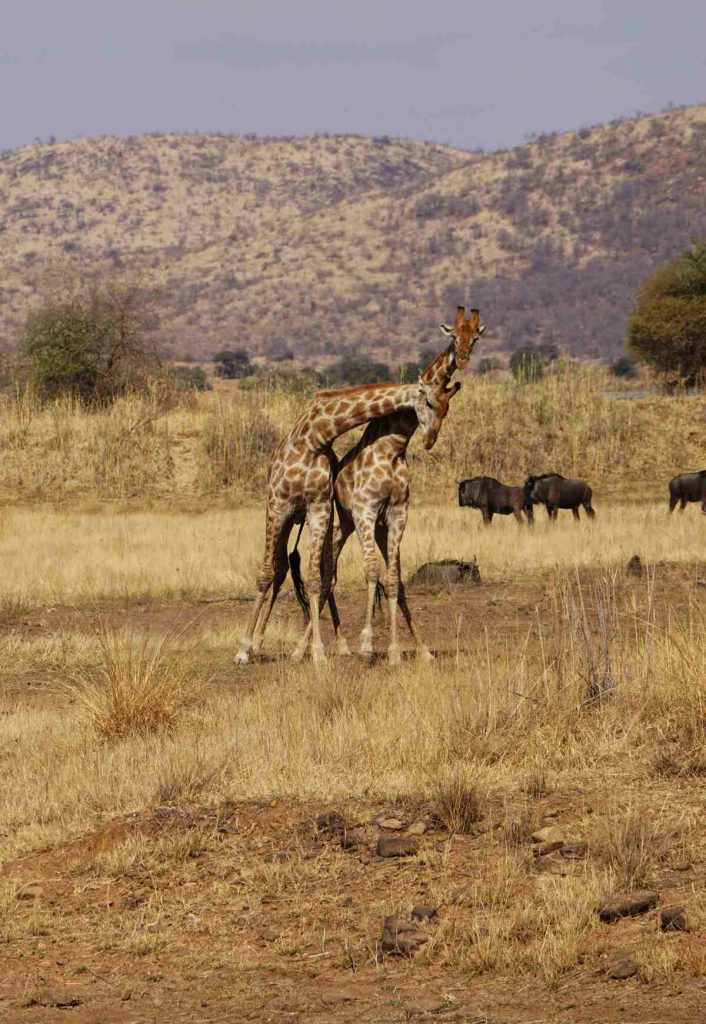
The first zebras may appear beside the road.
Giraffes can rise above woodland.
Gazelles occupy open grasslands.
Elephants may move across more wooded sections.
Buffalo can occur in substantial groups.
With good fortune, the first predator encounter may happen before you even reach your accommodation.
Central Serengeti is particularly attractive for short safaris because it combines several habitats within a relatively accessible wildlife area.
TANAPA identifies the Seronera Valley, open grasslands, riverine forest, woodland and kopjes as important elements of the ecosystem. Tanzania Parks
The granite kopjes are especially distinctive.
These rocky islands rise unexpectedly from the grasslands and provide shade, shelter and elevated observation points for wildlife.
Lions are famously associated with them.
A pride may be resting beneath the rocks or using higher ground to observe the surrounding plains.
Serengeti’s carnivore community is one of its greatest strengths.
TANAPA specifically identifies lions, leopards, cheetahs and hyenas among the park’s major attractions. Tanzania Parks
Lions may be encountered resting, walking or interacting socially.
Cheetahs often favor more open terrain where visibility allows them to monitor the landscape.
Leopards are more secretive and may use riverine trees and denser vegetation.
Spotted hyenas are important predators and scavengers throughout the ecosystem.
Continue the afternoon game drive according to current wildlife activity.
There is no need to race toward every reported sighting.
A strong Serengeti safari allows time to observe behavior.
If elephants are interacting as a family, remain with them.
If a lion pride is beginning to become active, allow the scene to develop.
If giraffes are moving across the evening landscape, use the opportunity for environmental photography.
Late afternoon can be particularly beautiful.
The grass becomes warmer in color.
Long shadows stretch from acacia trees.
Granite kopjes catch the final light.
Wildlife silhouettes appear against enormous skies.
Continue toward your lodge or tented camp in the Central Serengeti or another appropriately positioned location.
TANAPA confirms accommodation options range from lodges to campsites, with advance booking recommended during popular migration periods. Tanzania Parks
Enjoy dinner and your first night in the Serengeti wilderness.
Overnight: Serengeti National Park
Main Experience: Arusha to Serengeti journey, first game drive, lions and other predator possibilities, elephants, giraffes, plains wildlife and sunset scenery.
Wake early inside Serengeti National Park.
The second morning provides one of the most valuable wildlife periods of the entire safari.
Animals may have moved substantially during the night.
A plain that seemed empty yesterday afternoon may now contain zebras, elephants or predators.
Begin with a morning game drive through productive Central Serengeti habitats.
The exact route should remain flexible and depend on wildlife movement, season, recent sightings and current road conditions.
Your guide may explore open grassland, kopjes, riverine habitat or woodland according to what is happening that morning.
Lion viewing can be particularly rewarding.
TANAPA identifies Serengeti as one of Africa’s major lion landscapes and currently highlights the park’s exceptional carnivore concentration. Tanzania Parks
Possible observations include a pride resting after nighttime activity, adults walking through grassland or lions occupying areas around kopjes.
Spend time watching behavior rather than simply taking a photograph and immediately leaving.
Social interaction between lions can reveal far more about the animals than a brief sighting.
Leopard possibilities are another reason Central Serengeti is attractive.
Riverine environments and mature trees provide suitable cover.
A leopard may be resting in a tree or completely hidden within vegetation only a short distance away.
Sightings remain difficult and should be considered a bonus.
Cheetahs add another completely different predator experience.
Their preference for more open environments makes the Serengeti plains especially suitable habitat.
A cheetah may be seen scanning distant herds or resting in an elevated position.
Elephants and buffalo provide important Big Five possibilities.
Elephant families can move between grassland and woodland while buffalo may appear individually or in much larger groups.
Serengeti also contains black rhinos, completing the park’s Big Five, although rhinos are rare and considerably harder to encounter. TANAPA lists rhinos among Serengeti’s endangered wildlife. Tanzania Parks
Depending on the season, wildebeest and zebra may become a major feature.
TANAPA describes the Serengeti migration as the world’s largest terrestrial mammal migration, with over 1.5 million wildebeest and associated grazing animals moving through the wider ecosystem. Tanzania Parks
The major herds do not remain in Central Serengeti every month.
Their broad position changes with rainfall, water and grazing.
If the migration is nearby, the morning can include large herd viewing.
If the main herds are elsewhere, resident Serengeti wildlife still provides an exceptional safari.
Birdlife also deserves attention.
More than 500 species are documented, including ostriches, raptors and numerous grassland and wetland birds. Tanzania Parks
After the main Serengeti wildlife experience, begin traveling toward the Ngorongoro Conservation Area.
The journey provides one final opportunity to observe Serengeti wildlife as you leave the central plains.
Gradually, the endless grasslands begin transitioning toward the volcanic highlands.
The change is dramatic.
Serengeti feels broad, horizontal and seemingly endless.
Ngorongoro becomes higher, greener and increasingly mountainous.
Continue toward accommodation around the Ngorongoro Highlands or Karatu according to the selected package.
This positioning allows Day 3 to focus on the crater before returning to Arusha.
Enjoy dinner and your second night.
Overnight: Ngorongoro Highlands / Karatu area
Main Experience: Morning Serengeti game drive, lions, leopard and cheetah possibilities, elephants, buffalo, migration wildlife and transfer into the Ngorongoro volcanic highlands.
Wake early in the highlands and enjoy breakfast before beginning the final major wildlife experience of the safari.
Travel toward the Ngorongoro Crater.
As the landscape opens from the rim, the scale of the caldera becomes immediately apparent.
The official Ngorongoro Lengai Geopark describes the crater as the largest intact and unfilled volcanic caldera on Earth, extending across almost 260 km² and reaching approximately 610 metres from rim to floor. Geopark
The crater contains grasslands, wetlands, rivers, woodland and the shallow alkaline Lake Magadi.
These habitats support an unusually concentrated wildlife community.
NCAA’s current wildlife information estimates approximately 26,000–28,000 animals within the crater. NCAA
Begin the day’s wildlife viewing through the authorized crater safari areas.
Wildebeest and zebra may occur across broad grassland.
Buffalo can appear in substantial groups.
Spotted hyenas are significant predators within the ecosystem.
Lions remain one of the most anticipated animals.
The open terrain can provide excellent viewing when pride members are visible.
Some may spend much of the day resting, while others may be moving between feeding and resting areas.
Black rhino is one of Ngorongoro’s most important conservation species.
NCAA confirms the species occurs within the crater ecosystem, but a sighting should never be guaranteed. NCAA
Rhinos may be distant.
Weather, vegetation and natural movement all influence visibility.
A distant observation remains an exceptional wildlife encounter.
Elephants can also be seen, particularly around suitable woodland and wetland environments.
The Lerai Forest is one important crater habitat. The Ngorongoro Lengai Geopark identifies it as a yellow-barked acacia forest providing refuge for animals including elephants and rhinos. Geopark
Hippos use freshwater environments such as the Ngoitoktok Spring and associated pools. Geopark
Lake Magadi adds another visual dimension.
The shallow alkaline lake can attract flamingos when seasonal ecological conditions are favorable, while surrounding areas are also used by predators and other wildlife. Geopark
Ngorongoro should not be approached solely as a Big Five checklist.
The landscape itself is one of the great attractions.
Photograph animals within the enormous volcanic walls.
Watch wildebeest spread across the crater floor.
Observe hyenas moving through open grassland.
Listen to the sounds of a wildlife ecosystem enclosed by one of the world’s most remarkable geological formations.
After completing the main crater safari and lunch arrangement, return toward the crater rim and begin the road journey to Arusha.
The landscape gradually moves from highland forest into cultivated countryside and eventually back toward the city.
Arrive at your hotel, airport connection or agreed drop-off point.
Your 3 Days Tanzania Safari to Serengeti and Ngorongoro Short and Sweet 2026-2027 then comes to an end.
Main Experience: Ngorongoro Crater, lions, buffalo, elephants, black-rhino possibility, hippos, hyenas, flamingo possibilities and return to Arusha.
Both Serengeti and Ngorongoro support the traditional Big Five.
Serengeti is home to lion, leopard, elephant, buffalo and rhino, alongside exceptional populations of other predators and plains wildlife. Tanzania Parks
Ngorongoro also supports all five within the wider conservation area, with the crater particularly well known for lion, buffalo, elephant and endangered black-rhino possibilities. Geopark
Seeing all five during only three days is possible but should never be guaranteed.
Leopards are secretive.
Rhinos are rare.
Even lions may spend hours hidden within grass.
A more realistic expectation is a safari offering excellent Big Five opportunities combined with dozens of other species and two spectacular landscapes.
The Great Migration can become an additional highlight when the travel dates and selected Serengeti region align with herd movement.
TANAPA describes more than 1.5 million wildebeest moving through the Serengeti ecosystem alongside zebras and other grazing animals. Tanzania Parks
Broadly, early-year migration activity becomes important in the southern ecosystem, followed by movement through central and western regions and eventually toward northern Serengeti during parts of the dry season.
These are broad natural patterns, not guaranteed schedules.
Rainfall influences where the herds actually move.
For travelers whose main priority is the Great Migration rather than a general Serengeti-and-Ngorongoro safari, the accommodation location should be matched to the expected seasonal herd position.
For travelers simply wanting a strong first safari, Central Serengeti remains an excellent year-round choice because of its resident wildlife.
Both destinations can be visited throughout the year.
TANAPA highlights June through October for dry-season Serengeti wildlife and migration viewing and January through February for the broader calving period. Tanzania Parks
Dry-season travel generally provides more open vegetation and classic golden savannah scenery.
The green season creates a completely different experience.
Fresh grass transforms the plains.
Cloud formations can become dramatic.
Birdlife is excellent.
The southern Serengeti ecosystem can become particularly important for migration and calving during the early part of the year.
Ngorongoro contains substantial resident wildlife throughout the year, making it particularly reliable within a short safari.
The best travel period therefore depends on whether the priority is:
Big Five wildlife, Great Migration, calving, photography, birding or greener scenery.
The same three-day route can be adapted to several travel styles.
A lodge safari provides permanent accommodation with private rooms or tented suites, beds, bathrooms and prepared meals.
A camping safari can reduce accommodation costs while keeping the core wildlife route similar.
A private safari gives the booking party its own vehicle and professional guide.
This provides the greatest flexibility for photography, wildlife stops and daily pacing.
A group-joining safari can reduce the per-person cost because transportation and guiding expenses are shared.
The trade-off is a more structured schedule.
For a three-day trip, accommodation position is particularly important.
A strategically located Serengeti camp on Night 1 and Ngorongoro/Karatu property on Night 2 avoids unnecessary backtracking.
The classic version is a road safari from Arusha.
This allows travelers to see northern Tanzania’s countryside and the Ngorongoro highlands while reaching Serengeti by vehicle.
TANAPA currently estimates around 7–8 hours by road between Arusha and Serengeti, making Day 1 substantial. Tanzania Parks
Travelers wanting to maximize wildlife time can use air access instead.
TANAPA confirms regular flights serve Seronera Airstrip, among other Serengeti air connections. Tanzania Parks
A fly-in or one-way-flight arrangement can provide more time for game drives but normally costs more.
For only three days, the choice is essentially:
road safari for landscape, value and the classic overland journey
or
air safari for maximum Serengeti wildlife time.
The two destinations provide completely different photographic opportunities.
Serengeti is ideal for:
lions on kopjes, cheetahs in grassland, elephants beneath open skies, giraffes against the horizon, wildebeest herds and dramatic sunsets.
Ngorongoro provides:
wildlife beneath crater walls, open grasslands, wetlands, Lake Magadi, black-rhino possibilities and volcanic scenery.
Do not concentrate only on close-up photographs.
Wide images often communicate Tanzania far more effectively.
A lion surrounded by Serengeti grassland tells a different story from an isolated lion portrait.
A zebra herd beneath the immense Ngorongoro walls explains the crater’s scale.
Responsible photography is equally important.
Wildlife should not be crowded, blocked or disturbed simply to create a photograph.
Three days is short, but the itinerary works because it remains focused.
Day 1 becomes:
Arusha → Serengeti → first predators and plains wildlife → overnight Serengeti.
Day 2 becomes:
Serengeti sunrise wildlife → lions, cheetahs, elephants and migration possibilities → Ngorongoro Highlands.
Day 3 becomes:
Ngorongoro Crater → Big Five possibilities → Arusha.
The result combines two iconic destinations without trying to add Tarangire, Lake Manyara and several other parks simply to make the itinerary appear larger.
Travelers who have five or more days can slow the pace substantially and add another destination.
But when only three days are available, Serengeti + Ngorongoro is a powerful short-and-sweet combination.
Is three days enough for Serengeti and Ngorongoro? Yes. Three days works as an intensive short safari when Day 1 focuses on reaching and exploring Serengeti, Day 2 combines additional Serengeti wildlife with the transfer toward Ngorongoro, and Day 3 focuses on the crater.
Can I see the Big Five? Both Serengeti and Ngorongoro support the Big Five, but seeing all five during three days cannot be guaranteed. Leopard and black rhino can be particularly difficult to locate. Tanzania Parks
Can I see lions in Serengeti? Yes. Serengeti is particularly famous for its carnivore population, including lions, leopards, cheetahs and hyenas. Tanzania Parks
Can I see black rhinos in Ngorongoro? Yes. Black rhinos occur within the crater ecosystem, but sightings depend entirely on the animals’ natural location and visibility. NCAA
Can I see the Great Migration in three days? Possibly. It depends on the travel month and whether the main herds are close to the selected Serengeti area. Migration locations should never be guaranteed far in advance.
How many animals live in Ngorongoro Crater? Current NCAA information estimates approximately 26,000–28,000 animals within the crater ecosystem. NCAA
How large is Ngorongoro Crater? The official Geopark describes it as roughly 260 km², approximately 20 kilometres across and about 610 metres deep. Geopark
How many bird species are found in Serengeti? TANAPA records more than 500 species. Tanzania Parks
How long is the road journey from Arusha to Serengeti? TANAPA currently estimates around 7–8 hours, depending on the route and conditions. Tanzania Parks
Can the safari be private? Yes. Private safaris provide greater flexibility, while group-joining arrangements can reduce the per-person cost.
Can I fly into Serengeti instead? Yes. Regular flights serve Seronera Airstrip, and a fly-in arrangement can protect more wildlife-viewing time during a short trip. Tanzania Parks
Is wildlife guaranteed? No. Serengeti and Ngorongoro are natural ecosystems, and every wildlife sighting depends on animal movement, habitat and seasonal conditions.
The 3 Days Tanzania Safari to Serengeti and Ngorongoro Short and Sweet works because every destination earns its place.
There are no unnecessary park stops.
There is no attempt to fit the entire northern Tanzania circuit into three days.
Instead, the journey focuses on two exceptional wildlife landscapes.
In Serengeti:
endless plains + lions + cheetahs + elephants + buffalo + wildebeest + migration possibilities.
In Ngorongoro:
volcanic scenery + concentrated wildlife + lions + buffalo + elephants + black-rhino possibilities.
The contrast creates a complete short safari despite the limited duration.
The 3 Days Tanzania Safari to Serengeti and Ngorongoro Short and Sweet 2026-2027 begins in Arusha and travels west through Tanzania’s northern highlands toward the legendary Serengeti.
The landscape opens.
Grassland spreads toward the horizon.
Zebras begin appearing.
Giraffes rise above woodland.
Then predators enter the story.
Lions rest around granite kopjes.
Cheetahs scan the open plains.
Elephants cross between habitats while buffalo graze across the wider ecosystem.
During the appropriate season, immense wildebeest and zebra herds may transform whole sections of the Serengeti as part of the Great Migration.
Spend your first night surrounded by this wilderness.
Wake the following morning and continue exploring before traveling toward the volcanic Ngorongoro Highlands.
The next morning reveals another world.
Enter the immense Ngorongoro Crater and search the grasslands, wetlands and woodland for lions, elephants, buffalo, hippos, hyenas and the endangered black rhino.
Then return toward Arusha.
The complete journey follows:
Arusha → Ngorongoro Highlands → Serengeti National Park → Central Serengeti → Ngorongoro Conservation Area → Ngorongoro Crater → Arusha
The final 2026-2027 price should be calculated according to the exact travel dates, number of travelers, accommodation category, private or joining safari preference and the official park and conservation tariffs applying to those dates.
The itinerary can remain a focused three-day Serengeti and Ngorongoro adventure or expand with additional days for Tarangire, Lake Manyara, the Great Migration, a Serengeti balloon safari or Zanzibar.
Spend three carefully planned days moving from the predator-rich endless plains of Serengeti to the wildlife-filled volcanic basin of Ngorongoro Crater, creating a short but powerful Tanzania safari centered on genuine wildlife time rather than unnecessary destination hopping.
No results available
ResetNo results available
ResetTanzania is a year-round safari destination with many adventures being offered all over the country. For optimal wildlife sightings, the dry season from June to October is your best bet! Read more on when to visit Tanzania
Both have their perks with Big Five national parks, the incredible Great Migration and that quintessential African experience we all dream of. Check out our article on Serengeti vs Masai Mara to help you decide.
They both have such different safari experiences! Tanzania offers Big Five game reserves on classic dusty desert plains, rather South Africa partners the Big Five animals with luscious winelands. Both are just as good, but it depends on your safari style.
That’s a tough one! Botswana is home to herds of elephants at Chobe and the sparkling Okavango Delta, and Tanzania has the iconic Mount Kilimanjaro and Great Migration. Check out our article on Botswana vs Tanzania safaris to help you decide.
Tanzania is in general a safe, hassle-free country. However, like most places, you do need to take precautions and listen to your tour guide. It also pays to read our articles on ‘Things to know before going to Tanzania’.
A camera and binoculars are a must. You’ll regret it if you don’t take them! As for clothing, definitely pack lightweight, breathable clothing. Remember, Tanzania is an arid country so the days can get quite hot. Read more on what to pack for a safari in Tanzania in our travel magazine
EXPERIENCES
BEST TOURS
copyright©2026 . Enjore Safaris