
This classic route combines three remarkably different ecosystems within only three days. Tarangire National Park introduces vast elephant country, ancient baobab trees and the life-giving Tarangire River. Ngorongoro Crater adds one of Africa’s greatest concentrations of large wildlife inside an immense volcanic caldera. Lake Manyara National Park finishes the journey with groundwater forest, wetlands, an alkaline soda lake, primates, elephants, seasonal flamingos and the dramatic Great Rift Valley escarpment.
Arusha → Tarangire National Park → Karatu/Ngorongoro Highlands → Ngorongoro Crater → Karatu → Lake Manyara National Park → Arusha
The landscape progression is equally impressive:
Baobab savannah → elephant country → cool volcanic highlands → wildlife-filled crater → groundwater forest → alkaline lake → Great Rift Valley.
Tarangire covers approximately 2,850 km² and is especially famous for large elephant herds, baobabs, seasonal wildlife concentrations and more than 550 bird species. Tanzania Parks Ngorongoro Crater is described by the official Ngorongoro Lengai Geopark as the world’s largest intact and unfilled volcanic caldera and supports more than 25,000 animals, including members of the traditional Big Five. Geopark Lake Manyara covers approximately 648.7 km² and combines groundwater forest, acacia woodland, floodplain, wetlands and an alkaline lake supporting more than 400 recorded bird species. Tanzania Parks
For travelers planning a Tanzania safari in 2026-2027, this itinerary works particularly well because it delivers meaningful wildlife viewing every day while keeping the route geographically compact.
The biggest strength of the 3 Days Tanzania Safari to Tarangire, Ngorongoro and Lake Manyara is that the itinerary does not depend on three similar game drives.
Every destination changes the experience.
Tarangire feels spacious, dry and ancient. Giant baobabs dominate parts of the landscape while elephants move between woodland, river habitats and seasonal wetlands.
Ngorongoro feels completely different. The safari takes place within an enormous volcanic basin surrounded by high crater walls, where grassland, wetlands and woodland support an exceptional concentration of resident wildlife.
Lake Manyara then introduces a greener environment. Spring-fed forest appears near the entrance, monkeys move through the trees, elephants use woodland and floodplain habitats, hippos occupy wetland areas and the Rift Valley escarpment towers above the lake.
Within three days, travelers experience several of northern Tanzania’s defining landscapes without needing to reach the more distant Serengeti.
That makes this itinerary especially suitable for first-time visitors, couples, families, private groups and travelers adding a short safari to a broader Tanzania holiday.

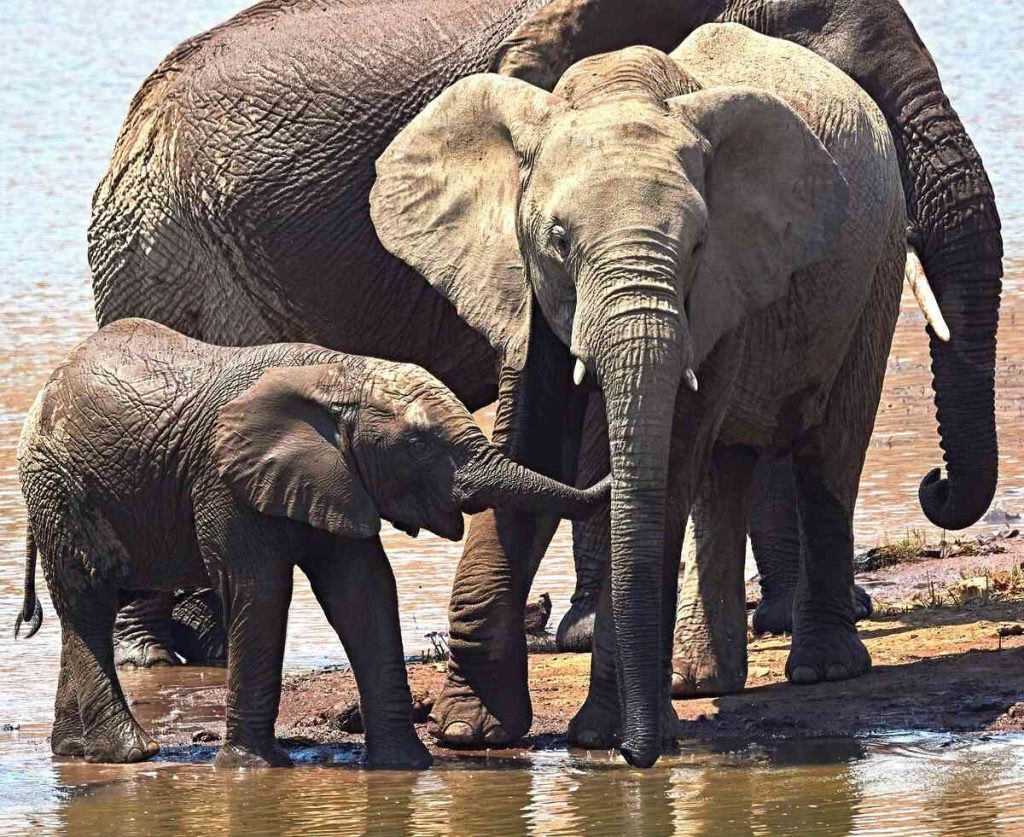

Your 3 Days Tanzania Wildlife Adventure begins in Arusha after breakfast or from an agreed pickup point.
Meet your professional safari driver-guide and travel toward Tarangire National Park, one of the most distinctive wildlife landscapes in northern Tanzania.
As Arusha disappears behind you, urban surroundings gradually transition into open countryside. Small communities, agricultural landscapes and dry savannah begin defining the route before you reach Tarangire.
After completing park-entry arrangements, begin your first game drive.
Tarangire immediately feels different from many other northern Tanzania parks.
Its huge baobab trees dominate sections of the landscape, while the Tarangire River forms an essential ecological corridor through the park.
TANAPA calls Tarangire the “Paradise of Elephants” and highlights its large elephant families, ancient baobabs, Silale Swamp, river loops and dry-season wildlife concentrations. Tanzania Parks
Elephants will likely become one of the major themes of the day.
Possible encounters include adult bulls feeding quietly, family groups moving between woodland and river areas, younger elephants remaining close to older females and large herds gathering near productive habitats.
During the drier months, the Tarangire River and Silale Swamp become increasingly important because they provide water when many surrounding areas are dry. TANAPA notes that buffalo, elephants and other wildlife concentrate around these habitats, while wildebeest, zebra and hartebeest move toward the river system. Tanzania Parks
Tarangire offers much more than elephants.
Giraffes browse among woodland and open areas.
Zebras and wildebeest graze across plains.
Buffalo may appear in substantial herds.
Antelope occupy different habitats throughout the park.
Predators are also present.
Lions patrol the plains, while leopards and hyenas occur within the ecosystem. Leopard sightings remain considerably more difficult because these cats can disappear easily into woodland and riverine vegetation. Tanzania Parks
The baobabs provide an important visual identity.
Some stretches of Tarangire feel almost prehistoric, with huge trunks rising above surrounding bush and savannah.
For photographers, this is an opportunity to move beyond close wildlife portraits.
An elephant framed beneath an ancient baobab or a giraffe walking through open savannah can communicate the destination much more effectively than a tightly cropped photograph.
Birdwatching is exceptional.
TANAPA records more than 550 species, including kori bustards, ostriches, lovebirds, bee-eaters and numerous raptors. Tanzania Parks
Even travelers who begin the safari interested mainly in elephants and lions often discover that Tarangire’s birdlife adds substantial color and activity between large-mammal sightings.
Enjoy lunch according to your safari arrangement and continue exploring during the afternoon.
Later light often transforms the park.
The baobabs become warmer in color.
Long shadows move across the grass.
Elephant families may cross the landscape as temperatures become more comfortable.
Continue toward the park exit before traveling to Karatu or the Ngorongoro Highlands for the first night.
The change in environment is immediate as the route rises toward cooler highland country.
Check into your lodge or tented accommodation, enjoy dinner and relax before the following morning’s Ngorongoro experience.
Overnight: Karatu / Ngorongoro Highlands
Main Experience: Tarangire elephants, baobabs, river landscapes, lions and other predator possibilities, giraffes, buffalo and exceptional birdlife.
Wake in the cool highlands and enjoy breakfast before continuing toward the Ngorongoro Conservation Area.
The second day introduces one of the most spectacular landscapes in African wildlife tourism.
As you approach the crater rim, the enormous volcanic basin opens below.
The official Ngorongoro Lengai Geopark describes Ngorongoro as the largest intact and unfilled volcanic caldera in the world, measuring approximately 16–19 kilometres across and about 610 metres deep. Geopark
The crater supports an extraordinary resident wildlife population.
The Geopark records more than 25,000 animals, while newer NCAA population information estimates roughly 26,000–28,000 animals within the crater ecosystem. Geopark
Begin the main game-viewing experience through the authorized crater safari area.
Open grasslands occupy much of the floor, but the ecosystem also contains wetlands, freshwater areas, woodland and the shallow alkaline Lake Magadi.
This habitat diversity supports wildebeest, zebra, buffalo, gazelles, eland, hippos, spotted hyenas, elephants and several predator species.
Ngorongoro also provides important Big Five possibilities.
NCAA confirms that the wider conservation area supports black rhinoceros, elephant, buffalo, lion and leopard. NCAA
Lions are among the crater’s most anticipated animals.
The relatively open environment can provide excellent viewing when pride members are visible. Some may spend the warmer hours resting while others move between different parts of their territory.
Allow time to watch behavior rather than simply photographing the animals and moving immediately to another sighting.
Buffalo can appear in sizeable groups across suitable grassland and wetland environments.
Elephants may also be encountered, particularly around wooded sections.
One of the most important wildlife possibilities is the endangered black rhino.
Ngorongoro remains a significant refuge for this species. A rhino may sometimes be observed at considerable distance across the crater floor, while on other days none may be visible at all.
A sighting should therefore be treated as a special opportunity rather than a guaranteed package feature.
Spotted hyenas are also important inhabitants.
They are skilled predators as well as scavengers and can be observed across open habitats.
Hippos occupy suitable freshwater environments, adding another very different wildlife experience.
Interestingly, giraffes occur within the wider Ngorongoro Conservation Area but NCAA notes that they are generally absent from the crater floor. NCAA
The crater’s true strength comes from combining wildlife with geography.
A photograph of wildebeest, zebra or buffalo against the enormous crater walls immediately communicates the scale of Ngorongoro.
Enjoy lunch according to the safari arrangement before continuing the wildlife experience.
Later, return toward the crater rim and travel back to your accommodation around Karatu or the surrounding highlands.
Enjoy dinner and another relaxed evening.
Overnight: Karatu / Ngorongoro Highlands
Main Experience: Ngorongoro Crater, lions, buffalo, elephants, black-rhino possibility, hippos, hyenas and immense volcanic scenery.
After breakfast, travel toward Lake Manyara National Park for the final chapter of your three-day Tanzania safari.
Manyara provides the perfect conclusion because its landscape looks completely different from both Tarangire and Ngorongoro.
TANAPA records the park at approximately 648.7 km² and describes an ecosystem combining alkaline soda lake, spring-fed groundwater forest, acacia woodland, floodplain, papyrus wetlands and the dramatic Great Rift Valley escarpment. Tanzania Parks
Enter the park and immediately experience one of its most unusual environments.
Tall trees dominate the groundwater forest, supported by freshwater springs emerging near the base of the Rift Valley.
Blue monkeys and baboons are particularly associated with this environment, while bushbuck and colorful forest birds may also be encountered. Tanzania Parks
Continue through changing habitat toward more open areas.
Elephants are among Lake Manyara’s characteristic large mammals.
Buffalo, giraffes, zebra and wildebeest may also use the floodplain and woodland environments. Tanzania Parks
The park is internationally associated with its tree-climbing lions.
TANAPA continues to identify this unusual behavior as one of Lake Manyara’s signature wildlife attractions. Tanzania Parks
However, visitors should keep realistic expectations.
A lion sighting is never guaranteed, and even when lions are found, they may remain on the ground rather than resting in trees.
The lake itself adds an entirely different dimension.
Its alkaline waters and surrounding wetlands provide habitat for substantial birdlife.
Seasonal concentrations of lesser and greater flamingos may appear when ecological and feeding conditions are suitable, alongside pelicans, storks, herons and numerous other water-associated species. Tanzania Parks
TANAPA records more than 400 bird species across Lake Manyara’s habitats, making the park one of the strongest birding additions to a short northern Tanzania safari. Tanzania Parks
Hippos occupy suitable shoreline pools and wetlands.
Watching hippos in a reedy wetland beneath the Rift Valley escarpment produces a very different scene from the elephant and baobab landscapes of Day 1.
That contrast completes the journey.
After the game drive and lunch arrangement, begin traveling toward Arusha.
Arrive at your hotel, airport connection or agreed final drop-off point, marking the end of the 3 Days Tanzania Safari to Tarangire, Ngorongoro and Lake Manyara – Wildlife Adventures 2026-2027.
Main Experience: Groundwater forest, elephants, monkeys, hippos, tree-climbing-lion possibility, seasonal flamingos, birdlife and Great Rift Valley scenery.
This itinerary is particularly strong because its wildlife diversity does not depend on a single ecosystem.
Tarangire provides some of the best elephant-focused scenery on the northern circuit. The combination of large herds, baobabs, river habitats and seasonal wildlife movement gives the park a recognizable identity. Lions, leopards, hyenas, buffalo, giraffes, zebras and wildebeest add to the experience. Tanzania Parks
Ngorongoro provides the strongest traditional Big Five opportunity of the three days. Lions, buffalo, elephants and black-rhino possibilities occur alongside thousands of wildebeest, zebras, gazelles, hippos and hyenas. Leopard is present within the wider conservation area but remains considerably more elusive. Geopark
Lake Manyara shifts the wildlife focus toward elephants, primates, hippos and birds. Tree-climbing lions remain a famous possibility, while more than 400 bird species take advantage of the park’s mixture of forest, wetlands, woodland and lake environments. Tanzania Parks
No wildlife encounter is guaranteed.
The advantage of visiting three ecosystems is that the safari remains interesting even when one specific species remains unseen.
This route can operate throughout the year.
The experience simply changes with the seasons.
Tarangire becomes especially famous during the drier part of the year when water becomes less widely available and animals increasingly use the Tarangire River, Silale Swamp and other dependable water sources. TANAPA specifically highlights the concentration of elephants, buffalo and other wildlife around these areas. Tanzania Parks
The dry-season landscape can become golden and dusty, creating classic safari photography.
The wetter periods transform the park into a greener environment and can be excellent for birds, scenery and photography.
Ngorongoro is particularly valuable because it supports substantial resident wildlife throughout the year.
Travelers therefore do not need to follow a seasonal migration simply to experience productive crater wildlife.
Lake Manyara also changes continuously.
Rainfall influences vegetation, wetlands and lake conditions. Flamingo numbers can vary because feeding conditions and water levels change naturally.
Green-season Manyara can appear exceptionally lush, while drier periods may offer more open visibility in some habitats.
For 2026-2027, the best travel period therefore depends on whether the priority is wildlife concentration, green scenery, birdwatching, photography, quieter periods or combinations with Serengeti and Zanzibar.
The 3 Days Tarangire, Ngorongoro and Lake Manyara Safari can be arranged in several styles.
A private safari gives your booking party its own vehicle and professional guide. This creates greater flexibility around wildlife sightings, photography and the pace of each day.
If an elephant family is behaving interestingly in Tarangire, a private vehicle can remain longer.
If a black rhino becomes visible in Ngorongoro, the safari can prioritize the sighting where conditions and park rules allow.
A group-joining safari shares transportation with other travelers. This can reduce the per-person cost but generally follows a more structured itinerary.
Accommodation can range from practical lodges to comfortable mid-range properties and luxury highland stays.
For such a short safari, location matters greatly.
Using accommodation around Karatu or the Ngorongoro Highlands for both nights can keep the route efficient and reduce unnecessary packing and transfers.
There is no single correct price for every three-day Tarangire, Ngorongoro and Lake Manyara safari.
The final amount depends on the exact travel dates, number of travelers, accommodation category and whether the safari is private or shared.
A private safari for two people generally costs more per person than a safari where several travelers share the same vehicle and guide.
Accommodation can also significantly change the final rate.
Budget lodges, mid-range tented properties and luxury highland accommodation all provide different levels of service and comfort.
The Ngorongoro visit also has its own conservation and vehicle-related charges in addition to the normal costs associated with transportation, guide services, fuel, accommodation and meals.
For a 2026-2027 safari, the final quotation should therefore use the official TANAPA and NCAA tariffs applying to the actual travel dates rather than relying on an outdated permanent website price.
The most useful comparison is not simply the cheapest package.
It is the balance between:
wildlife time, vehicle quality, guiding, accommodation location, comfort and total price.
This itinerary provides extraordinary photographic variety.
Tarangire is strongest for environmental wildlife photographs: elephants beneath baobabs, giraffes against open skies, river landscapes and evening silhouettes.
Ngorongoro adds dramatic scale. Wildlife can be photographed beneath immense crater walls, giving images a sense of place that cannot easily be reproduced elsewhere.
Lake Manyara introduces green forest, monkeys, elephants, wetlands, hippos, flamingo possibilities and the Rift Valley escarpment.
Responsible viewing remains essential throughout the safari.
Vehicles should remain on authorized routes and wildlife should be given enough space to behave naturally.
Do not encourage guides to surround predators or block elephants.
Never feed wildlife.
At Lake Manyara, TANAPA specifically emphasizes remaining on authorized routes and boardwalks, avoiding harassment or feeding and keeping appropriate distance around hippo pools and bird roosts. Tanzania Parks
The strongest photograph is one obtained without changing the animal’s natural behavior.
Serengeti is extraordinary, but it is farther from Arusha.
When travelers have only three days and want several parks rather than a Serengeti-only journey, the Tarangire–Ngorongoro–Lake Manyara circuit is usually more balanced.
Each day can concentrate on a meaningful wildlife destination instead of using large sections of Day 1 and Day 3 for long Serengeti transfers.
That does not mean this route is better than Serengeti in every situation.
Travelers whose primary dream is Serengeti, big cats or the Great Migration should choose a focused Serengeti itinerary.
Travelers who want maximum landscape and wildlife variety within three days will often find Tarangire, Ngorongoro and Lake Manyara a stronger combination.
With four, five or more safari days, Serengeti becomes much easier to add without sacrificing the quality of the other parks.
Travelers with additional time can transform this short wildlife adventure into a larger northern Tanzania circuit.
Adding Serengeti can create a route such as:
Tarangire → Ngorongoro → Serengeti
with Lake Manyara included when the total trip length allows sufficient time.
Serengeti adds vast plains, major predator populations and seasonal Great Migration opportunities.
Zanzibar provides an entirely different extension.
After several days of elephants, lions, volcanic landscapes and game drives, travelers can continue toward the Indian Ocean for beaches, Stone Town and coastal experiences.
A longer Tanzania journey can therefore evolve naturally through:
Tarangire → Ngorongoro → Serengeti → Zanzibar.
The essential planning principle is to increase the number of days whenever distant destinations are added.
Is three days enough for Tarangire, Ngorongoro and Lake Manyara? Yes. These destinations fit together geographically and provide meaningful wildlife viewing every day without requiring the long transfers associated with adding Serengeti.
What animals can I see in Tarangire? Possible sightings include elephants, lions, leopards, hyenas, buffalo, giraffes, zebras, wildebeest and many antelope and bird species. Tarangire is particularly famous for elephants and baobabs. Tanzania Parks
Can I see the Big Five in Ngorongoro? The wider Ngorongoro Conservation Area supports black rhino, elephant, buffalo, lion and leopard, but seeing all five during a single visit is never guaranteed. NCAA
Can I see black rhinos in Ngorongoro Crater? Yes. Black rhinos occur within the crater ecosystem, although individual sightings depend on natural wildlife movement and visibility. NCAA
How many animals are found in Ngorongoro Crater? Official sources describe more than 25,000 animals, with current NCAA population information estimating roughly 26,000–28,000. Geopark
Can I see tree-climbing lions at Lake Manyara? Possibly. Lake Manyara is famous for the behavior, but lions may be elsewhere or resting on the ground during your visit. Tanzania Parks
Are flamingos found at Lake Manyara? Yes. Lesser and greater flamingos may gather on the alkaline lake when feeding and water conditions are suitable, but their concentrations are seasonal. Tanzania Parks
How many bird species occur in Tarangire and Lake Manyara? TANAPA records more than 550 species in Tarangire and more than 400 species in Lake Manyara. Tanzania Parks
Can this safari be private? Yes. Private safaris provide greater control over game-drive pacing and photography, while group-joining options can provide a lower per-person cost.
Where do travelers normally stay? A practical three-day itinerary can use accommodation around Karatu or the Ngorongoro Highlands for both nights, although different lodge arrangements can be designed according to budget and preference.
Can Serengeti be added? Yes, but additional days are strongly recommended. A three-day trip should remain focused if the goal is meaningful wildlife time rather than simply visiting the maximum number of park names.
Is wildlife guaranteed? No. All three destinations are natural protected ecosystems, and individual animal sightings depend on wildlife movement, season, habitat and daily conditions.
The safari succeeds because the experience changes completely every day.
Day 1 becomes:
Arusha → Tarangire → elephants → baobabs → lions and other wildlife → highland lodge.
Day 2 becomes:
Ngorongoro Crater → Big Five possibilities → black rhino → lions → buffalo → hippos → volcanic scenery.
Day 3 becomes:
Lake Manyara → groundwater forest → monkeys → elephants → hippos → flamingo possibilities → Great Rift Valley → Arusha.
Within just three days, travelers experience savannah, river ecosystems, volcanic highlands, crater grasslands, groundwater forest, wetlands and an alkaline lake.
That ecological variety makes the 3 Days Tanzania Safari to Tarangire, Ngorongoro and Lake Manyara one of the strongest short northern Tanzania wildlife itineraries for 2026-2027.
The 3 Days Tanzania Safari to Tarangire, Ngorongoro and Lake Manyara – Wildlife Adventures 2026-2027 begins in Arusha and quickly enters the elephant country of Tarangire.
Giant baobabs rise above the savannah.
Elephant families move through woodland and toward the river.
Buffalo, zebra, wildebeest and giraffes share the wider landscape while lions and other predators remain part of the same ecosystem.
Spend the first night in the cooler highlands.
The next morning reveals one of Africa’s greatest natural landscapes.
Look across the enormous Ngorongoro Crater before exploring its grasslands, wetlands and woodland in search of lions, elephants, buffalo, hippos, hyenas and the endangered black rhino.
After a second comfortable night, travel to Lake Manyara.
The scenery transforms once more.
Tall groundwater forest shelters blue monkeys and baboons.
Elephants move between forest and floodplain.
Hippos occupy wetland areas.
Flamingos may gather on the alkaline lake while the towering Great Rift Valley escarpment frames the entire landscape.
Then return to Arusha.
The complete safari follows:
Arusha → Tarangire National Park → Karatu/Ngorongoro Highlands → Ngorongoro Crater → Lake Manyara National Park → Arusha
The final 2026-2027 price should be calculated according to the exact travel dates, number of travelers, accommodation category, private or group-joining preference and the official park and conservation tariffs valid for those dates.
The journey can remain a focused three-day wildlife adventure or expand with extra days for Serengeti National Park, the Great Wildebeest Migration, a Serengeti balloon safari, cultural experiences or Zanzibar.
Discover Tarangire’s elephant herds and ancient baobabs, Ngorongoro’s extraordinary wildlife-filled volcanic caldera and Lake Manyara’s groundwater forest, hippos, birdlife and Great Rift Valley scenery on a carefully balanced three-day Tanzania safari built around real wildlife time and three dramatically different landscapes.
No results available
ResetNo results available
ResetTanzania is a year-round safari destination with many adventures being offered all over the country. For optimal wildlife sightings, the dry season from June to October is your best bet! Read more on when to visit Tanzania
Both have their perks with Big Five national parks, the incredible Great Migration and that quintessential African experience we all dream of. Check out our article on Serengeti vs Masai Mara to help you decide.
They both have such different safari experiences! Tanzania offers Big Five game reserves on classic dusty desert plains, rather South Africa partners the Big Five animals with luscious winelands. Both are just as good, but it depends on your safari style.
That’s a tough one! Botswana is home to herds of elephants at Chobe and the sparkling Okavango Delta, and Tanzania has the iconic Mount Kilimanjaro and Great Migration. Check out our article on Botswana vs Tanzania safaris to help you decide.
Tanzania is in general a safe, hassle-free country. However, like most places, you do need to take precautions and listen to your tour guide. It also pays to read our articles on ‘Things to know before going to Tanzania’.
A camera and binoculars are a must. You’ll regret it if you don’t take them! As for clothing, definitely pack lightweight, breathable clothing. Remember, Tanzania is an arid country so the days can get quite hot. Read more on what to pack for a safari in Tanzania in our travel magazine
EXPERIENCES
BEST TOURS
copyright©2026 . Enjore Safaris