
The 3-Day Chimps Trekking in Kibale and Bigodi Swamp Walks 2026-2027 is a short western Uganda primate and nature safari combining chimpanzee tracking in Kibale National Park with a community-guided walk through Bigodi Wetland Sanctuary.
Instead of focusing on Uganda’s classic savannah game drives, this journey enters a completely different wildlife environment: tropical forest, primates, wetland birds, forest-edge communities and the green landscapes around Fort Portal and Kibale.
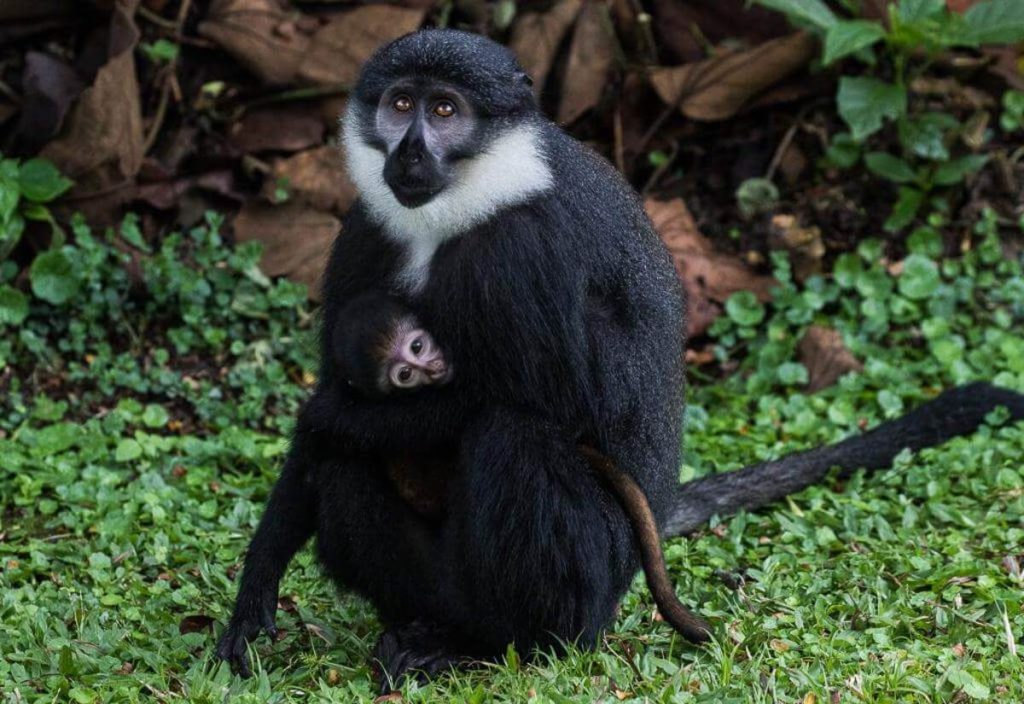
Kibale National Park covers approximately 321 km² and is one of Africa’s most important primate destinations. Uganda Wildlife Authority records 13 primate species in the park, including chimpanzees, red colobus, black-and-white colobus, L’Hoest’s monkeys and grey-cheeked mangabeys. UWA also estimates that Kibale supports around 1,500 chimpanzees, making it Uganda’s leading destination for chimpanzee tracking. Uganda Wildlife Authority
Bigodi Wetland Sanctuary provides a complementary experience immediately outside the national park. Managed by the community organization KAFRED, the wetland protects an important wildlife corridor while tourism revenue supports local conservation and community projects. Its guided nature walk is known for primates, forest-edge wildlife and more than 200 recorded bird species. Bigodi Wetland Sanctuary
Entebbe/Kampala → Fort Portal → Kibale National Park → Chimpanzee Tracking → Bigodi Wetland Sanctuary → Fort Portal/Kibale → Kampala/Entebbe
The journey progresses through:
Ugandan countryside → Fort Portal highlands → Kibale rainforest → wild chimpanzees → forest primates → Bigodi wetland → birds and community conservation → Kampala/Entebbe.
For travelers visiting Uganda in 2026-2027, this is one of the strongest short itineraries for experiencing the country’s primate heritage without trying to combine too many distant national parks within only three days.
Three days is a short period, so the route needs to remain focused.
Kibale and Bigodi work particularly well together because the two experiences are located within the same wider forest landscape.
Kibale provides the major wildlife highlight: tracking habituated chimpanzees through tropical forest under Uganda Wildlife Authority guidance.
Bigodi then changes the pace.
Instead of searching primarily for chimpanzees, the experience shifts toward wetland ecology, monkeys, birds, local guides and community-based conservation.
This creates two complementary experiences:
Kibale → deep forest and chimpanzees
Bigodi → wetland, forest edge, birds, primates and community conservation
For travelers starting in Kampala, UWA places Kibale roughly 326 km away by the Kampala–Fort Portal route, with a road journey of around six hours under normal conditions. That makes Day 1 a significant transfer day, but Days 2 and 3 can then concentrate on the Kibale area. Uganda Wildlife Authority
Kibale National Park lies in western Uganda in the wider Fort Portal and Albertine Rift landscape.
The park ranges from approximately 1,160 to 2,607 metres in elevation, creating a mixture of tropical forest and associated habitats. Uganda Wildlife Authority
Its greatest international reputation comes from primates.
UWA lists 13 primate species, including chimpanzees, red colobus monkeys, black-and-white colobus, L’Hoest’s monkeys, grey-cheeked mangabeys, baboons and other monkeys. Uganda Wildlife Authority
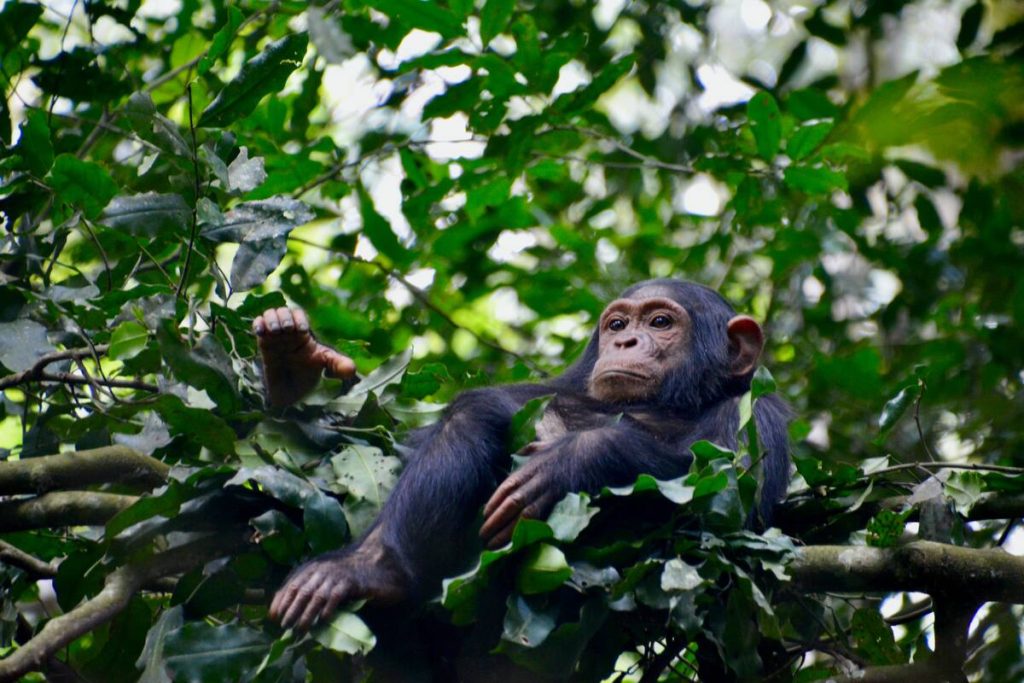
Chimpanzees are the headline attraction.
UWA estimates that Uganda has roughly 5,000 wild chimpanzees, with close to 1,500 occurring in Kibale National Park. Uganda Wildlife Authority
The Kanyanchu chimpanzee community has been monitored and habituated for decades, and UWA reports a tracking success rate above 90 percent. That is still not a guarantee: chimpanzees remain free-ranging wildlife and their movements depend on food, weather and social behavior. Uganda Wildlife Authority
The forest experience itself should remain part of the attraction.
Even before chimpanzees are located, visitors may hear distant calls, watch monkeys moving through the canopy and experience the dense vegetation, birds and forest sounds that make Kibale so different from Uganda’s savannah parks.
Your 3-Day Chimps Trekking in Kibale and Bigodi Swamp Walks begins in Kampala or Entebbe after breakfast or from another agreed collection point.
Meet your professional Uganda safari driver-guide and travel west toward Fort Portal and Kibale National Park.
The road journey gradually leaves the busy central Uganda region and moves through agricultural countryside, towns and increasingly greener western landscapes.
UWA identifies the Kampala–Fort Portal highway as the quickest main road approach to Kibale and estimates the journey at approximately 326 kilometres and around six hours, depending on traffic and conditions. Uganda Wildlife Authority
Because this is already a substantial transfer, Day 1 should remain realistic rather than trying to add another major wildlife activity.
Continue toward the Fort Portal and Kibale region, where the scenery becomes increasingly associated with western Uganda’s green hills, farms and forest edges.
Depending on the selected accommodation, you may stay near Kibale National Park, Kanyanchu, Bigodi or within the wider Fort Portal area.
Arriving before evening allows time to settle into the lodge and prepare for the following day.
This quiet introduction is particularly useful before chimpanzee tracking because Day 2 begins with the park’s main primate experience.
Enjoy dinner and your first night near Kibale.
Main Experience: Kampala or Entebbe departure, western Uganda countryside, Fort Portal region and arrival in the Kibale forest landscape.
Wake in the Kibale area and enjoy breakfast before traveling to the designated Uganda Wildlife Authority chimpanzee-tracking sector.
Chimpanzee tracking in Kibale is conducted under UWA management, with authorized guides leading visitors through the forest.
UWA’s current tracking guidelines identify Kanyanchu and Buraiga as designated Kibale chimpanzee-tracking entry sectors, while any additional sectors are opened only when formally authorized by UWA. Uganda Wildlife Authority
Before entering the forest, participants receive a ranger briefing covering wildlife behavior, health precautions and visitor rules.
The tracking experience then begins through Kibale’s tropical forest.
Finding chimpanzees can require patience.
Some days the animals may be relatively close to the visitor area.
On other days they may have moved farther through the forest in search of fruit and other food.
UWA notes that chimpanzee tracking takes place throughout the year and that seasonal food availability can influence how far the animals travel. Uganda Wildlife Authority
The forest itself remains interesting throughout the search.
Red colobus monkeys may appear high in the trees.
Black-and-white colobus can move through the canopy.
Grey-cheeked mangabeys and other primates may also be encountered.
Bird calls add another layer to the forest atmosphere.
When the habituated chimpanzees are located, visitors can observe their natural social behavior under ranger supervision.
Individuals may be feeding, resting, communicating or moving through trees and forest floor vegetation.
UWA’s current management guidelines set the standard chimpanzee viewing period at a maximum of one hour after the animals are encountered. Uganda Wildlife Authority
The encounter should remain observational.
Chimpanzees are wild animals, and protecting their health is especially important because humans and great apes can share infectious diseases.
After completing the forest experience, return from Kibale and enjoy lunch or a short rest according to the selected arrangement.
The afternoon then changes completely with a visit to Bigodi Wetland Sanctuary.
Bigodi lies beside Kibale National Park and is managed by the Kibale Association for Rural and Environmental Development—KAFRED, a Ugandan community-based conservation organization established in 1992. Tourism revenues are reinvested into community initiatives involving education, conservation, water and livelihoods. Bigodi Wetland Sanctuary
Join a trained local guide for the wetland nature walk.
The official Bigodi organization describes its principal guided route as approximately 4.5 km, typically taking up to around three hours depending on pace and wildlife observations. Bigodi Wetland Sanctuary
The environment feels very different from Kibale’s interior forest.
Wetland vegetation, forest-edge habitat, boardwalk sections and cultivated landscapes create opportunities for a different wildlife community.
Bigodi records more than 200 bird species and eight primate species within its wider wetland environment. Potential primate sightings include black-and-white colobus, red colobus, red-tailed monkeys, grey-cheeked mangabeys, olive baboons, L’Hoest’s monkeys, vervet monkeys and blue monkeys. Bigodi Wetland Sanctuary
The great blue turaco is one of Bigodi’s best-known birding symbols, but no bird or primate should be guaranteed.
The afternoon is equally important for understanding how tourism can support conservation outside a national park.
KAFRED describes Bigodi as a community-managed project in which tourism income helps finance local education, health, sanitation and conservation initiatives. Bigodi Wetland Sanctuary
Return to your accommodation after the wetland experience and enjoy dinner.
The combination of Kibale and Bigodi makes Day 2 the centerpiece of the journey:
chimpanzees in protected rainforest → monkeys and birds in community-managed wetland → local conservation benefits.
Main Experience: Kibale chimpanzee tracking, forest primates, Bigodi Wetland Sanctuary, birdlife and community conservation.
After breakfast, enjoy the final views of western Uganda before beginning the return journey toward Kampala or Entebbe.
A three-day Kibale itinerary is already relatively intensive because of the overland distance, so the final day is best kept comfortable rather than attempting to add another distant national park.
Depending on the agreed safari arrangement and travel schedule, the journey can include normal rest stops before continuing east.
The landscape gradually changes from the forested western region into Uganda’s more densely settled central countryside.
Arrive in Kampala, Entebbe or another agreed destination later in the day.
Travelers with an onward international flight should build a sensible time buffer into the itinerary rather than assuming road conditions will always match estimated journey times.
Your 3-Day Chimps Trekking in Kibale and Bigodi Swamp Walks 2026-2027 then comes to an end.
Main Experience: Western Uganda scenery, return journey and completion of the Kibale primate safari.
Chimpanzee tracking is different from a traditional vehicle safari.
Instead of searching broad plains from a 4×4, the experience takes place inside tropical forest.
Wildlife may first be detected by sound.
Chimpanzees have complex vocal communication, and groups can sometimes be heard before they are visible.
When located, the animals may be high in trees, feeding in fruiting vegetation or moving across the forest floor.
UWA notes that the Kanyanchu community has been intensively monitored for decades and that Kibale offers a reported sighting success rate above 90 percent. Uganda Wildlife Authority
That strong probability should still not be marketed as certainty.
Weather, food distribution and chimpanzee movement remain natural.
The experience is strongest when travelers appreciate the entire forest rather than treating the day solely as a race to photograph one chimpanzee.
Current UWA regulations set the minimum chimpanzee-tracking age at 12 years. This comes from UWA’s 2024 management guidelines and is more recent than some older Kibale tourism materials that published a higher age limit. Uganda Wildlife Authority
Bigodi Wetland Sanctuary is not simply an additional walk after Kibale.
It represents a different model of conservation.
KAFRED was established specifically to protect local wetland biodiversity while generating benefits for people living around Kibale National Park. The organization says tourism income is returned to community projects and local employment. Bigodi Wetland Sanctuary
The guided nature walk passes through a wildlife corridor connected to the broader Kibale landscape.
Bigodi’s own tourism information lists more than 200 bird species and eight primate species, while mammals such as bushbuck, sitatunga and otters are also associated with the wetland environment. Bigodi Wetland Sanctuary
For birdwatchers, the wetland can substantially expand the species diversity of a Kibale trip.
Kibale is dominated by forest species.
Bigodi adds forest-edge, wetland and more open-habitat birds.
The combination is therefore stronger than visiting either ecosystem in isolation.
Bigodi is also best experienced with the trained local guides who manage the sanctuary.
Their knowledge covers wildlife, wetland ecology, local plants and the relationship between conservation and surrounding communities.
Chimpanzees may be the headline species, but this three-day trip can expose travelers to a much broader primate community.
Kibale is officially recognized for 13 primate species and is widely referred to as Uganda’s primate capital. Red colobus, black-and-white colobus, grey-cheeked mangabey and L’Hoest’s monkey are among its notable species. Uganda Wildlife Authority
UWA also records hundreds of bird species in Kibale. An official UWA environmental document lists 372 bird species, 71 mammal species and 13 primate species in the national park. Uganda Wildlife Authority
The Bigodi component adds another habitat type and more than 200 bird species according to the sanctuary’s community tourism organization. Bigodi Wetland Sanctuary
This makes the itinerary particularly attractive for travelers interested in biodiversity rather than only one flagship animal.
Kibale chimpanzee tracking operates throughout the year.
The seasonal experience, however, changes.
UWA notes that chimpanzee tracking can actually be rewarding during wetter periods because food can be more available within accessible forest areas, although trails may be muddier. During drier periods, chimpanzees can travel deeper into the forest while searching for food. Uganda Wildlife Authority
Broader UWA climate information for Kibale identifies major rainfall peaks around March–May and September–November. Uganda Wildlife Authority
The drier periods broadly around June–August and December–February can provide more comfortable walking conditions, although chimpanzees may range farther.
The wetter months offer:
lush forest, strong green landscapes, active vegetation and potentially favorable feeding conditions for chimpanzees.
The drier months offer:
firmer trails and generally easier forest travel.
For Bigodi, both conditions can be rewarding because the wetland and forest-edge ecosystem supports birds and primates throughout the year.
There is therefore no single perfect month.
The strongest choice depends on whether the traveler prioritizes easier walking conditions, green scenery, birdlife, permit availability or a broader Uganda itinerary.
Permit pricing is particularly important because Uganda Wildlife Authority changed its structure during 2026.
UWA announced discounted low-season chimpanzee-tracking permits for April, May and November, including a rate of US$200 for foreign non-residents and US$150 for foreign residents. The notice states that these low-season rates took immediate effect in 2026. Uganda Wildlife Authority
UWA also announced a revised tariff taking effect on 1 January 2027. Under that structure, Kibale chimpanzee tracking is listed at US$300 for foreign non-residents, US$200 for foreign residents, US$100 for Rest-of-Africa visitors and UGX 180,000 for East African Community citizens. Uganda Wildlife Authority
Because UWA’s February 2026 notice specifically publishes the low-season discount and the January 2027 tariff rather than a complete replacement schedule for every remaining 2026 date, travelers booking other late-2026 months should confirm the exact permit amount when making the reservation.
UWA also suspended its previous seven-day unpaid permit reservation window from 1 March 2026. Permits are now secured upon full payment rather than being held temporarily without payment. Uganda Wildlife Authority
This makes early confirmation particularly important for fixed travel dates.
Bigodi’s own website displays walk pricing, but some of its detailed published rate pages are explicitly dated from earlier years. For 2026-2027, the current Bigodi walk price should therefore be reconfirmed rather than relying on an old static figure. Bigodi Wetland Sanctuary
A three-day Kibale safari can be arranged at several accommodation levels.
Budget options focus on simple rooms or guesthouses around Kibale and Bigodi.
Mid-range lodges normally provide private rooms, en-suite facilities, prepared meals and attractive forest or rural surroundings.
Higher-end properties can provide larger rooms, more privacy and premium locations within the broader Fort Portal–Kibale landscape.
For such a short itinerary, location is particularly important.
A well-positioned property close to the chimpanzee-tracking sector and Bigodi can reduce unnecessary morning transfers.
The safari itself can also be private, allowing the road journey and general daily schedule to be designed around one booking party.
For travelers wanting to reduce the long road transfer, UWA notes that domestic air options can connect Entebbe or Kajjansi with Kasese, followed by an onward road transfer toward Kibale. Uganda Wildlife Authority
For many three-day packages, however, the classic road route from Kampala remains the simplest arrangement.
Chimpanzee tourism carries a special conservation responsibility because great apes can be affected by human diseases.
Current UWA rules require visitors to follow ranger instructions and prohibit tracking when a person is unwell with an infectious illness. UWA also requires controlled viewing distances and limits normal chimpanzee viewing to one hour after the animals are encountered. Uganda Wildlife Authority
Visitors should avoid feeding wildlife, attempting physical interaction or using flash photography.
Chimpanzees remain powerful wild animals, not pets or performers.
Responsible tourism means allowing them to continue their normal activities with minimal disturbance.
The same principle applies in Bigodi.
KAFRED’s conservation approach asks visitors to remain on guided routes and keep the wetland environment clean while supporting locally managed tourism. Bigodi Wetland Sanctuary
This makes the complete itinerary valuable at two levels:
wildlife experience and conservation support.
Three days works well for a focused Kibale and Bigodi safari, but western Uganda offers several possibilities for travelers with additional time.
A longer itinerary can combine Kibale with Queen Elizabeth National Park, creating a mixture of primate forest and classic savannah wildlife.
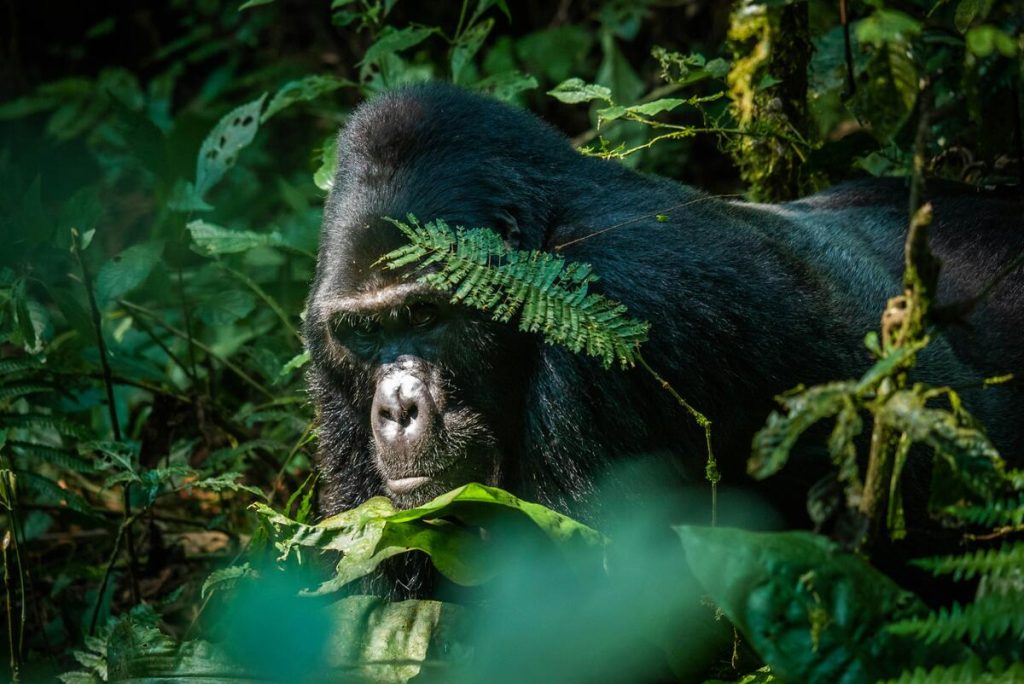
Another extension can continue toward Bwindi Impenetrable National Park, creating a broader primate-focused Uganda journey.
Travelers interested in lakes and scenery can also spend additional time around Fort Portal and western Uganda before returning to Kampala.
The important planning principle is to add days whenever adding a distant destination.
A focused three-day itinerary is stronger than attempting to include Kibale, Queen Elizabeth, Bwindi and several other regions while spending most of the holiday inside a vehicle.
Is three days enough for Kibale and Bigodi? Yes. Three days works well for a focused road trip with Day 1 dedicated to reaching Kibale, Day 2 to chimpanzee tracking and Bigodi, and Day 3 to returning toward Kampala or Entebbe.
How many chimpanzees are found in Kibale National Park? UWA estimates roughly 1,500 chimpanzees in Kibale, making it Uganda’s most important chimpanzee-tracking destination. Uganda Wildlife Authority
Are chimpanzee sightings guaranteed? No. UWA reports a tracking success rate above 90 percent for Kanyanchu, but chimpanzees remain free-ranging wild animals and exact sightings cannot be guaranteed. Uganda Wildlife Authority
How long can visitors stay with the chimpanzees? Current UWA management guidelines limit normal chimpanzee viewing to a maximum of one hour after the animals are encountered. Uganda Wildlife Authority
What is the minimum age for chimpanzee tracking? Current UWA tracking guidelines set the minimum age at 12 years. Uganda Wildlife Authority
How much is the chimpanzee permit in 2027? From 1 January 2027, UWA lists Kibale chimpanzee tracking at US$300 for foreign non-residents, US$200 for foreign residents, US$100 for Rest-of-Africa visitors and UGX 180,000 for East African Community citizens. Uganda Wildlife Authority
Is there a low-season chimpanzee permit? Yes. UWA introduced discounted permits for April, May and November, including US$200 for foreign non-residents and US$150 for foreign residents. Uganda Wildlife Authority
What is special about Bigodi Wetland Sanctuary? Bigodi is a community-managed wetland beside Kibale known for primates, more than 200 bird species and tourism that helps finance local conservation and community projects. Bigodi Wetland Sanctuary
Can monkeys be seen at Bigodi? Yes. The sanctuary lists eight primate species, including red colobus, black-and-white colobus, red-tailed monkeys, grey-cheeked mangabeys and L’Hoest’s monkeys, although sightings vary naturally. Bigodi Wetland Sanctuary
What is the best time to visit Kibale? Kibale operates year-round. Drier periods can provide easier walking conditions, while UWA notes that wetter periods may sometimes keep chimpanzees closer to abundant food despite muddier trails. Uganda Wildlife Authority
Can this safari start from Entebbe? Yes. Entebbe or Kampala can be used as the road-safari starting point, although the transfer to Kibale is substantial and should be planned as the main activity of Day 1.
Can Kibale be combined with Queen Elizabeth or Bwindi? Yes, but additional days are recommended so that road travel does not overwhelm the wildlife experience.
The 3-Day Chimps Trekking in Kibale and Bigodi Swamp Walks 2026-2027 begins in Kampala or Entebbe and travels west toward Uganda’s great primate forest.
The cities gradually disappear.
Green hills dominate the scenery.
Then Kibale begins.
Enter the rainforest with an authorized Uganda Wildlife Authority guide and listen as the forest reveals itself through bird calls, monkey movement and distant chimpanzee vocalizations.
When the chimpanzees are located, observe their social life within the forest rather than treating the encounter as a simple photograph.
Later, move beyond the national park into the community-managed landscape of Bigodi.
Search the wetland for colobus monkeys, mangabeys and colorful birds while local guides explain the relationship between conservation, tourism and village livelihoods.
The following morning, leave western Uganda and return toward Kampala or Entebbe.
The complete journey follows:
Kampala/Entebbe → Fort Portal → Kibale National Park → Chimpanzee Tracking → Bigodi Wetland Sanctuary → Kampala/Entebbe
The final package price should be calculated according to the exact travel dates, traveler category, chimpanzee-permit rate, accommodation level, group size, private transportation and current Bigodi fees.
The journey can remain a focused three-day Kibale and Bigodi experience or expand with additional days for Queen Elizabeth National Park, Bwindi Impenetrable National Park or a broader western Uganda safari.
Combine Kibale’s wild chimpanzees and remarkable primate diversity with Bigodi’s monkeys, wetland birds and community-led conservation on a three-day Uganda safari that reveals a quieter, greener and deeply rewarding side of East African wildlife.
No results available
ResetNo results available
ResetTanzania is a year-round safari destination with many adventures being offered all over the country. For optimal wildlife sightings, the dry season from June to October is your best bet! Read more on when to visit Tanzania
Both have their perks with Big Five national parks, the incredible Great Migration and that quintessential African experience we all dream of. Check out our article on Serengeti vs Masai Mara to help you decide.
They both have such different safari experiences! Tanzania offers Big Five game reserves on classic dusty desert plains, rather South Africa partners the Big Five animals with luscious winelands. Both are just as good, but it depends on your safari style.
That’s a tough one! Botswana is home to herds of elephants at Chobe and the sparkling Okavango Delta, and Tanzania has the iconic Mount Kilimanjaro and Great Migration. Check out our article on Botswana vs Tanzania safaris to help you decide.
Tanzania is in general a safe, hassle-free country. However, like most places, you do need to take precautions and listen to your tour guide. It also pays to read our articles on ‘Things to know before going to Tanzania’.
A camera and binoculars are a must. You’ll regret it if you don’t take them! As for clothing, definitely pack lightweight, breathable clothing. Remember, Tanzania is an arid country so the days can get quite hot. Read more on what to pack for a safari in Tanzania in our travel magazine
EXPERIENCES
BEST TOURS
copyright©2026 . Enjore Safaris