This is a fast-paced Namibia short tour designed for travelers who want both safari and coast but have only four days available. Etosha provides elephants, lions, black and white rhinos, giraffes, zebras, springbok, wildebeest and famous waterhole game viewing, while Swakopmund changes the scenery completely with Atlantic Ocean air, Namib Desert surroundings, historic architecture and a relaxed coastal atmosphere.
Windhoek → Etosha National Park → Etosha Waterholes & Salt Pan → Swakopmund → Windhoek
The experience develops naturally through:
Central Namibia → wildlife savannah → Etosha salt pan → elephants and rhinos → arid western landscapes → Namib Desert → Atlantic Ocean → Swakopmund → Windhoek.
Etosha National Park covers approximately 22,935 km² and is dominated by its enormous salt pan, open plains, shrub savannah and wildlife-rich waterholes. Namibia’s Ministry of Environment, Forestry and Tourism lists elephants, black and white rhinos, lions, leopards, giraffes, zebras, springbok, wildebeest and black-faced impala among the park’s characteristic wildlife, together with more than 400 recorded bird species. Ministry of Environment
Swakopmund provides the opposite environment. Namibia’s official tourism platform describes it as the country’s premier coastal holiday destination and emphasizes its relaxed atmosphere and dramatic position between Namibia’s arid interior and the Atlantic Ocean. Visit Namibia
Etosha and Swakopmund work well together because they do not repeat the same experience.
In Etosha, the focus is wildlife.
Game drives move between open plains, salt-pan viewpoints and waterholes where animals may gather naturally according to weather and season.
Swakopmund changes the entire mood.
Temperatures become cooler.
Atlantic fog may appear.
Wildlife plains give way to desert landscapes and coastal streets.
The transition is one of the most interesting parts of the itinerary.
Namibia’s official tourism board promotes a dedicated route linking Etosha and Swakopmund, describing it as a journey through some of the country’s most impressive arid scenery. Its broader scenic version covers approximately 860 km including detours and is recommended over several days. Visit Namibia
For a strict four-day holiday beginning and ending in Windhoek, however, the itinerary must stay focused. There is not enough time to add every attraction in Damaraland, the Skeleton Coast and central Namibia without turning the holiday into continuous driving.
The strongest short version therefore prioritizes:
Etosha wildlife + scenic transfer + Swakopmund coast.
Etosha is one of southern Africa’s most distinctive safari environments.
Unlike national parks dominated by rivers or thick forest, much of Etosha is shaped by an enormous pale salt pan surrounded by grassland, shrub savannah and woodland.
The park was first proclaimed in 1907 and today covers approximately 22,935 km². The Ministry of Environment, Forestry and Tourism identifies the Etosha Pan and numerous smaller pans as defining natural features, while permanent and artificial waterholes play an important role in wildlife viewing. Ministry of Environment
During drier months, water becomes increasingly important.
Animals may gather around waterholes, creating some of Etosha’s best-known safari scenes.
A single productive waterhole can attract zebras, springbok, wildebeest, giraffes and elephants while predators remain nearby.
Rhinos are another important Etosha highlight.
Both black and white rhinos occur in the park, and the floodlit waterhole at Okaukuejo is particularly famous for possible evening encounters with black rhinos, elephants and lions. Ministry of Environment
Wildlife remains completely natural, so no particular species or waterhole encounter can be guaranteed.
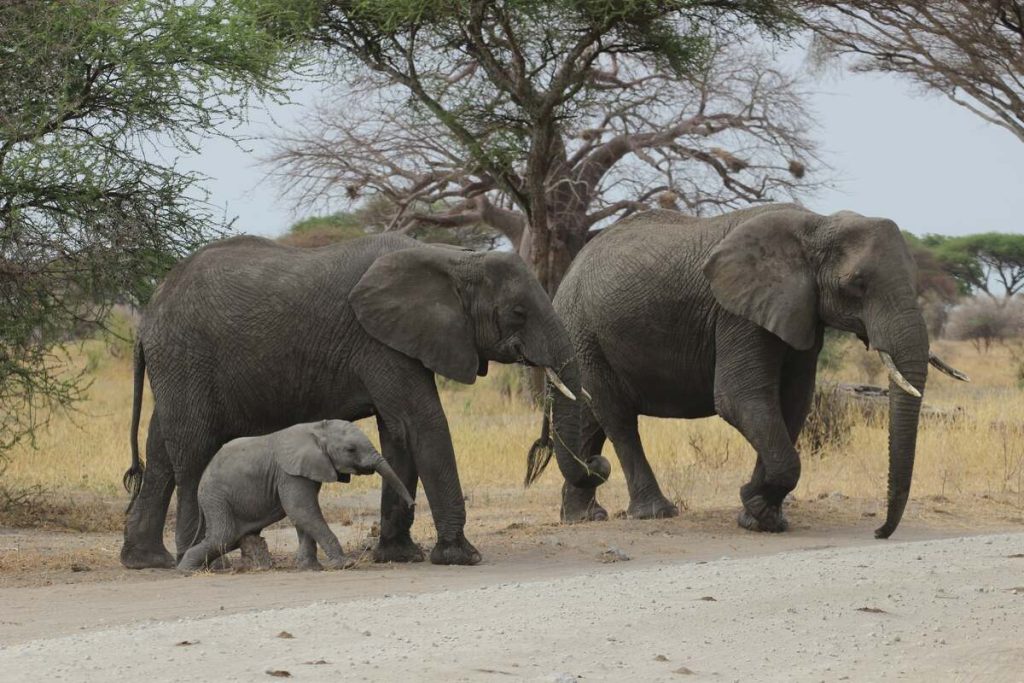
Your 4 Days Etosha & Swakopmund Short Trip 2026-2027 begins in Windhoek after breakfast or from another agreed pickup point.
Meet your professional driver-guide and begin traveling north toward the Etosha region.
The journey introduces Namibia’s scale almost immediately.
Windhoek and the central highlands gradually disappear behind you as the road moves through broad farming landscapes, small towns and increasingly open country.
Namibia’s official tourism board describes the broader Windhoek-to-western-Etosha route as passing through savannah thornveld and established farming areas before reaching the country’s more arid northern landscapes. Visit Namibia
Because the journey to Etosha is substantial, Day 1 should remain realistically paced.
The aim is to arrive with enough time for an introductory wildlife experience rather than promising a full-day game drive after several hours on the road.
Depending on the selected accommodation and confirmed park entrance, enter Etosha and begin exploring toward the camp area.
The landscape can initially appear almost empty.
Then wildlife begins to reveal itself.
Springbok may spread across open plains.
Burchell’s zebras move through dry grassland.
Blue wildebeest can occupy the same wider habitats.
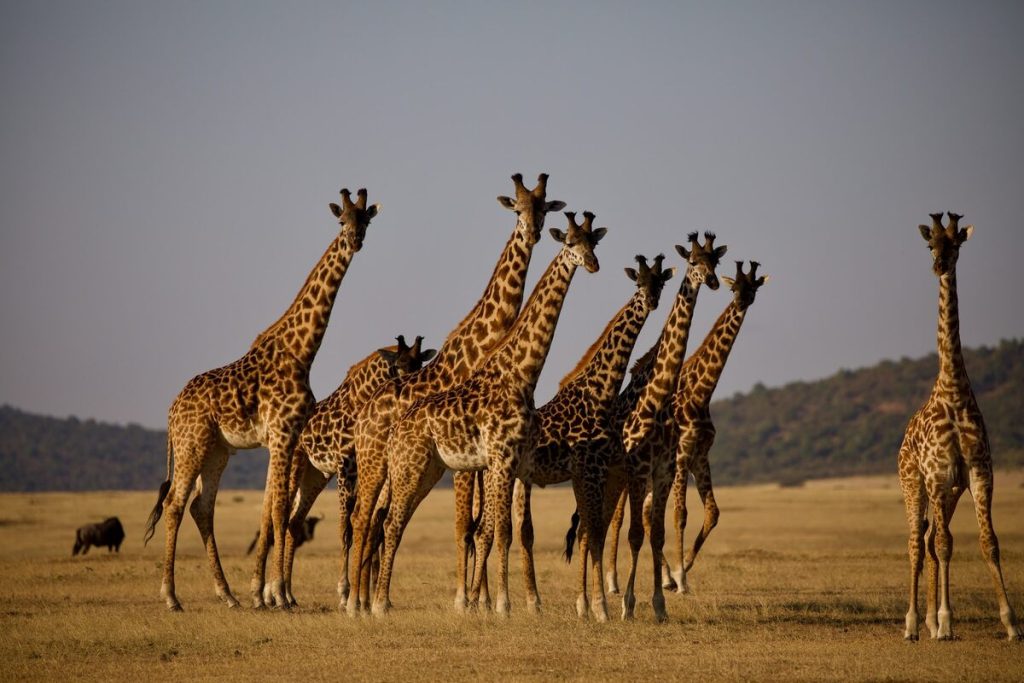
Giraffes appear above woodland vegetation, while elephants may move toward water or feeding areas.
Etosha’s wildlife list includes elephants, black and white rhinos, lions, leopards, giraffes, eland, zebras, springbok, wildebeest, oryx and the endemic black-faced impala. Ministry of Environment
The first drive can include suitable waterholes along the route to camp.
Waterhole viewing is one of the most important elements of an Etosha safari because animals often use these dependable sources during dry conditions.
Patience matters.
A waterhole that looks quiet when the vehicle arrives may become active minutes later.
Zebras might approach first.
Springbok remain alert nearby.
A giraffe may spend time assessing the surroundings before moving closer.
Elephants can completely change the atmosphere when a family group arrives.
Predators are possible but never predictable.
Lions may rest away from water during the heat before becoming more active later.
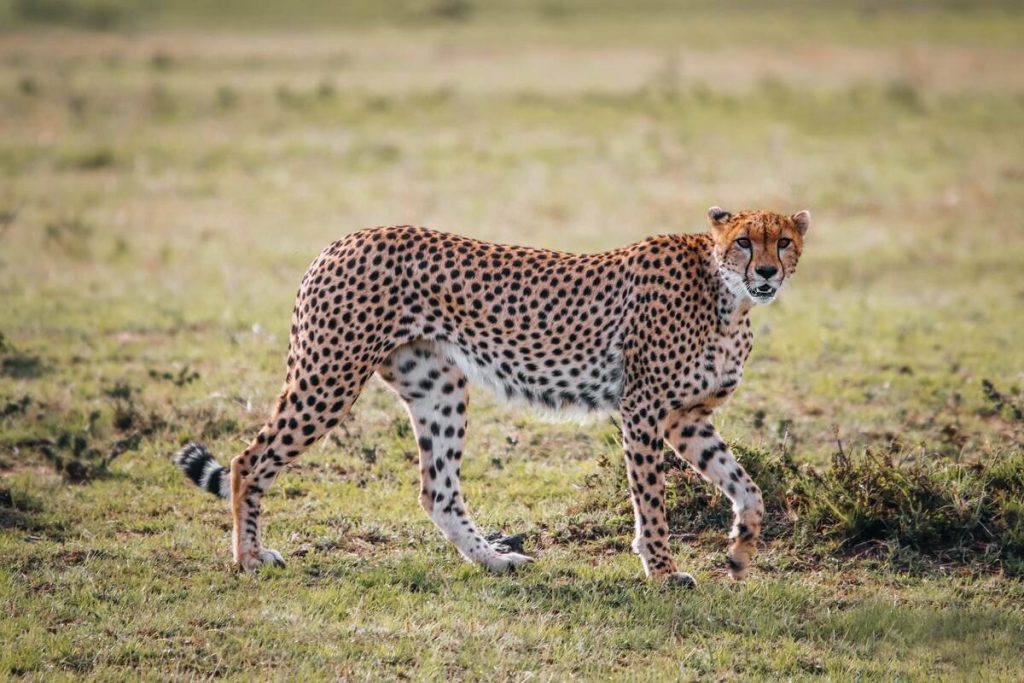
Leopards occur within Etosha but are naturally secretive.
Rhinos may appear in suitable areas, particularly around productive waterholes.
As daylight softens, continue toward your confirmed accommodation.
Etosha’s principal tourist camps include Okaukuejo, Halali and Namutoni, each providing accommodation and access to important wildlife areas. Okaukuejo, Halali and Namutoni also have floodlit waterholes. Ministry of Environment
If staying at an appropriate camp, the evening may provide one of Etosha’s most memorable experiences simply by observing the waterhole from the designated visitor area.
Animals choose whether or not to appear.
There is no need to disturb them or search beyond permitted areas after park driving hours.
Enjoy dinner and your first night in the Etosha region.
Overnight: Etosha National Park or nearby lodge
Main Experience: Windhoek to Etosha, first game drive, elephants, giraffes, zebras, antelope, rhino and lion possibilities.
Wake early for the main wildlife day of the journey.
Day 2 is devoted to exploring Etosha rather than immediately leaving for another destination.
Morning conditions can be especially rewarding because temperatures are generally more comfortable and animals may be active before the hotter part of the day.
Begin along authorized game-viewing roads, moving between open plains, woodland and productive waterholes.
The exact route should respond to current wildlife movement rather than following one identical circuit throughout the year.
Etosha’s defining feature is the immense salt pan.
The flat white landscape creates a distinctive background completely different from the grassy plains of East Africa.
During dry periods, large sections appear pale and almost empty.
After seasonal rain, temporary water can transform parts of the pan and surrounding areas, influencing birdlife and animal distribution.
Visit suitable viewpoints while continuing the search for wildlife.
Elephants are among the park’s most impressive animals.
Possible encounters range from solitary bulls to larger family groups moving between feeding areas and water.
Allow elephants enough space to continue their natural behavior.
Black and white rhinos make Etosha especially significant.
Sightings remain unpredictable, but the park is one of Namibia’s major rhino landscapes.
Black rhinos tend to be more browsing-oriented and can sometimes be encountered around woodland and waterholes, while white rhinos are generally associated more strongly with grazing habitats.
The objective is observation rather than trying to approach animals closely.
Lions are another major attraction.
They may be seen around open grasslands, shade or waterholes where herbivores gather.
Their coloration can blend remarkably well with Etosha’s pale grass and soil, so patience is often necessary.
Leopards are present but generally more difficult to locate.
Spend the middle part of the day exploring at a comfortable pace.
Etosha is not a safari where success should be measured by the number of kilometres driven.
Stopping at selected waterholes can be more productive than constantly moving.
One waterhole may contain zebras and springbok.
Another may attract elephants.
A third could remain quiet until late afternoon.
The park also provides outstanding birdlife.
Official information records 407 bird species, including vultures, storks, parrots and several species associated with Namibia’s arid landscapes. Ministry of Environment
Seasonal conditions influence birding significantly.
The rainy season can transform parts of the pan into temporary wetland habitat, while the dry season produces a stronger concentration of terrestrial wildlife around dependable water.
Later in the afternoon, return gradually toward your selected lodge or rest camp.
The softer light can create excellent photography.
Zebras against the white pan, elephants beside a waterhole and giraffes crossing the open horizon all communicate Etosha’s distinctive character.
Enjoy your second evening in or around the park.
If your accommodation has access to a designated floodlit waterhole, spend some quiet time observing it before dinner or later in the evening.
Overnight: Etosha National Park or nearby lodge
Main Experience: Full-day Etosha game drive, salt-pan scenery, waterholes, elephants, rhinos, lions, giraffes, zebras and birdlife.
Enjoy breakfast before leaving the Etosha region and beginning the journey toward Swakopmund.
This is the longest transition of the short trip, but it is also one of the most visually interesting.
The landscape gradually becomes drier.
Wildlife country gives way to increasingly arid terrain.
Mountain formations and broad open horizons begin dominating the scenery as the route approaches western Namibia.
Namibia’s official tourism board promotes a longer scenic route between Etosha and Swakopmund known as the Welwitschia Experience. The complete version, including detours, covers approximately 860 km and passes through landscapes associated with the Erongo Mountains, Spitzkoppe, Uis and the wider northwestern desert region. Visit Namibia
A four-day short trip cannot reasonably explore all of those places.
The direct transfer should therefore prioritize reaching Swakopmund at a comfortable time, with scenic stops only where they fit naturally into the confirmed route.
As the Atlantic region approaches, another major change becomes noticeable: the temperature.
Namibia’s coast is strongly influenced by the cold Benguela Current, which keeps coastal temperatures substantially cooler than much of the interior. Fog is common, particularly during mornings and later afternoons. Visit Namibia
Eventually arrive in Swakopmund.
The contrast with Etosha is immediate.
Instead of waterholes and wildlife plains, the atmosphere becomes coastal and urban.
Atlantic air meets the Namib Desert.
Historic buildings, palm-lined areas and the seafront create a completely different final stage of the journey.
Swakopmund was founded in 1892 and retains a distinctive architectural character associated with Namibia’s colonial-era history. Today, Namibia’s tourism authority describes the town as a relaxed coastal destination and an important base for exploring the central coast. Visit Namibia
After checking into your selected accommodation, spend the remaining afternoon or evening enjoying the town at a relaxed pace.
A walk through appropriate central areas can introduce its historic buildings and coastal character.
Continue toward the Atlantic promenade or beach area and experience the cooler ocean environment after two days in Namibia’s interior.
The purpose of Swakopmund on this itinerary is not to fill every remaining hour with activities.
It provides contrast.
After intensive wildlife viewing, the coast offers time to slow down.
Enjoy dinner at your accommodation or another suitable local restaurant and spend your third night in Swakopmund.
Overnight: Swakopmund
Main Experience: Etosha departure, changing desert landscapes, Atlantic coastal climate and Swakopmund arrival.
Wake in Swakopmund and enjoy breakfast.
The morning should remain focused on the character of the coastal town rather than trying to introduce another distant destination.
Explore selected historic and coastal areas with enough time to appreciate how dramatically different Swakopmund feels from Etosha.
The Atlantic Ocean lies immediately beside one of the world’s great desert environments.
Cool air and fog can sit over the coast while warmer, drier conditions dominate farther inland.
This climate contrast is one of the defining features of Namibia’s central coastline. Visit Namibia
Spend time along the seafront and appropriate central areas before beginning the return journey toward Windhoek.
Travel inland once again, watching the environment change from the cool coastal desert toward Namibia’s central plateau.
Arrive in Windhoek later in the day according to traffic, stops and road conditions.
Travelers departing from Walvis Bay Airport or continuing elsewhere on the coast can instead end the trip in the Swakopmund region, avoiding the final road transfer to Windhoek.
For travelers returning to Windhoek, this completes the full four-day loop.
Your 4 Days Etosha & Swakopmund Short Trip 2026-2027 then comes to an end.
Main Experience: Swakopmund coastline, central Namibia landscapes and return to Windhoek.
Etosha supports an impressive diversity of wildlife despite its arid environment.
The Ministry of Environment, Forestry and Tourism lists elephant, black rhino, white rhino, black-faced impala, lion, giraffe, leopard, eland, Burchell’s zebra, springbok, blue wildebeest, oryx and Damara dik-dik among its notable species. Ministry of Environment
Etosha should not be marketed as a complete traditional Big Five destination because buffalo are not a standard Etosha species.
However, the park offers four of the classic Big Five: elephant, lion, leopard and rhino.
Its real strength lies in the way wildlife uses the waterhole system.
Instead of searching only for animals hidden across immense vegetation, visitors can spend time near productive water sources and watch different species arrive naturally.
This behavior becomes particularly important during Namibia’s dry season.
Water defines much of the wildlife experience in Etosha.
The park contains a combination of natural springs and artificially maintained waterholes. Namibia’s environment ministry identifies water provision as one of Etosha’s most important management activities because permanent surface water is naturally limited. Ministry of Environment
For visitors, this creates a distinctive safari style.
Game drives often connect one waterhole with another.
A productive stop may reveal several species at once.
Springbok and zebras may approach cautiously while giraffes wait nearby.
Elephants can arrive in larger family groups.
Predators may remain close enough to influence the behavior of prey even when they are difficult to see.
Okaukuejo’s floodlit waterhole is particularly famous for possible nighttime rhino, elephant and lion observations from the designated viewing area. Ministry of Environment
No two waterhole visits are identical.
That unpredictability is part of Etosha’s appeal.
Swakopmund works particularly well after Etosha because it does not try to compete with the safari.
Instead, it provides a completely different environment.
The town sits on Namibia’s central Atlantic coast, where the cold Benguela Current creates cooler conditions and frequent fog. Visit Namibia
This can be surprising after the warmer interior.
A traveler may leave dry wildlife country and arrive the same day in a town where cool ocean air dominates.
Swakopmund is also known for its distinctive historic architecture and laid-back coastal atmosphere.
Founded in 1892, the settlement developed during Namibia’s colonial period, and elements of that history remain visible in the built environment. Visit Namibia
Today it functions as one of Namibia’s major visitor destinations and a gateway to the central coast.
For a four-day itinerary, Swakopmund is best enjoyed simply: coastal scenery, town atmosphere, local food and a slower final stage after the safari.
Namibia is generally considered a year-round destination, but the seasons affect Etosha and Swakopmund differently.
For Etosha wildlife viewing, Namibia’s official tourism information identifies roughly May to October as the strongest dry-season period. Cooler weather and limited water availability tend to bring animals toward established waterholes, making game viewing particularly productive. Visit Namibia
Toward the end of the dry season, landscapes can become extremely dry and pale.
Wildlife may be highly concentrated.
The rainy season changes Etosha dramatically.
Vegetation becomes greener and temporary water becomes more available.
Animals can spread more widely rather than remaining concentrated around permanent waterholes.
Birding becomes especially interesting, and seasonal water in parts of the pan can attract wetland species. Visit Namibia
Swakopmund behaves differently because of the Atlantic.
The coast remains cooler than much of Namibia throughout the year due to the Benguela Current, and fog can occur during different seasons. Visit Namibia
The best overall time therefore depends on whether the priority is concentrated Etosha wildlife, green landscapes, birdlife or comfortable coastal travel.
This itinerary can be arranged at budget, mid-range or higher-end accommodation levels.
Around Etosha, travelers can stay at official park rest camps or lodges immediately outside the park.
Official facilities inside Etosha include Okaukuejo, Halali and Namutoni, each providing accommodation and access to floodlit waterholes. Ministry of Environment
Staying close to the park is particularly important on a short itinerary.
A cheaper lodge located far from the entrance can reduce actual wildlife time.
In Swakopmund, accommodation ranges from practical guesthouses to more refined hotels and coastal properties.
The best option depends on budget and preferred atmosphere rather than wildlife access.
For a four-day trip, location and efficient routing often matter more than paying for the most expensive room category.
There is no single fixed price for every four-day Etosha and Swakopmund tour.
The total depends on the exact travel dates, accommodation category, number of travelers, private or shared vehicle arrangement, meals, Etosha park charges and whether the journey finishes in Swakopmund or returns to Windhoek.
Vehicle costs are significant because Namibia is a large country.
A private trip for one or two travelers normally costs more per person than a journey where several travelers share the same vehicle and guide.
Accommodation also has a major effect.
A simple guesthouse and standard Etosha lodge create a very different final price from premium accommodation inside or close to the park.
For 2026-2027, the final quotation should therefore be based on the official park charges and accommodation rates valid for the actual travel dates rather than using an old fixed price.
The most useful comparison considers:
transport + park access + accommodation + wildlife time + route efficiency + total cost.
Yes, but travelers should understand that this is a short and relatively fast-paced itinerary.
Four days allows one arrival game drive, one full Etosha safari, the transfer to Swakopmund and a short coastal experience before returning to Windhoek.
It does not provide enough time for a deep exploration of Damaraland, the Skeleton Coast, Walvis Bay, several Etosha regions and Swakopmund all at once.
Namibia rewards slow travel because distances are significant.
If travelers have five or six days, the same route becomes much more relaxed and can include additional scenic stops.
For visitors with only four days, however, keeping the itinerary focused produces a strong contrast between wildlife and coast without adding unnecessary detours.
Etosha and Swakopmund create very different photographic opportunities.
Etosha provides elephants beside waterholes, zebras against white salt-pan scenery, giraffes on open horizons, lions in dry grassland and rhinos around suitable water sources.
Swakopmund provides coastal architecture, Atlantic skies, fog, beach scenery and the remarkable visual meeting of desert and ocean.
Responsible wildlife viewing is essential inside Etosha.
Vehicles should remain on authorized roads and respect park rules.
Animals must not be fed or pressured for photographs.
Waterholes are particularly sensitive because wildlife depends on them.
Visitors should allow animals clear access to water and avoid behavior that changes their natural movement.
The same principle applies to Namibia’s desert and coastal environments: enjoy the landscape without damaging vegetation, leaving waste or disturbing wildlife.
Is four days enough for Etosha and Swakopmund? Yes, if the route remains focused. Two days can be devoted largely to Etosha, Day 3 to the coastal transfer and Day 4 to Swakopmund and the return journey.
How large is Etosha National Park? Namibia’s environment ministry lists Etosha at approximately 22,935 km². Ministry of Environment
What animals can be seen in Etosha? Possible sightings include elephants, black and white rhinos, lions, leopards, giraffes, zebras, springbok, wildebeest, oryx, eland and black-faced impala. Ministry of Environment
Can I see the Big Five in Etosha? Etosha supports lion, leopard, elephant and both black and white rhinos, but buffalo are not a normal Etosha species, so it is not a complete traditional Big Five destination.
Are rhinos found in Etosha? Yes. Both black and white rhinos occur, although sightings remain natural and cannot be guaranteed. Ministry of Environment
What is Etosha famous for? It is especially famous for its immense salt pan, wildlife-rich waterholes, rhinos, elephants, lions and open arid landscapes.
What is the best time for Etosha wildlife viewing? Official Namibia tourism information identifies May to October as the main dry-season wildlife period, when animals are often easier to observe around waterholes. Visit Namibia
Why combine Swakopmund with Etosha? Swakopmund creates a dramatic contrast, replacing wildlife plains with Atlantic coastline, desert scenery, cooler temperatures and historic urban character.
Is Swakopmund cold compared with Etosha? It can feel substantially cooler because Namibia’s central coast is influenced by the cold Benguela Current. Fog is also common. Visit Namibia
Can the trip start and finish in Windhoek? Yes. The four-day loop can begin and end in Windhoek, although Day 4 includes a substantial return transfer.
Can the tour finish in Swakopmund instead? Yes. Finishing on the coast or continuing through Walvis Bay can reduce Day 4 driving and provide more time in Swakopmund.
Can more destinations be added? Yes, but additional days are recommended for places such as Damaraland, Spitzkoppe or other parts of the Namibian coast.
The route succeeds because the destinations provide two completely different experiences.
Day 1 becomes:
Windhoek → Etosha → first game drive → elephants, zebras and rhino possibilities.
Day 2 becomes:
Full Etosha safari → waterholes → salt pan → lions → elephants → giraffes → rhino possibilities.
Day 3 becomes:
Etosha → changing arid landscapes → Atlantic coast → Swakopmund.
Day 4 becomes:
Swakopmund → coastal morning → central Namibia → Windhoek.
Within four days, the journey moves from one of southern Africa’s great wildlife landscapes to one of Namibia’s most distinctive coastal towns.
The 4 Days Etosha & Swakopmund Short Trip 2026-2027 begins in Windhoek and travels north toward Namibia’s extraordinary wildlife country.
Enter Etosha and watch the enormous salt-pan landscape open ahead.
Search the plains and waterholes for elephants, giraffes, zebras, springbok and wildebeest.
Remain patient for lions, leopards and rhinos.
Spend a full second day exploring the wildlife ecosystem rather than treating Etosha as a quick stop.
Then leave the safari landscape behind.
Travel west as Namibia becomes increasingly dry and dramatic before the Atlantic Ocean finally changes the climate and scenery completely.
Arrive in Swakopmund, where cool coastal air, historic streets and the meeting of desert and ocean provide a completely different ending to the journey.
The complete route follows:
Windhoek → Etosha National Park → Etosha Waterholes & Salt Pan → Swakopmund → Windhoek
The final price should be calculated according to the exact dates, number of travelers, accommodation category, private or shared transport, Etosha entrance charges and whether the journey finishes in Swakopmund or returns to Windhoek.
The four-day route can remain a focused Etosha and Swakopmund journey or be extended with additional days for a slower exploration of Namibia’s central coast, Damaraland and other scenic regions between Etosha and the Atlantic.
Combine Etosha’s elephants, rhinos, lions, waterholes and immense salt pan with Swakopmund’s cooler Atlantic atmosphere, historic character and desert-meets-ocean scenery on a short four-day journey showing how dramatically Namibia can change within a single road trip.
No results available
ResetNo results available
ResetTanzania is a year-round safari destination with many adventures being offered all over the country. For optimal wildlife sightings, the dry season from June to October is your best bet! Read more on when to visit Tanzania
Both have their perks with Big Five national parks, the incredible Great Migration and that quintessential African experience we all dream of. Check out our article on Serengeti vs Masai Mara to help you decide.
They both have such different safari experiences! Tanzania offers Big Five game reserves on classic dusty desert plains, rather South Africa partners the Big Five animals with luscious winelands. Both are just as good, but it depends on your safari style.
That’s a tough one! Botswana is home to herds of elephants at Chobe and the sparkling Okavango Delta, and Tanzania has the iconic Mount Kilimanjaro and Great Migration. Check out our article on Botswana vs Tanzania safaris to help you decide.
Tanzania is in general a safe, hassle-free country. However, like most places, you do need to take precautions and listen to your tour guide. It also pays to read our articles on ‘Things to know before going to Tanzania’.
A camera and binoculars are a must. You’ll regret it if you don’t take them! As for clothing, definitely pack lightweight, breathable clothing. Remember, Tanzania is an arid country so the days can get quite hot. Read more on what to pack for a safari in Tanzania in our travel magazine
EXPERIENCES
BEST TOURS
copyright©2026 . Enjore Safaris